Executive Summary
A representative high-volume automotive machining facility — the kind operated by any major North American vehicle producer — machines aluminum engine and transmission components across multiple CNC lines. Sanding, deburring and dry-machining stations generated fine aluminum dust that accumulated on machine enclosures, overhead structure and floors between shifts.
Housekeeping relied on brooms and, in tight enclosures, compressed-air blowdown — the two methods combustible-dust standards most explicitly discourage, because both resuspend fine particles into exactly the airborne cloud that makes aluminum dangerous. The facility's Dust Hazard Analysis flagged the practice, the accumulation, and the unrated shop vacuums in use.
The engineered response: grounded, air-operated explosion-proof vacuums with immersion separation at the fine-dust stations, HEPA-filtered explosion-proof units for general line-side housekeeping, static-dissipative hose and tool packages throughout, and a zoned cleaning schedule aligned to the DHA. The result is a recovery path with no ignition sources, collected fines rendered inert on entry, and housekeeping that supports — rather than undermines — the facility's compliance position.
Project Overview
- Facility type
- Automotive powertrain machining plant
- Processes
- CNC milling and turning, deburring, sanding, dry and wet machining
- Environment
- Multi-line production, three-shift operation
- Dust generation points
- Machine enclosures, deburr benches, sanding cells, transfer conveyors
- Housekeeping challenge
- Fine aluminum accumulation on horizontal and overhead surfaces
- Potential ignition sources
- Sparking hand tools, unrated vacuum motors, static discharge from plastic hoses, hot work
Industry Background
Modern powertrain plants machine enormous volumes of aluminum: engine blocks, heads, transmission cases, brackets and housings. Every cutting, grinding, deburring and sanding operation liberates particles — and while chips and swarf are coarse, the finishing steps produce genuinely fine dust. It is this fine fraction, not the chips, that creates the explosion hazard.
Aluminum's combustibility rises steeply as particle size falls. Fine aluminum dust sits in the most severe dust-explosion classes (St 2–St 3 in standard classification), with very low ignition energy for the finest fractions — a static spark can be enough. That is why aluminum fines are governed by their own standard, NFPA 484 for combustible metals, now carried into the consolidated NFPA 660.
The operational irony is that the hazard concentrates in the cleanup, not the cutting. Machining itself is often enclosed and wetted; it's the settled dust on enclosures, beams and floors — and the method used to remove it — that determines whether a facility has a managed hazard or a latent one.
The Challenge
- Safety
- Fine aluminum accumulation on elevated surfaces created secondary-explosion fuel; blowdown practices periodically created exactly the suspended cloud the standards warn about.
- Operations
- Manual sweeping was slow, recursive (resuspended dust resettles), and pulled operators away from production tasks.
- Compliance
- The DHA identified combustible metal dust, unrated cleaning equipment, and prohibited cleaning methods — three open action items with inspection exposure under the OSHA Combustible Dust NEP.
- Maintenance
- Dust ingress shortened the life of machine electronics and way covers; unrated shop vacuums failed frequently and were themselves a hazard.
- Employee exposure
- Blowdown and dry sweeping drove airborne particulate at operator height precisely during cleaning tasks.
- Production interruptions
- Housekeeping requiring line stoppage competed with output; deferred cleaning deepened the accumulation problem.
Hazard Analysis
Aluminum dust satisfies the explosion pentagon with uncomfortable ease. Fuel is generated continuously by finishing operations. Oxygen is ambient. Dispersion is supplied by any energetic cleaning method — blowdown above all. Confinement exists inside machine enclosures, duct runs and the building volume itself. Ignition is the only element engineering controls can reliably remove, which is why every element of the recovery path matters.
The secondary-explosion mechanism drives the housekeeping requirement: a small initiating event lofts settled dust from beams and equipment tops into a cloud, which then deflagrates far more destructively than the initiating event. Published OSHA and NFPA guidance treats layers as thin as 1/32 of an inch over a modest fraction of a room's surface as a credible hazard — a threshold a busy machining line can reach between shifts.
Static electricity deserves specific attention with aluminum. Fine metal dust moving through an insulating plastic hose is a textbook charge generator; without a continuous conductive path to ground, the discharge can occur inside the collection container where the dust concentration is highest. Grounding and bonding across hose, wand, canister and chassis is therefore not an accessory — it is the control.
For fine and reactive aluminum fractions, NFPA 484 points to a further layer of protection: immersion separation, in which collected fines pass directly into a liquid bath on entry. The material never exists inside the vacuum as a dry, ignitable accumulation, and it is stored wetted until disposal.
| Pentagon element | Present as |
|---|---|
| Fuel | Fine aluminum dust from sanding, deburring and dry machining |
| Oxygen | Ambient plant atmosphere |
| Dispersion | Compressed-air blowdown, dry sweeping, vibration |
| Confinement | Machine enclosures, ducting, building volume |
| Ignition | Unrated vacuum motors, static discharge, sparking tools, hot work |
Site Assessment Findings
- Measured dust layers on machine tops, cable trays and structural steel exceeding the 1/32 in. reference thickness in several zones
- Compressed-air blowdown in routine use inside CNC enclosures; dry sweeping on open floor
- Consumer-grade shop vacuums — sparking universal motors, plastic hoses, no grounding path — in daily service
- No dedicated recovery equipment for the sanding and deburr cells producing the finest dust
- Collected dust stored dry in open bins pending disposal
- Cleaning frequency undocumented; accumulation reset only at periodic shutdowns
Recommended Solution
The engineered specification split the problem by fraction. For the fine-dust cells — sanding, deburring, dry machining — air-operated explosion-proof vacuums with immersion separation were selected: no electrical components anywhere on the unit, and collected fines wetted on entry per NFPA 484 practice.
For general line-side housekeeping of mixed chips and dust, grounded explosion-proof vacuums with multi-stage filtration and tested HEPA final stages keep captured fines captured rather than exhausting them back into plant air. Every unit ships with static-dissipative hose and non-sparking tool packages, bonded to the machine's grounding path.
The equipment was matched with a zoned housekeeping schedule keyed to the DHA: defined frequencies per area, vacuum-only methods, sealed handling of collected material, and blowdown formally retired from the cleaning repertoire.
Equipment Used
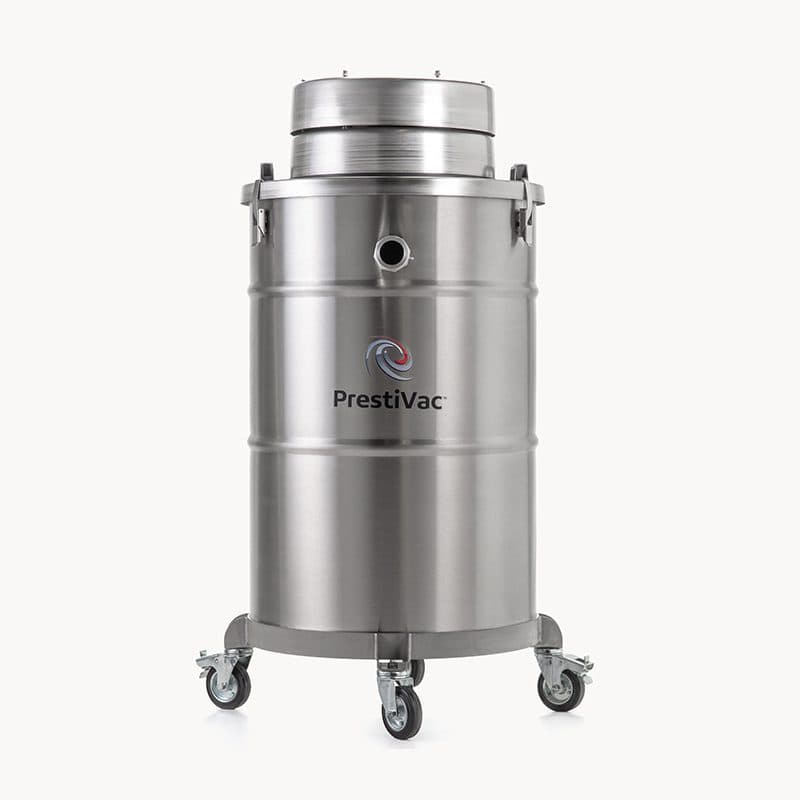
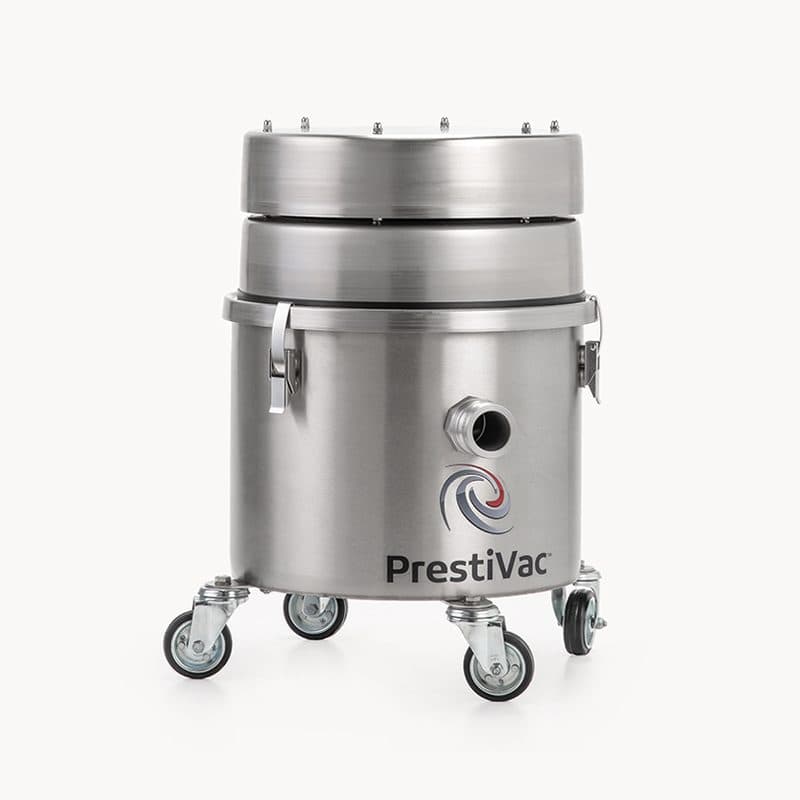
Air-operated explosion-proof vacuums (AVX series, e.g. AVX-55 EX)
Fine-dust cells and classified areas — zero electrical components
Immersion separation configuration
Collects fine aluminum directly into a liquid bath per NFPA 484 practice
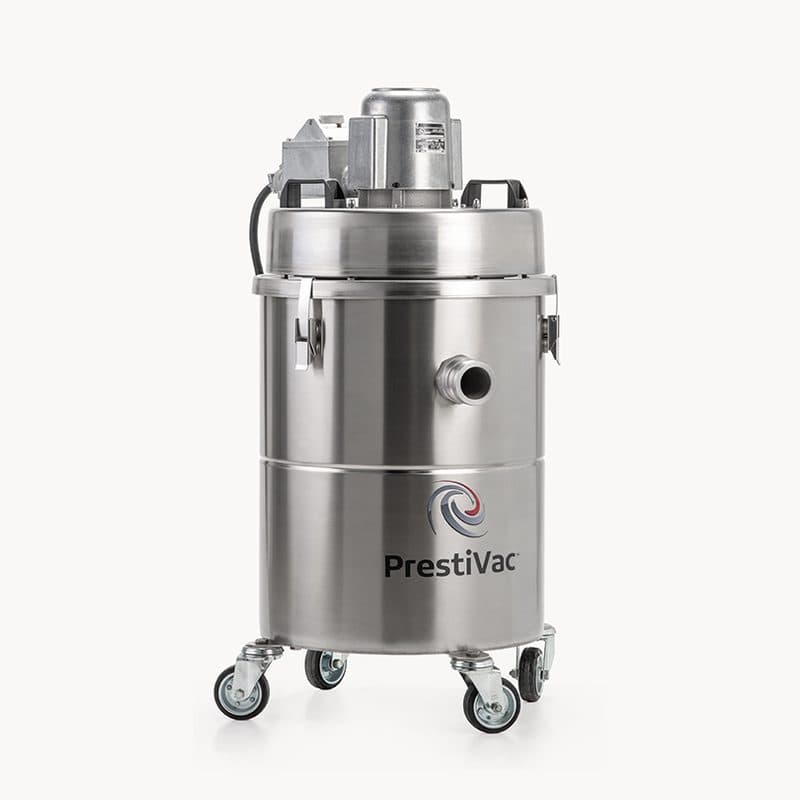
Explosion-proof HEPA vacuums (EX series with tested 99.99% final stage)
General line-side housekeeping without fine-dust re-entrainment
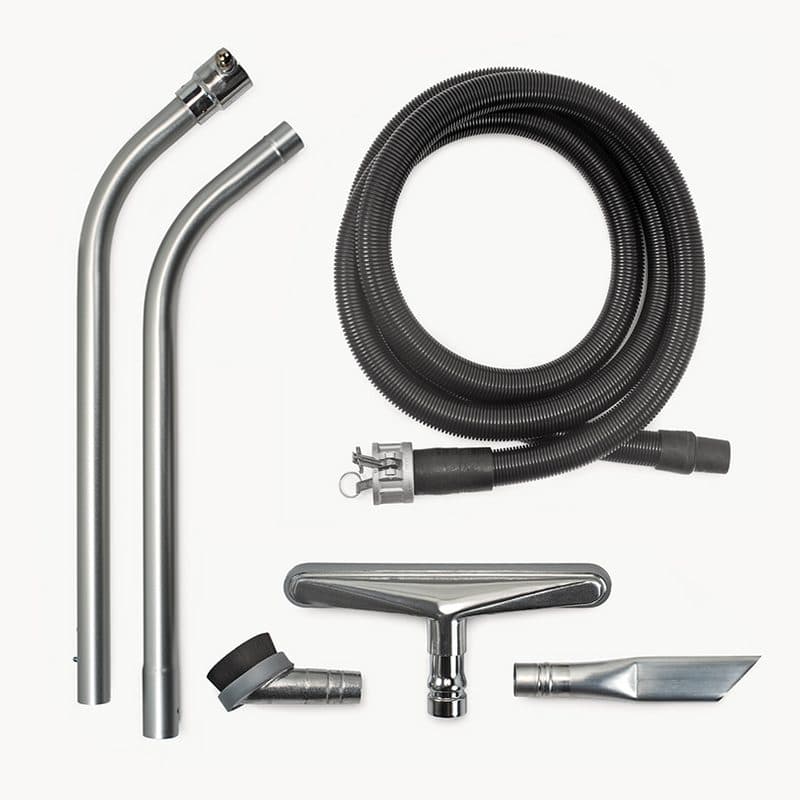
Static-dissipative hose assemblies
Continuous conductive path from pickup point to canister
Grounded stainless wands, floor tools and crevice nozzles
Non-sparking contact at the pickup point
Bonding and grounding kits
Verified chassis-to-ground connection at every station
Sealed stainless collection containers
Wetted or contained transport of collected fines to disposal
Replacement cartridge and HEPA filter program
Condition-based filtration maintenance
Installation & Implementation
- 1
Assessment
Walk-down of dust generation points, layer measurement, method audit and area classification review against the DHA.
- 2
Planning
Zone map with equipment assignments, cleaning frequencies and material-handling routes to disposal.
- 3
Training
Operator sessions covering why blowdown is retired, grounding checks, wetted-material handling and filter service.
- 4
Commissioning
Grounding continuity verification per station; suction and separation performance checks against specification.
- 5
Operator education
Point-of-use placards and a one-page method standard per zone.
- 6
Maintenance program
Condition-based filter service, container handling procedure, and periodic grounding re-verification folded into PM schedules.
Before vs After
| Aspect | Before | After |
|---|---|---|
| Cleaning method | Compressed-air blowdown and dry sweeping | Grounded vacuum recovery at the source |
| Fine-dust equipment | Unrated consumer shop vacuums | Air-operated explosion-proof units with immersion separation |
| Ignition sources in recovery path | Sparking motors, static-generating hoses | No electrical components; bonded conductive path throughout |
| Captured fines | Exhausted or resuspended into plant air | Retained at HEPA 99.99%; fine fractions wetted on entry |
| Collected material | Stored dry in open bins | Sealed, wetted handling to disposal |
| Housekeeping basis | Undocumented, shutdown-driven | Zoned schedule aligned to the DHA |
Compliance Improvements
The engineered program supports compliance with the combustible-metal provisions carried from NFPA 484 into NFPA 660: vacuum-only cleaning methods, control of ignition sources in the recovery path, and wetted handling of fine aluminum.
It supports the housekeeping expectations enforced under OSHA's Combustible Dust National Emphasis Program — documented frequencies, appropriate equipment, and elimination of practices that suspend dust clouds.
Air-operated units align with the intent of NEC Class II area requirements by removing electrical ignition sources entirely; the same architecture is consistent with ATEX and IECEx zone principles for facilities operating under those frameworks. Component certifications and listings vary by model and configuration — documentation is supplied per application, and the program is described throughout as supporting compliance rather than conferring it.
Operational Improvements
- Cleaning became single-pass: vacuum pickup at the source ends the resuspend-and-resettle cycle that made sweeping recursive, so zones stay within their accumulation targets between scheduled passes.
- Housekeeping moved from shutdown-scale events into shift routines — line-side units at the point of generation remove the travel and setup overhead that made cleaning compete with production.
- Machine uptime benefits indirectly: less dust ingress into electronics and ways, and the retirement of blowdown ends the practice of driving fines deeper into equipment.
- Operator exposure during cleaning drops by mechanism — capture at the nozzle with HEPA-retained exhaust replaces methods that put particulate at breathing height. (Directional improvements are stated by mechanism; this representative scenario publishes no fabricated percentages.)
Technical Explanation
Why air-operated units for the fine-dust cells: a compressed-air venturi or turbine drive contains no motor, switch, or wiring — there is simply nothing on the unit to classify, derate or fail sparking. In dusty, wash-down-adjacent machining environments this doubles as a reliability decision: fewer moving parts, no windings to contaminate.
Why immersion separation: fine aluminum's hazard is its dry, dispersed state. Passing the inlet stream through a liquid bath converts the material to a wetted sludge at the earliest possible point, so no dry accumulation ever forms inside the collection vessel — the standard's intent implemented mechanically rather than procedurally.
Why the grounding path is continuous: charge generation scales with flow velocity and particle fineness, which peak inside the hose. A conductive hose bonded to a conductive wand, canister and chassis — verified to ground at commissioning and on a PM cycle — keeps accumulated charge at ground potential instead of storing it for a discharge.
Why staged filtration with a tested HEPA final stage: cyclonic and cartridge stages take the mass loading, so the HEPA stage runs within its design regime and its 99.99% at 0.3 µm rating holds in service, not just on the datasheet. The exhaust question is the whole point — a vacuum that re-emits fines is a dust-distribution system with extra steps.
Frequently Asked Questions
Is aluminum dust really explosive?
Fine aluminum dust is among the most severe combustible dusts — classified in the highest dust-explosion classes, with very low ignition energy for fine fractions. Coarse chips and swarf are not the concern; the fine dust from sanding, deburring and dry machining is.
Why is compressed-air blowdown a problem?
Blowdown converts a settled layer into an airborne cloud — the dispersed state in which combustible dust deflagrates. Combustible-dust standards heavily restrict it, and vacuum recovery is the accepted alternative.
What is immersion separation?
A collection architecture in which the inlet stream passes directly into a liquid bath, wetting fine metal dust the moment it enters the system. The material never exists inside the vacuum as a dry, ignitable accumulation — the approach NFPA 484 points to for fine and reactive metal fines.
Why choose an air-operated vacuum over an electric one?
Air-operated units contain no electrical components at all, which removes the electrical-ignition question entirely — the straightforward choice inside classified areas, and a robust one anywhere fine metal dust is handled.
Do I need HEPA filtration for aluminum dust?
For the fine fraction, effectively yes: filtration that lets fines pass returns them to the plant air, recreating both the hazard and the exposure. A tested 99.99% final stage keeps captured material captured.
What does NFPA 660 change for metal dust?
NFPA 660 consolidates the commodity standards — including NFPA 484 for combustible metals — into one document. The structure changes; the obligations, including vacuum-based housekeeping and wetted handling of fine aluminum, carry forward.
Can one vacuum handle chips, fines and coolant together?
Wet/dry explosion-proof configurations exist for mixed streams, and they suit line-side chip-and-coolant recovery. Dedicated immersion-separation units remain the right tool where the stream is predominantly fine dry aluminum.
How is collected aluminum dust disposed of?
Wetted or sealed, per the facility's waste procedures — never accumulated dry in open bins. Immersion systems deliver the material already wetted; dry-collected fines are transferred in sealed containers.
Key Takeaways
- The fine fraction, not the chips, is the aluminum hazard — target recovery where sanding, deburring and dry machining generate it.
- Blowdown and dry sweeping are the practices to retire first; they manufacture the dispersed cloud the standards exist to prevent.
- Remove ignition from the recovery path: grounded conductive construction end to end, and air-operated drives where classification or prudence calls for them.
- Immersion separation implements NFPA 484's intent mechanically — fines are wetted on entry and never accumulate dry.
- HEPA-retained exhaust is what separates dust recovery from dust redistribution.
- Equipment plus a zoned, DHA-aligned schedule is the compliance posture; equipment alone is not.
Classification
- Industry
- Automotive
- Application
- CNC Machining & Finishing
- Hazard
- Combustible Aluminum Dust
- Material
- Aluminum
- Process
- CNC Machining
- Dust Class
- Combustible Metal Dust (St 2–St 3)
- Facility Type
- Automotive Powertrain Machining Plant
- Relevant Standards
- NFPA 660, NFPA 484, OSHA NEP, NEC Class II, UL 1203, ATEX principles (where applicable)
- Products Featured
- AVX Series (air-operated explosion-proof), EX Series HEPA vacuums, Immersion separation configuration, Static-dissipative hose & tool kits
- Target Personas
- Plant Manager, EHS Manager, Maintenance Manager, Production Engineer