
Vacuum solutions engineered for aerospace manufacturing
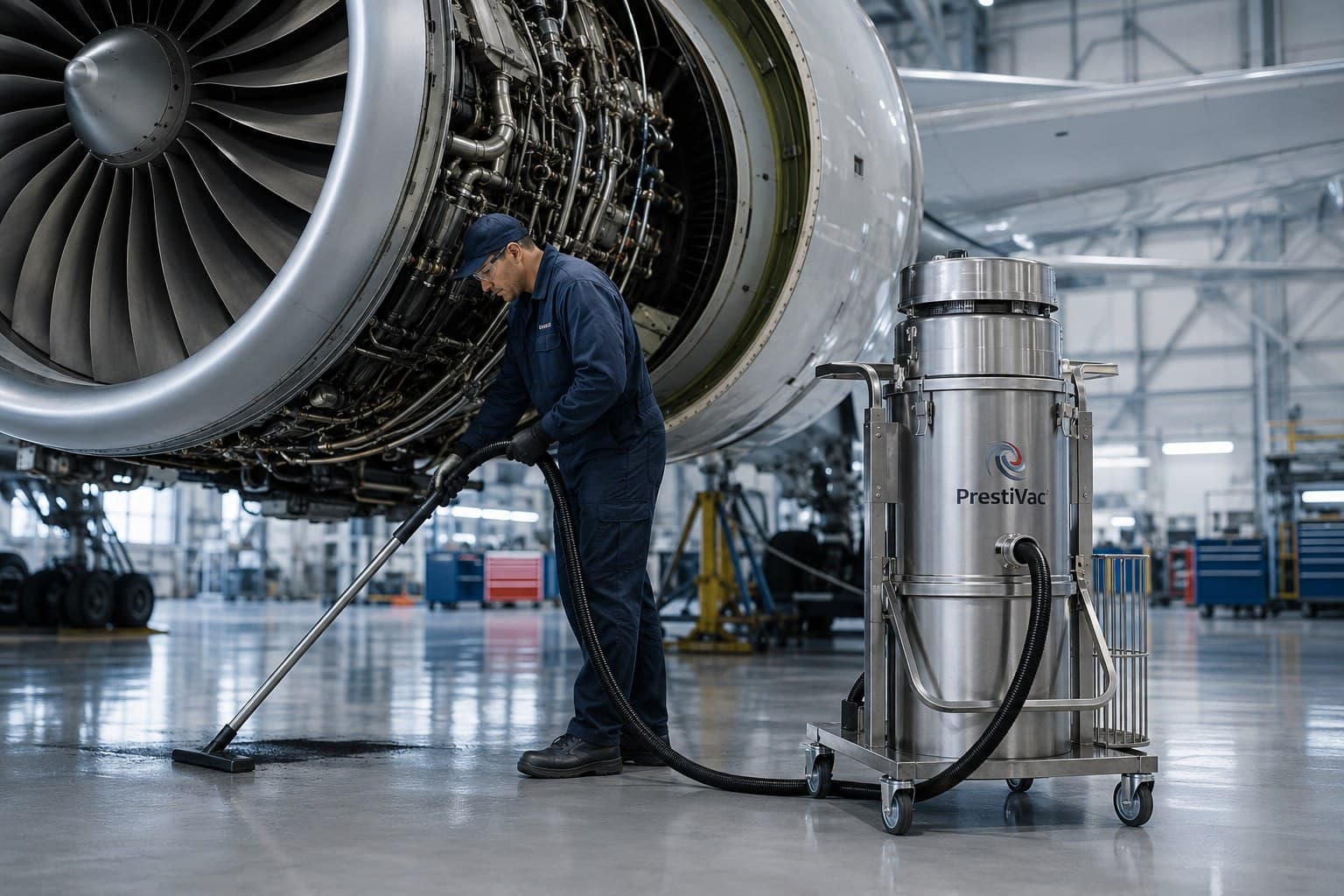
Aerospace machines the two most demanding structural metals — titanium and aluminum — alongside conductive composite dust and additive manufacturing powders, inside the most documentation-heavy quality culture in industry. The dust program and the FOD program are the same discipline pointed at different consequences.
Explosion-Safe Design
Engineered to NFPA 484 / 660 practice
HEPA Filtration
Fines retained, not redistributed
Static Control
Grounded & bonded recovery
Built for Aerospace
Machining cells to MRO bays
Explosion-Proof
Manufacturing specialists
1000+
Vacuums sold worldwide
USA
Designed & manufactured
Direct
Buy from the manufacturer
NFPA 660
ATEX / IECEx principles
Aerospace & Defense production process explorer
Every stage. Every challenge. The right vacuum solution.
From structural machining to the test cell, each stage generates a different dust family with different rules — reactive metal fines, conductive composite dust and the finest AM condensate all live in one plant.
Stage 01 — Titanium & aluminum machining
Structural machining makes the plant's most severe streams — titanium fines with documented fire history and St 2 to St 3 aluminum — wetted, sealed, material-dedicated recovery.
Key challenges
Certification-grade cleaning for certification-grade parts
Titanium's fire history
Titanium machining fires are documented industry-wide — fine swarf and grinding fines ignite far more easily than the solid metal, and burning titanium resists common extinguishers.
Reactive metal discipline
Aluminum and titanium fines each carry NFPA 484 legacy requirements — wetted collection, sealed handling and material-dedicated equipment close the pathways.
Conductive composite dust
Carbon fiber dust is electrically conductive and abrasive — a settled film inside cabinets and controls is an electrical fault waiting for a surface.
AM powder rules
Alloy-dedicated recovery, condensate treated as the most reactive fraction, and a hard wall between the reuse stream and the disposal stream.
FOD culture alignment
Foreign object debris programs already schedule, document and verify cleaning — the dust program plugs into that machinery rather than inventing its own.
Documentation load
Validated methods, defined frequencies and records that survive an audit — cleaning here is a controlled process like any other.
Dust & materials knowledge center
Understand the dusts. Match the recovery.
Combustibility and severity are material- and particle-size-specific — testing and your Dust Hazard Analysis govern. Full directory: metal dusts.
Applications in aerospace
- Aircraft manufacturing
- Aircraft maintenance
- Composite manufacturing
- Engine manufacturing
- Turbine manufacturing
- Surface preparation
- Titanium machining
- Aluminum machining
- View all
Built for performance. Built for compliance.
View all products →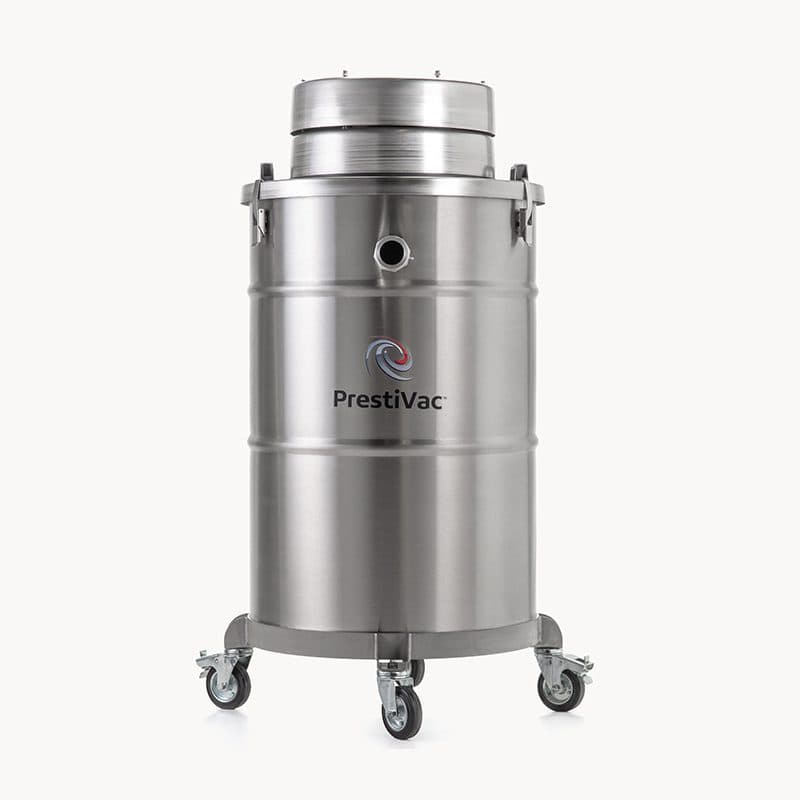
Explosion Proof Vacuums
Grounded, bonded recovery for combustible dust
Learn more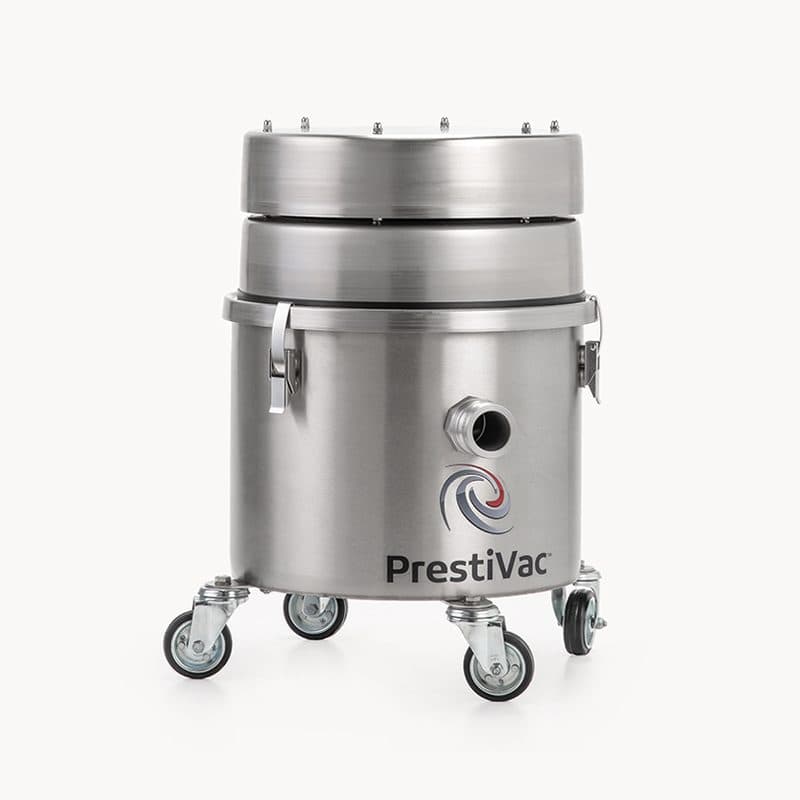
Pneumatic Vacuums
Air-operated — no electrical components
Learn more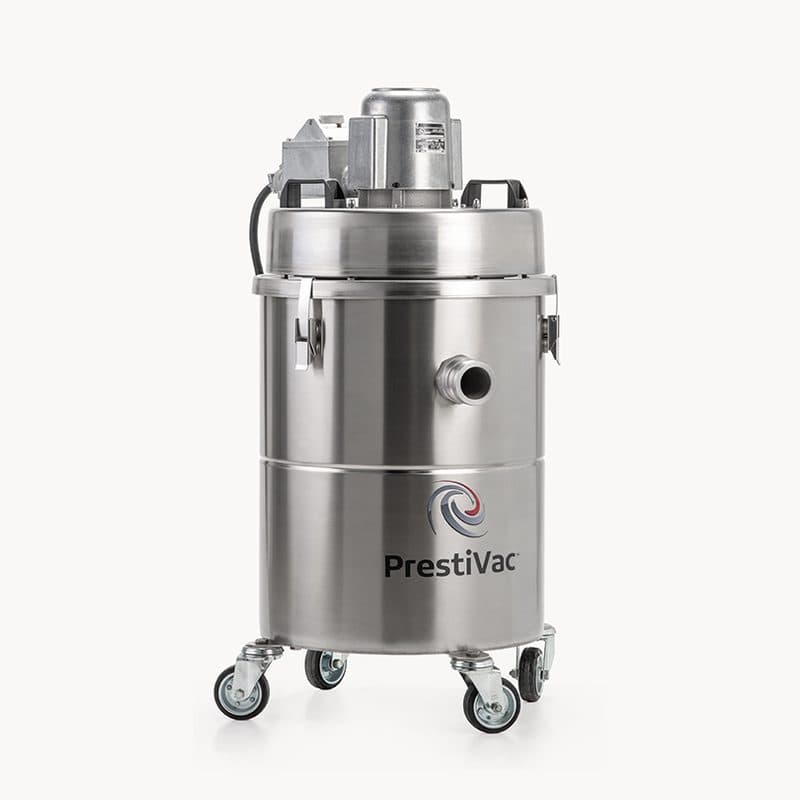
HEPA Vacuums
99.99% filtration for fine and hazardous dust
Learn more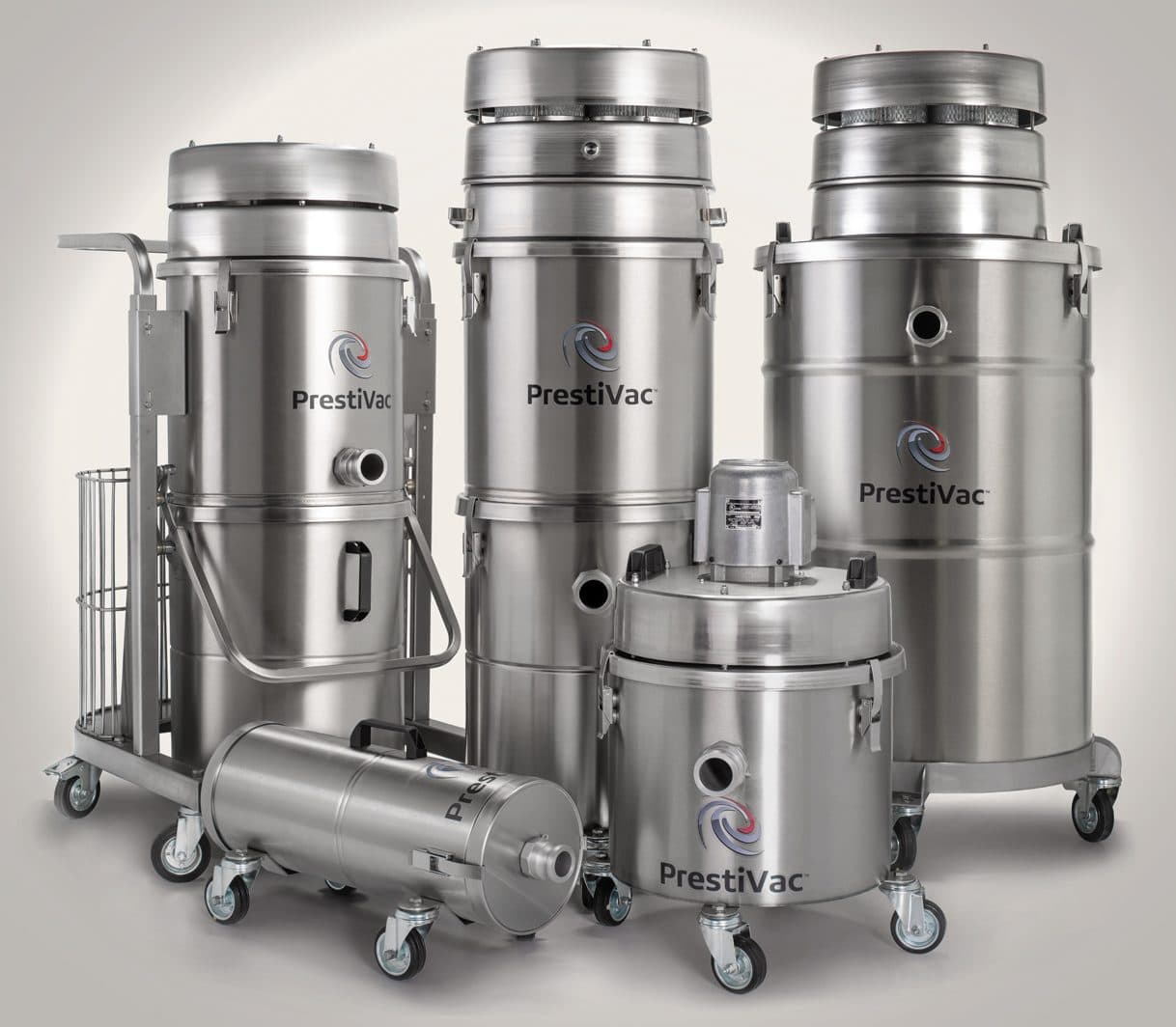
Industrial Vacuums
Continuous-duty recovery for demanding plants
Learn more
Representative case study
Recovering Titanium Powder in a Metal Additive
How a representative aerospace-focused AM producer made powder handling safe and economical at once — air-operated explosion-proof vacuums with immersion separation for one of the most reactive dusts in manufacturing.
Read the full case studyTalk to the manufacturer
Get the right explosion proof vacuum for your application.
Tell us what you need to vacuum and where. Our technical team will recommend the PrestiVac model best suited to your material, your classification and how hard you will work it — and because we build every unit ourselves, we can modify it to fit.
- Legally certified explosion proof
- Solid stainless steel construction
- Industry-best 3-year warranty
- Designed & manufactured in the USA
- 200+ vacuum versions