
Vacuum solutions engineered for automotive manufacturing
An automotive plant runs half the combustible dust catalog under one roof: reactive metal fines off powertrain machining, chips swimming in coolant, charged powder in the paint shop, and — increasingly — conductive graphite on the EV line. The program is material segregation plus scheduled recovery, area by area.
Explosion-Safe Design
Engineered to NFPA 660 practice
HEPA Filtration
Fines retained, not redistributed
Static Control
Grounded & bonded recovery
Built for Plants
Machining halls to final assembly
Explosion-Proof
Manufacturing specialists
1000+
Vacuums sold worldwide
USA
Designed & manufactured
Direct
Buy from the manufacturer
NFPA 660
ATEX / IECEx principles
Automotive production process explorer
Every stage. Every challenge. The right vacuum solution.
Each production area generates its own dust family with its own rules — the stages below trace the fuel from the press shop to the loading dock.
Stage 01 — Stamping & body-in-white
Slug fragments, lubricant mist and grinding dust around the presses — routine recovery keeps walkways and pits clear.
Key challenges
Half the dust catalog under one roof
Reactive metal fines
Aluminum machining fines run St 2 to St 3 severity, and magnesium is the most ignition-sensitive structural metal — the powertrain hall sets the plant's specification.
Mixed-material streams
Material-dedicated, labeled equipment closes cross-contamination pathways — including the iron-oxide-plus-aluminum thermite pairing.
Chips plus coolant
Wet/dry explosion-proof recovery separates reclaimable coolant from solids at the machine instead of losing both to the floor.
Charged finishing areas
Paint and powder shops charge particles on purpose — recovery equipment must be part of the bonded, grounded system before it enters.
The EV line arrives
Graphite dust is combustible and electrically conductive — a settled film near live circuits is a fault pathway as well as a fuel layer.
Scale and cadence
A plant this size needs defined frequencies per area and condition-based triggers — best-effort cleaning can't hold the accumulation targets.
Dust & materials knowledge center
Understand the dusts. Match the recovery.
Combustibility and severity are material- and particle-size-specific — testing and your Dust Hazard Analysis govern. Full directory: metal dusts.
Applications in automotive
- Vehicle manufacturing
- EV manufacturing
- Engine plants
- Transmission manufacturing
- Brake manufacturing
- Wheel manufacturing
- Battery production
- Paint preparation
- Robotic welding
- View all
Built for performance. Built for compliance.
View all products →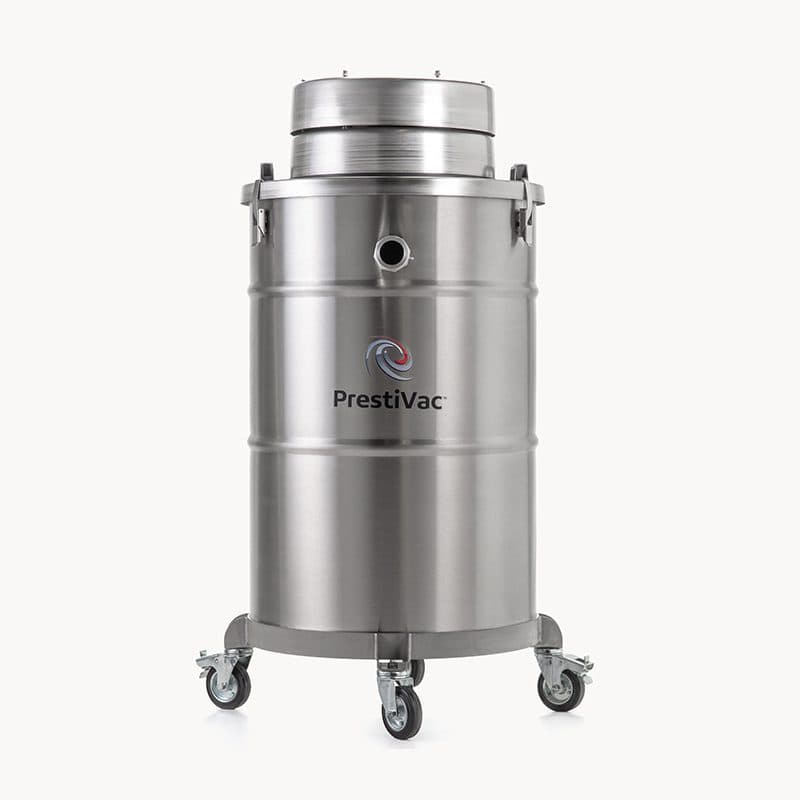
Explosion Proof Vacuums
Grounded, bonded recovery for combustible dust
Learn more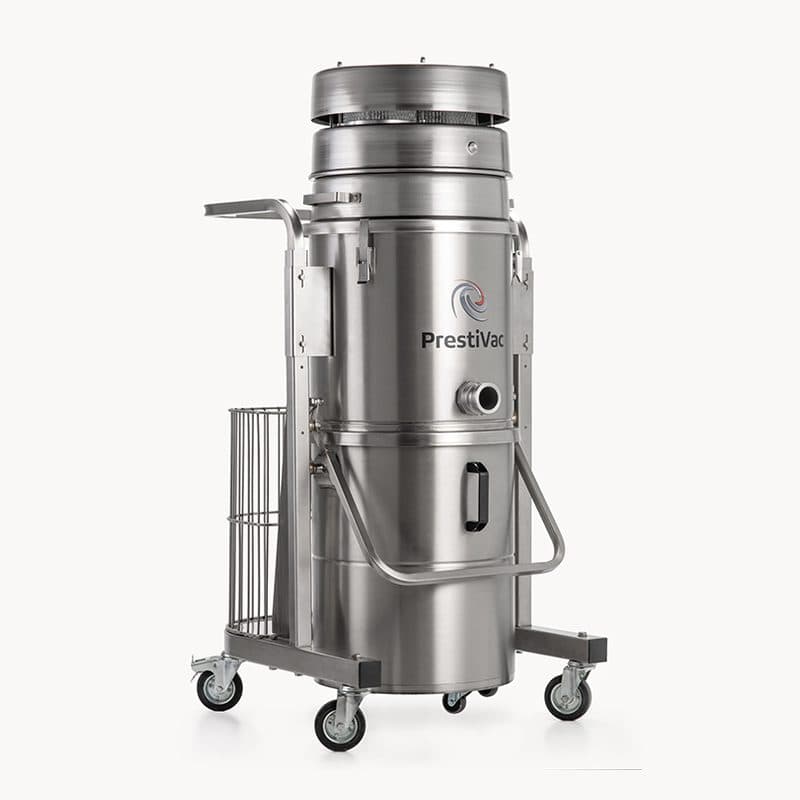
Wet & Dry Systems
Liquids, sludge and dust on one platform
Learn more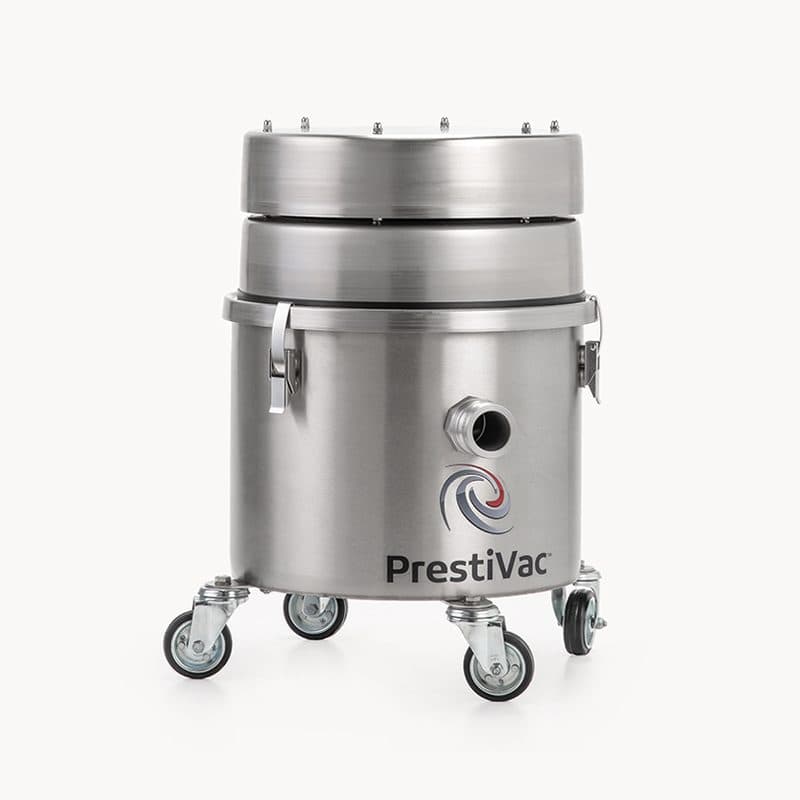
Pneumatic Vacuums
Air-operated — no electrical components
Learn more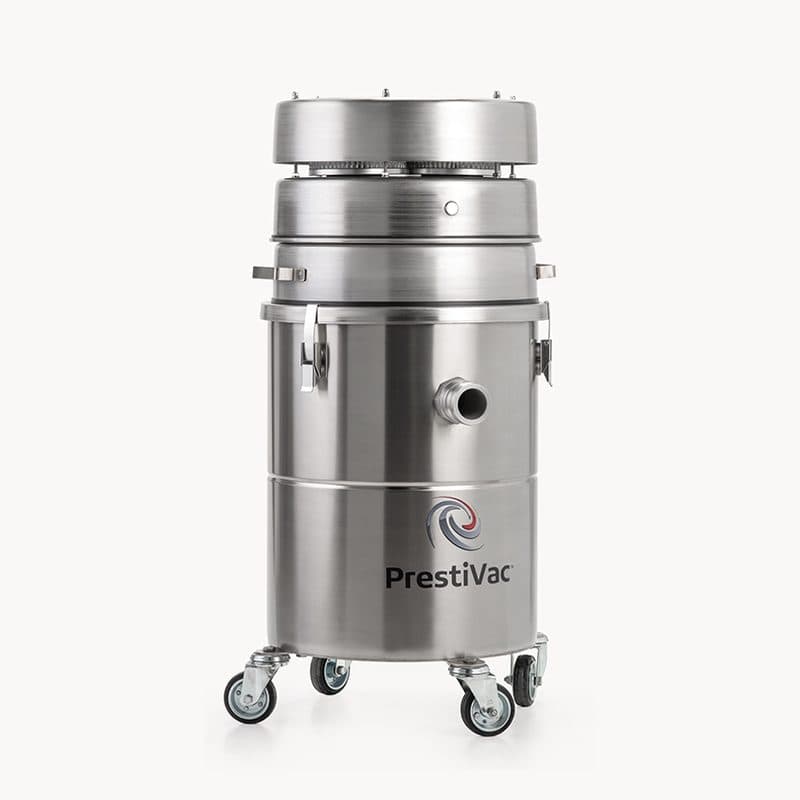
Central Vacuum Systems
Facility-wide housekeeping from fixed drops
Learn more
Representative case study
Reducing Aluminum Dust Hazards in an Automotive
How a representative North American automotive manufacturer brought combustible aluminum fines under control with grounded, air-operated explosion-proof vacuum recovery and immersion separation.
Read the full case studyTalk to the manufacturer
Get the right explosion proof vacuum for your application.
Tell us what you need to vacuum and where. Our technical team will recommend the PrestiVac model best suited to your material, your classification and how hard you will work it — and because we build every unit ourselves, we can modify it to fit.
- Legally certified explosion proof
- Solid stainless steel construction
- Industry-best 3-year warranty
- Designed & manufactured in the USA
- 200+ vacuum versions