
Vacuum solutions engineered for food & beverage manufacturing
The ingredients are familiar; the dusts are not benign. Flour, sugar, starch and cocoa are classic combustible dusts — the material family behind the disaster that reshaped OSHA enforcement — and they're handled in plants where sanitation, allergen control and wet floors add rules of their own.
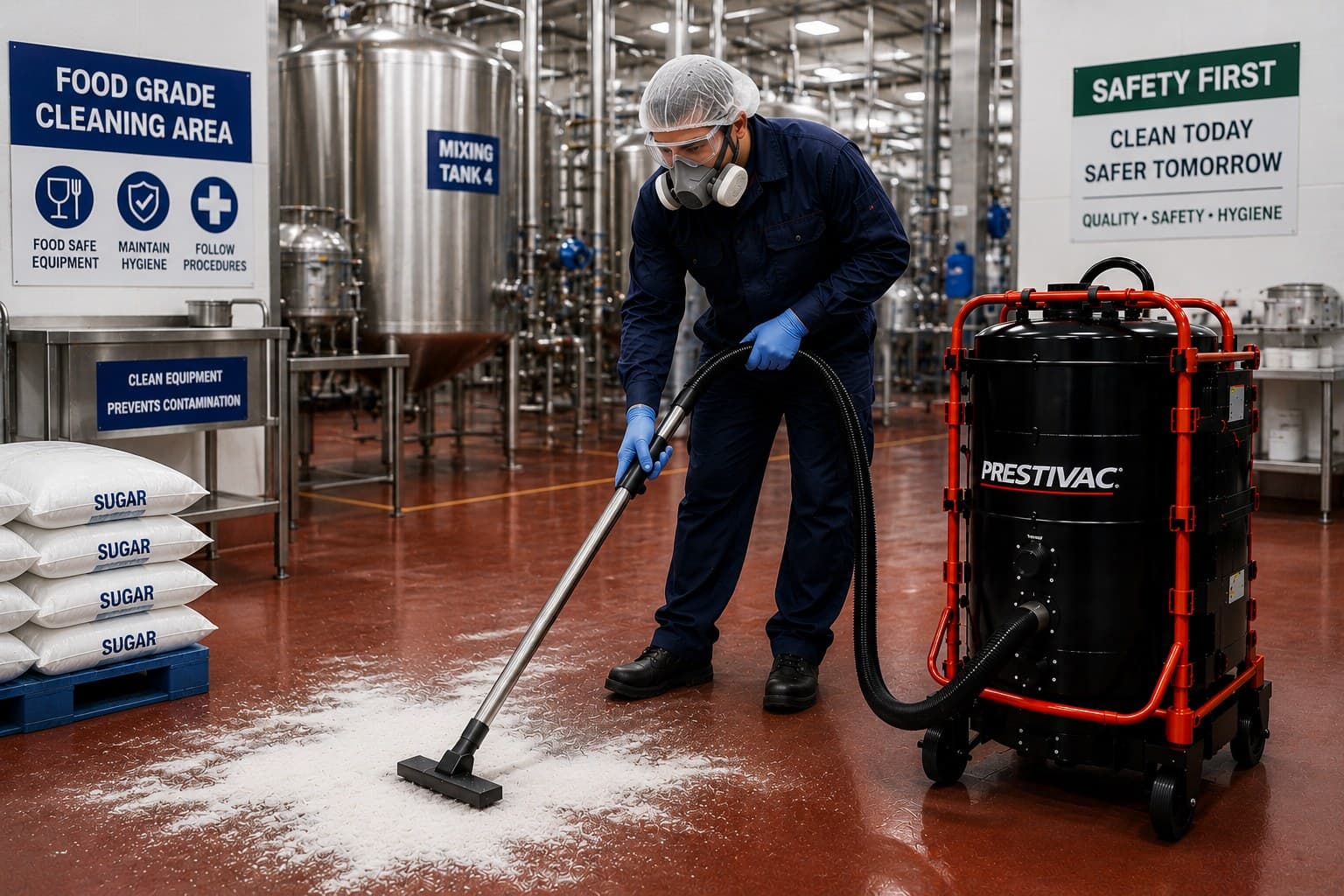
Explosion-Safe Design
Engineered to NFPA 61 / 660 practice
HEPA Filtration
99.99% at 0.3 µm — hygiene and exposure control
Sanitation-Compatible
Stainless, wash-down-tolerant construction
Wet & Dry Capability
Powder, wash-down water and spills in one tool set
Explosion-Proof
Manufacturing specialists
1000+
Vacuums sold worldwide
USA
Designed & manufactured
Direct
Buy from the manufacturer
NFPA 660
ATEX / IECEx principles
Food & Beverage production process explorer
Every stage. Every challenge. The right vacuum solution.
Ingredient dust escapes from the silo to the sealed bag — each stage below is a generation point with its own recovery requirement.
Stage 01 — Receiving & bulk storage
Pit dumps and silo transfers liberate ingredient dust at intake — the first generation point and the first sealed-disposal habit.
Key challenges
Familiar ingredients, industrial hazards
Combustible ingredient dusts
Flour, sugar, starch and cocoa are classic combustible dusts under NFPA 61 — the 2008 sugar refinery disaster is why OSHA's Combustible Dust NEP was reissued.
Sanitation is not a dust program
Food-safety cleaning is frequent but reaches elevated surfaces last — exactly where secondary-explosion fuel accumulates.
Product hygiene
Recovery equipment works food-adjacent: stainless, wash-down-tolerant construction that the sanitation regime can accept.
Allergen changeover
Flour, milk powder and other allergen dusts make carryover a recall-class risk — capture at source with cleanable, documented equipment.
Wet and dry in one shift
Floors alternate between dry powder, wash-down water and sugary spills — the tool set has to handle both states.
Exposure during cleaning
Flour dust is a recognized respiratory sensitizer; blowdown and sweeping put it airborne at breathing height.
Dust & materials knowledge center
Understand the ingredients. Match the recovery.
Combustibility and severity are material- and particle-size-specific — testing and your Dust Hazard Analysis govern. Full directory: food dusts.
Applications in food & beverage
- Flour milling
- Sugar processing
- Bakery production
- Chocolate manufacturing
- Coffee roasting
- Coffee grinding
- Spice processing
- Dairy production
- Milk powder
- View all
Built for performance. Built for compliance.
View all products →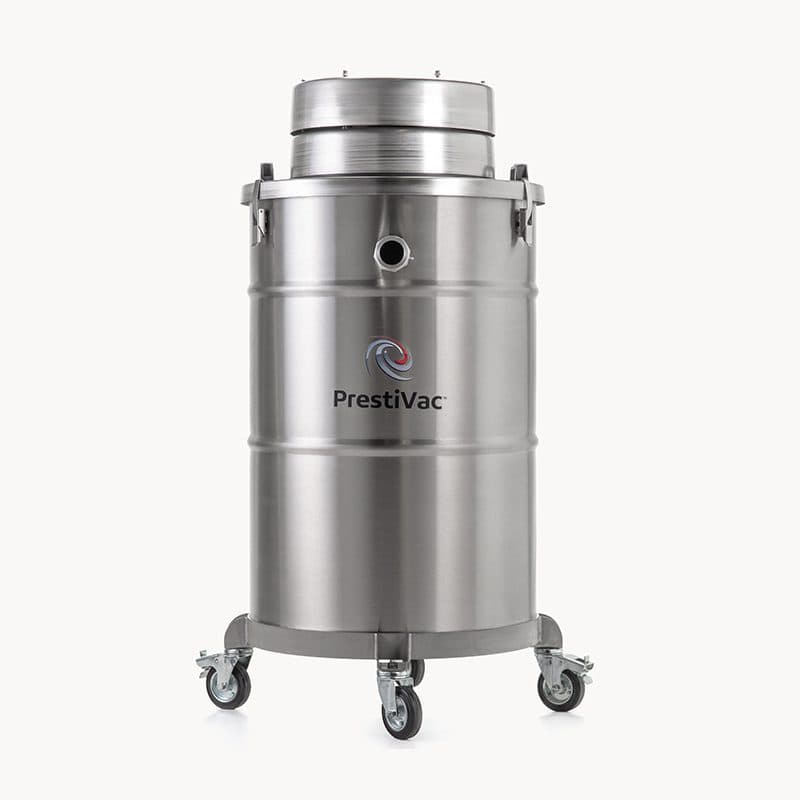
Explosion Proof Vacuums
Grounded, bonded recovery for combustible dust
Learn more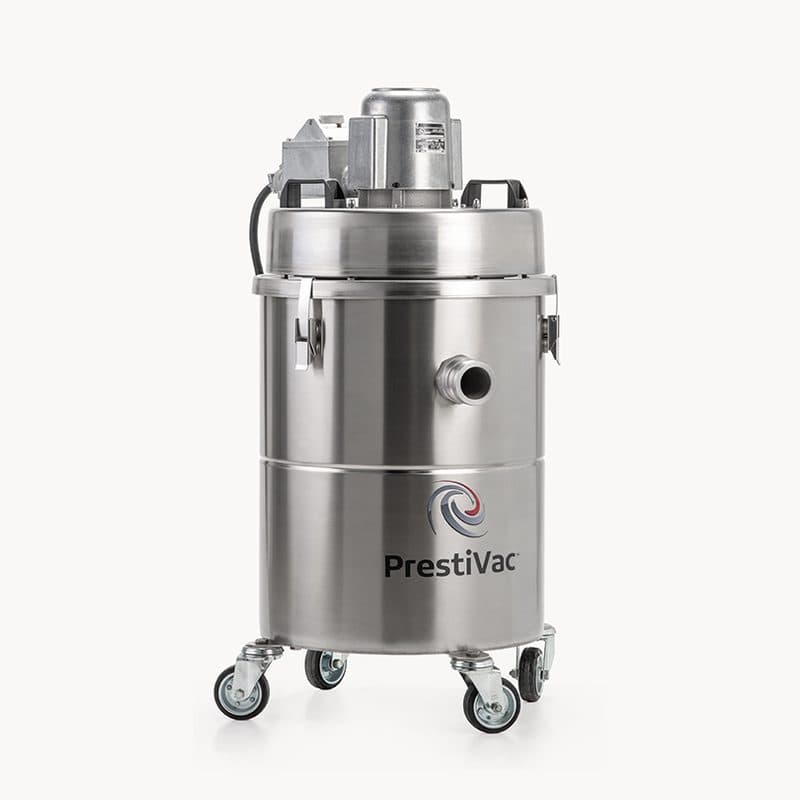
HEPA Vacuums
99.99% filtration for fine and hazardous dust
Learn more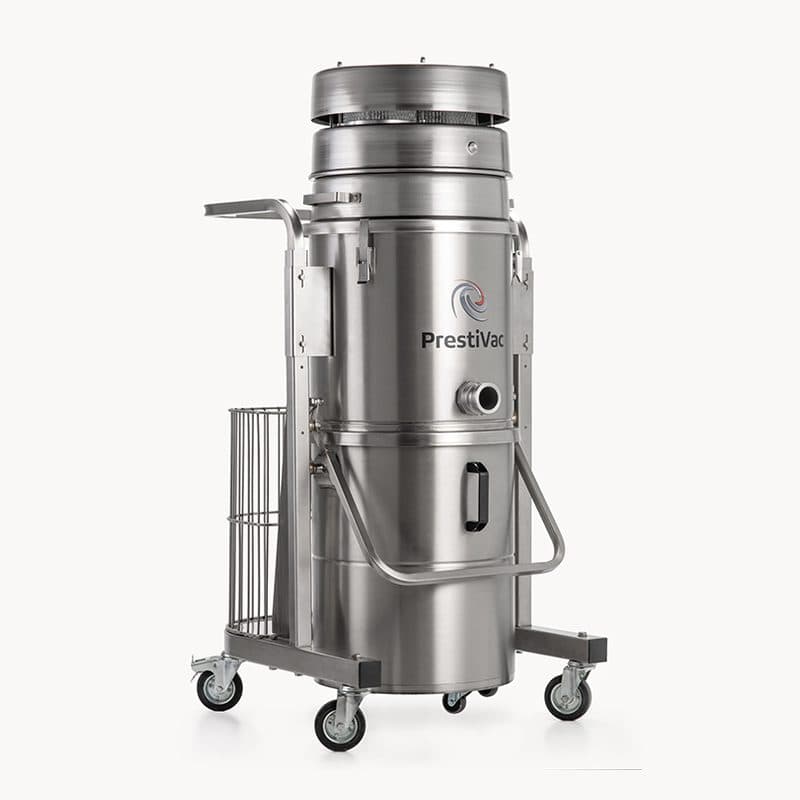
Wet & Dry Systems
Liquids, sludge and dust on one platform
Learn more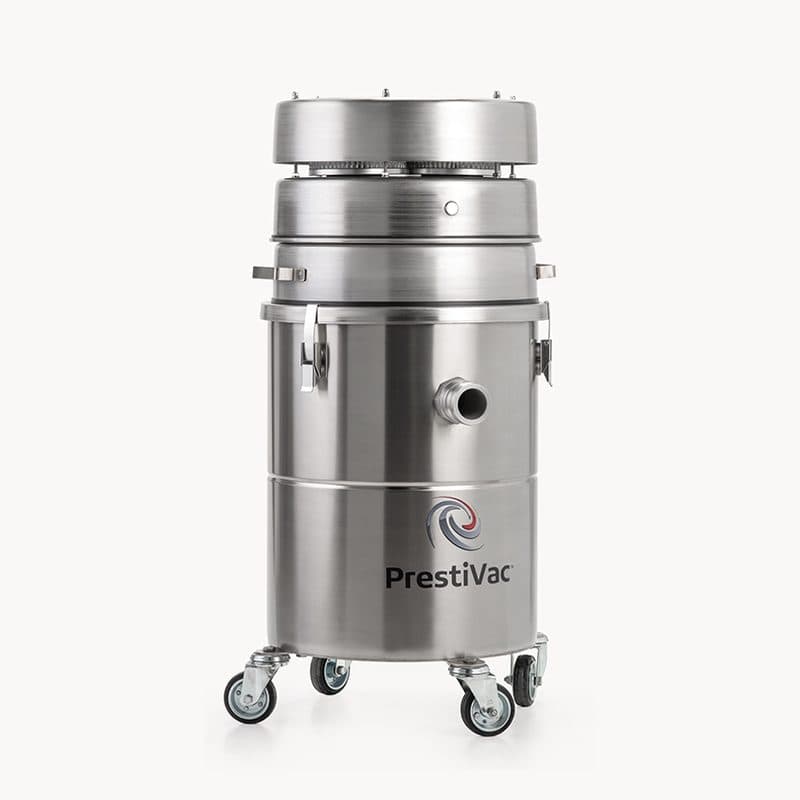
Central Vacuum Systems
Facility-wide housekeeping from fixed drops
Learn more
Representative case study
Controlling Flour Dust in a High-Volume
How a representative national baked-goods producer replaced brooms and blowdown around its bulk flour handling and mixing lines with explosion-proof vacuum recovery — and turned housekeeping into a scheduled, inspectable program.
Read the full case studyTalk to the manufacturer
Get the right explosion proof vacuum for your application.
Tell us what you need to vacuum and where. Our technical team will recommend the PrestiVac model best suited to your material, your classification and how hard you will work it — and because we build every unit ourselves, we can modify it to fit.
- Legally certified explosion proof
- Solid stainless steel construction
- Industry-best 3-year warranty
- Designed & manufactured in the USA
- 200+ vacuum versions