
Vacuum solutions engineered for battery manufacturing
Combustible carbon dusts that are also conductive, cathode powders governed by exposure limits, dry rooms that constrain every piece of equipment — and all of it running 24/7. Battery-plant housekeeping is a specification problem before it's a cleaning one.
Explosion-Safe Design
Engineered to NFPA 652 / 660 practice
HEPA Filtration
99.99% at 0.3 µm — the exposure control
Conductive-Dust Aware
Grounded recovery, electrical rooms on schedule
Continuous Duty
Built for 24/7 electrode lines
Explosion-Proof
Manufacturing specialists
1000+
Vacuums sold worldwide
USA
Designed & manufactured
Direct
Buy from the manufacturer
NFPA 660
ATEX / IECEx principles
Battery Manufacturing production process explorer
Every stage. Every challenge. The right vacuum solution.
Powder enters at the front of the plant and dust generation follows the electrode all the way to assembly — each stage below has its own recovery requirement.
Stage 01 — Powder handling & mixing
Graphite and cathode powders charged by the ton — peak combustible-dust concentration, and where explosion-proof HEPA recovery earns its specification.
Key challenges
Three hazards, one dust program
Combustible carbon dusts
Graphite and carbon black are combustible carbon dusts, handled by the ton in mixing rooms — squarely inside NFPA 652/660's DHA obligation.
Conductive fines
The same graphite that fuels a deflagration also tracks and shorts on energized equipment — housekeeping doubles as electrical-infrastructure protection.
Exposure-limited powders
Nickel- and cobalt-bearing cathode materials carry strict occupational exposure limits — HEPA capture and sealed disposal, whatever the combustibility test says.
Dry-room constraints
Assembly happens at ultra-low humidity; every piece of equipment entering the space is a moisture and particle question.
Continuous generation
Slitting and notching shed electrode dust for as long as the line runs — there is no weekly shutdown to catch up in.
Gigafactory scale
Kilometers of coated electrode per shift multiply every small emission into a program-sized housekeeping load.
Dust & materials knowledge center
Understand the powders. Match the recovery.
Combustibility and severity are material- and particle-size-specific — testing and your Dust Hazard Analysis govern. Full directory: battery manufacturing dusts.
Applications in battery manufacturing
- Lithium-ion battery production
- Electrode manufacturing
- Cathode production
- Anode production
- Cell assembly
- Module assembly
- Battery recycling
- Black mass recovery
- Graphite handling
- View all
Built for performance. Built for compliance.
View all products →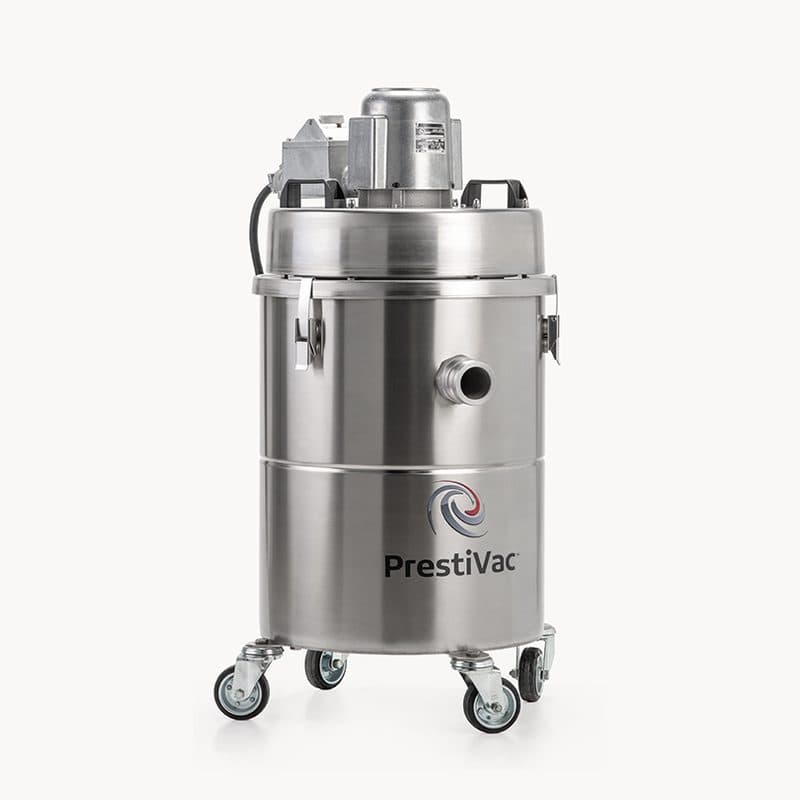
HEPA Vacuums
99.99% filtration for fine and hazardous dust
Learn more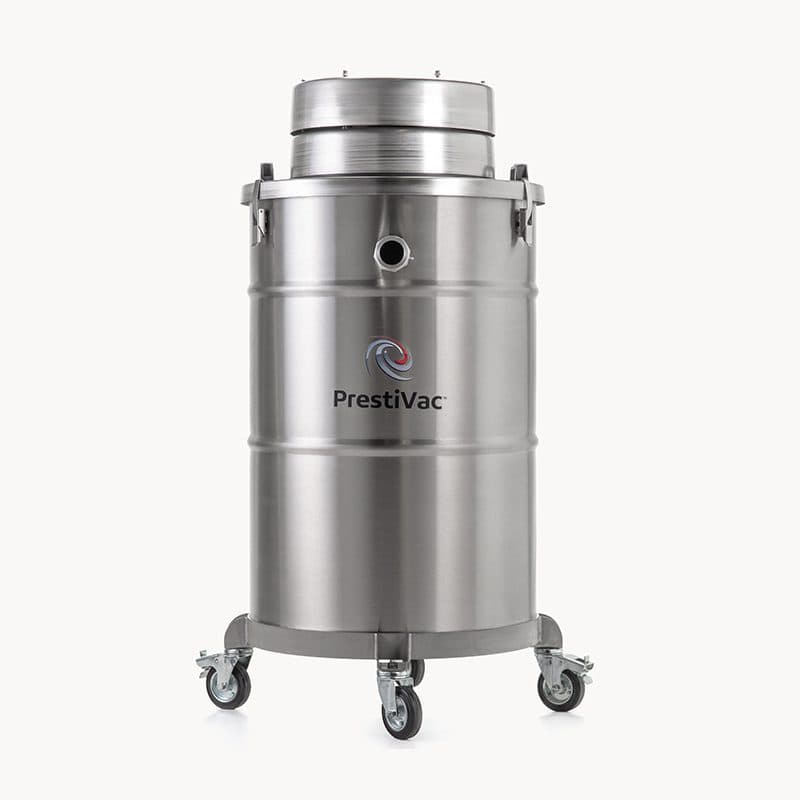
Explosion Proof Vacuums
Grounded, bonded recovery for combustible dust
Learn more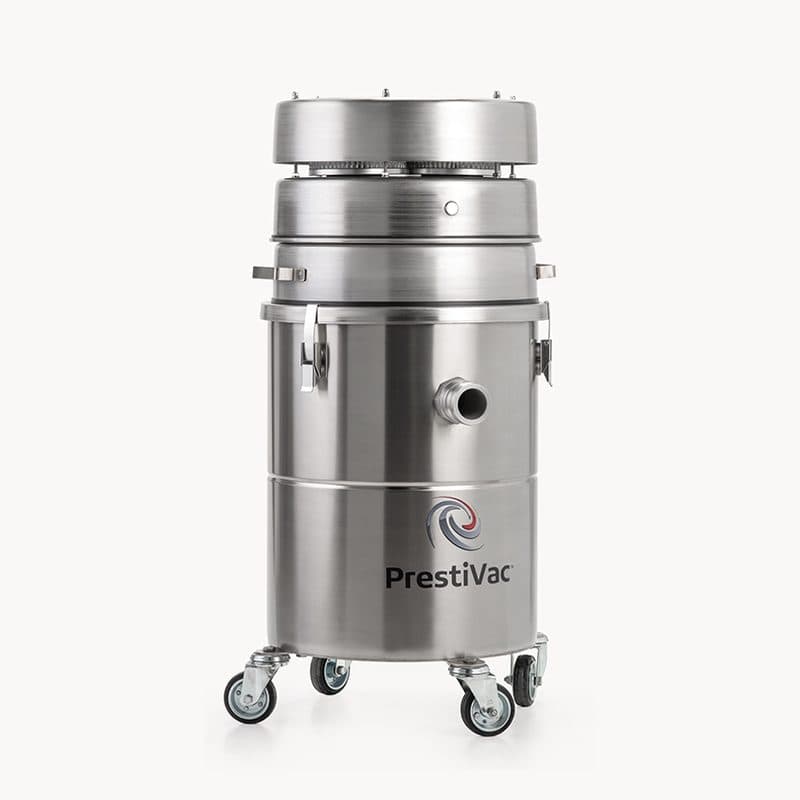
Central Vacuum Systems
Facility-wide housekeeping from fixed drops
Learn more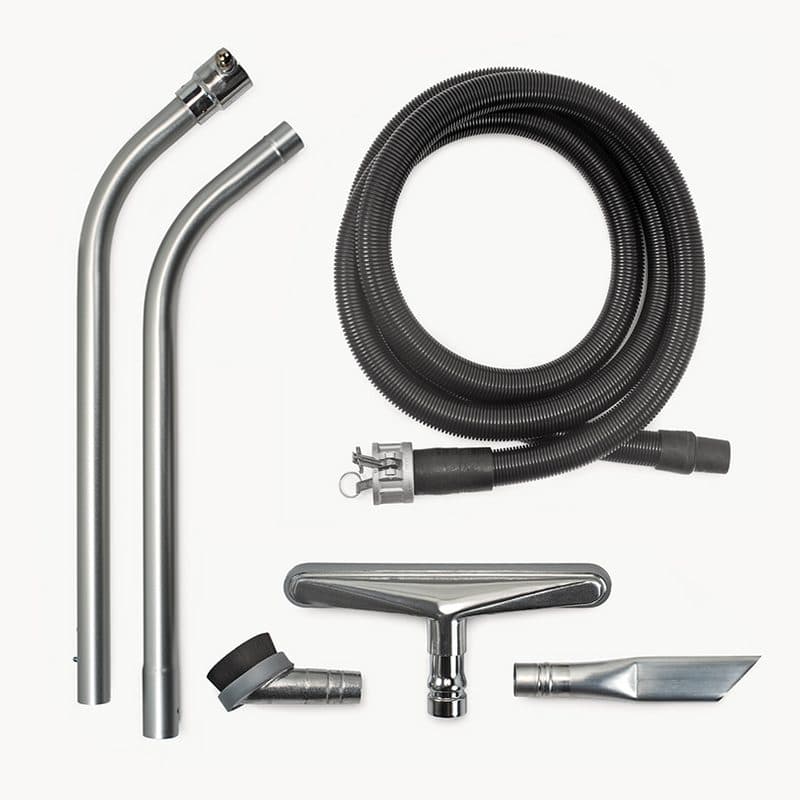
Accessories
Grounded hoses, tools and filters
Learn more
Representative case study
Controlling Electrode Dust in an EV Battery Cell
How a representative North American cell manufacturer manages graphite and electrode dust across mixing rooms, slitting lines and dry-room assembly — where the dust is combustible, conductive and exposure-limited all at once.
Read the full case studyTalk to the manufacturer
Get the right explosion proof vacuum for your application.
Tell us what you need to vacuum and where. Our technical team will recommend the PrestiVac model best suited to your material, your classification and how hard you will work it — and because we build every unit ourselves, we can modify it to fit.
- Legally certified explosion proof
- Solid stainless steel construction
- Industry-best 3-year warranty
- Designed & manufactured in the USA
- 200+ vacuum versions