
Vacuum solutions engineered for woodworking & furniture manufacturing
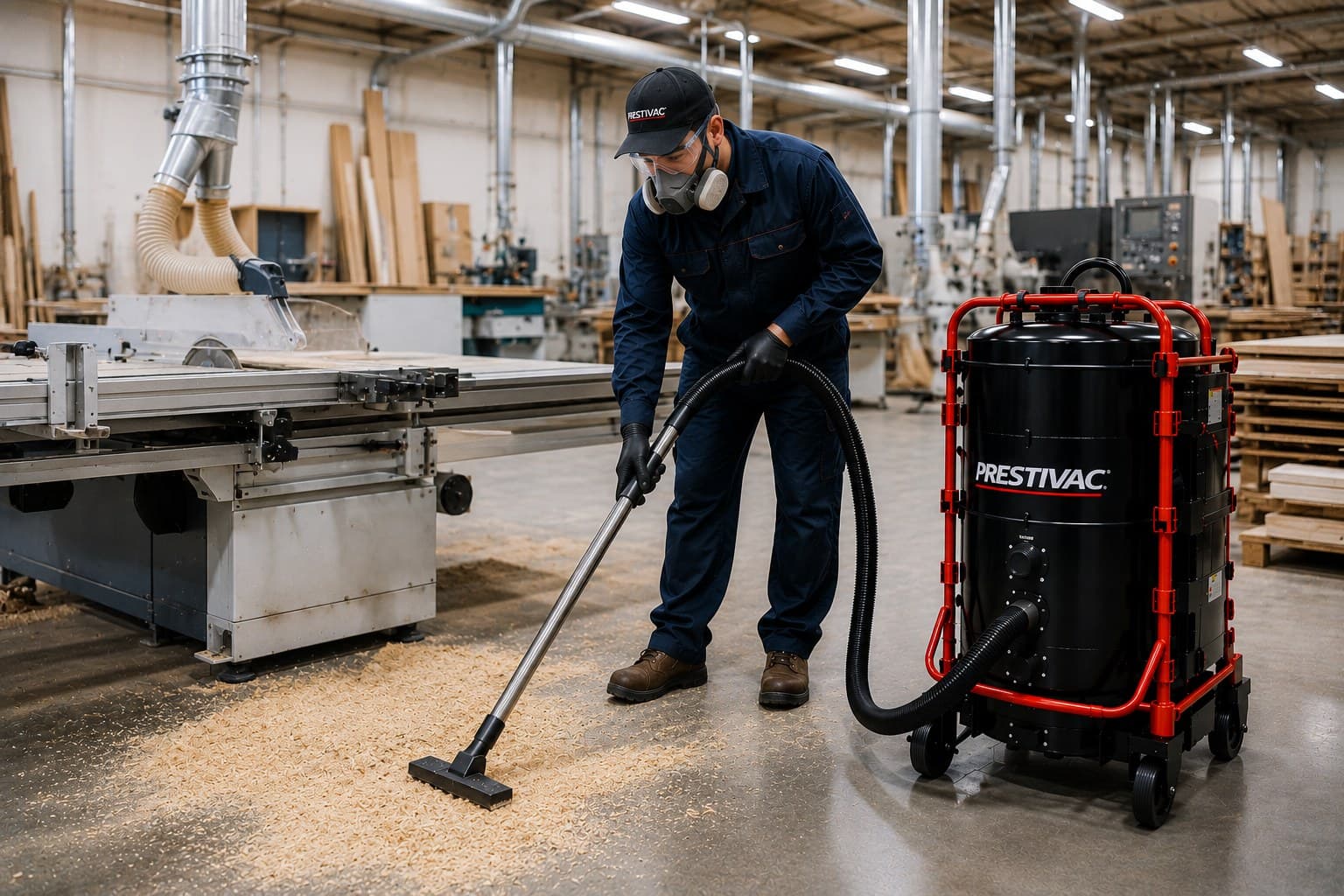
Wood dust carries two hazards in one material: it's a classic combustible dust with its own legacy standard, and it's a classified human carcinogen. The extraction system captures most of what each machine makes — the housekeeping program exists for the fraction that escapes and settles.
Explosion-Safe Design
Engineered to NFPA 664 / 660 practice
HEPA Filtration
Carcinogen retained, not redistributed
Static Control
Grounded & bonded recovery
Built for Wood Shops
Sanding fines to shavings
Explosion-Proof
Manufacturing specialists
1000+
Vacuums sold worldwide
USA
Designed & manufactured
Direct
Buy from the manufacturer
NFPA 660
ATEX / IECEx principles
Woodworking production process explorer
Every stage. Every challenge. The right vacuum solution.
Every cutting, shaping and smoothing operation makes its own dust fraction — the finer the process, the finer and more dispersible the dust. The stages below trace where the fuel is generated and where it settles.
Stage 01 — Lumber receiving & storage
Handling and cutting to length generate the coarse fraction — racks and floor zones join the scheduled rotation early.
Key challenges
One dust, two hazards, one program
A classic combustible dust
Wood dust shaped NFPA 664 — now consolidated into NFPA 660 — and deflagration-capable fines come off every sanding and machining head.
A classified carcinogen
Wood dust is an IARC Group 1 exposure — HEPA retention and sealed disposal are health controls as much as fire controls.
The fugitive fraction
Extraction captures most of what's made at the machine; the fraction that escapes settles on structure and becomes the accumulation the DHA measures.
Sanding makes the worst of it
The finest, most dispersible dust on site comes off sanders — highest ignition sensitivity and highest exposure in the same stream.
Housekeeping method matters
Compressed air and dry sweeping re-suspend settled fines into exactly the clouds the program exists to prevent — vacuum recovery is the compliant method.
Elevated surfaces
Beams, ducts, fixtures and joist bays accumulate out of sight — the classic secondary-explosion fuel that scheduled structure cleaning removes.
Dust & materials knowledge center
Understand the wood dusts. Match the recovery.
Combustibility and severity are material- and particle-size-specific — testing and your Dust Hazard Analysis govern. Full directory: wood dusts.
Applications in woodworking
- Furniture manufacturing
- Cabinet making
- Sawmills
- Wood sanding
- CNC woodworking
- MDF machining
- Veneer production
- Lamination
- Flooring production
- View all
Built for performance. Built for compliance.
View all products →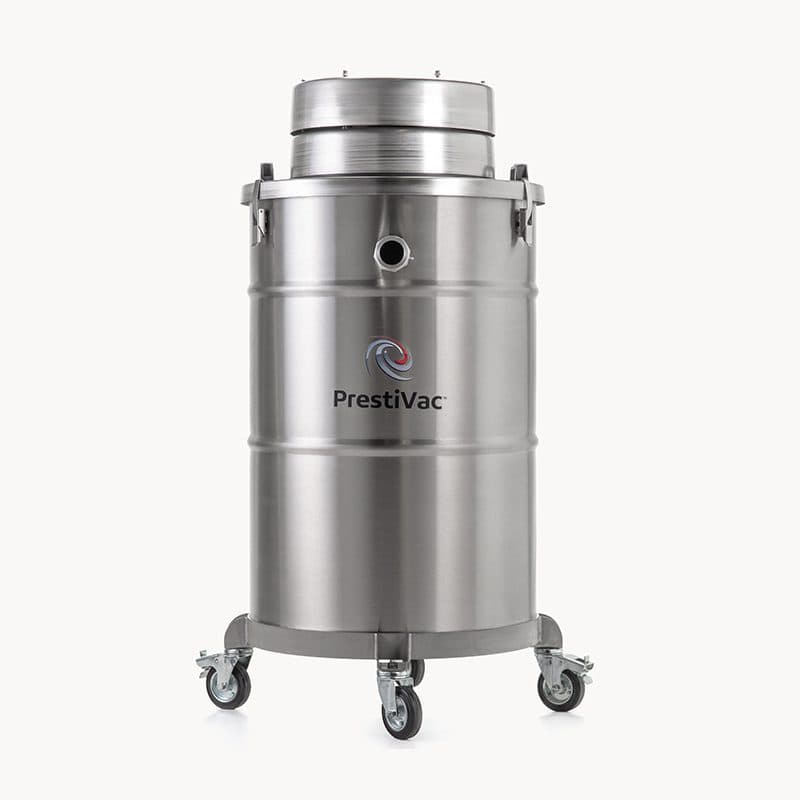
Explosion Proof Vacuums
Grounded, bonded recovery for combustible dust
Learn more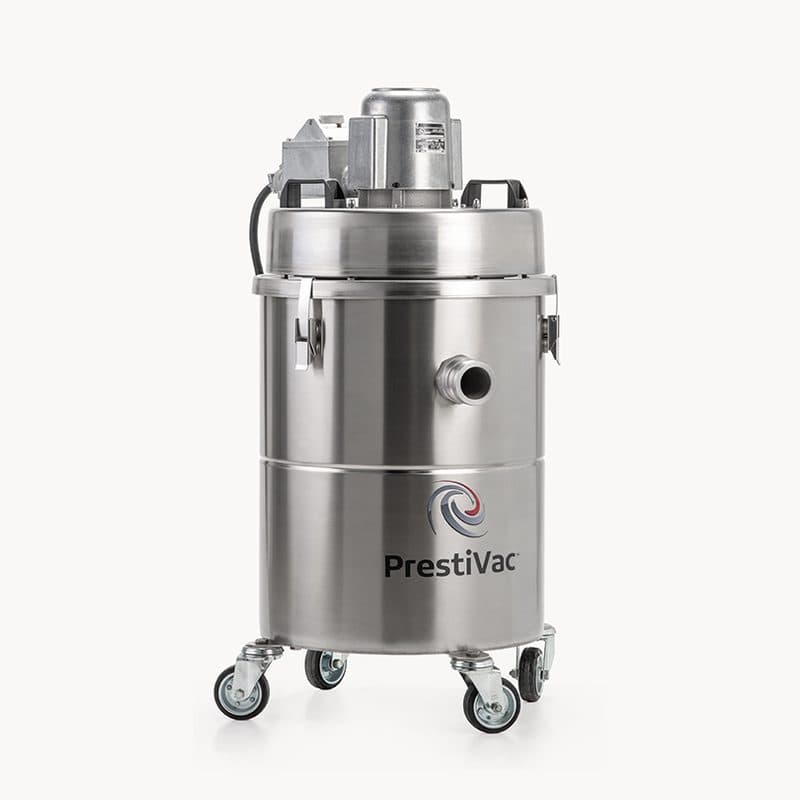
HEPA Vacuums
99.99% filtration for fine and hazardous dust
Learn more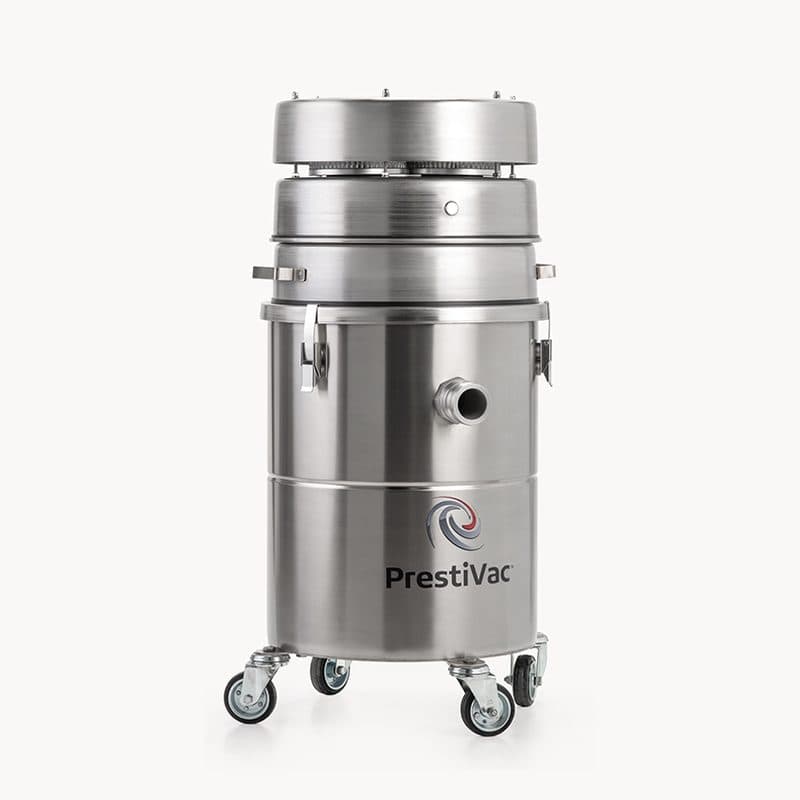
Central Vacuum Systems
Facility-wide housekeeping from fixed drops
Learn more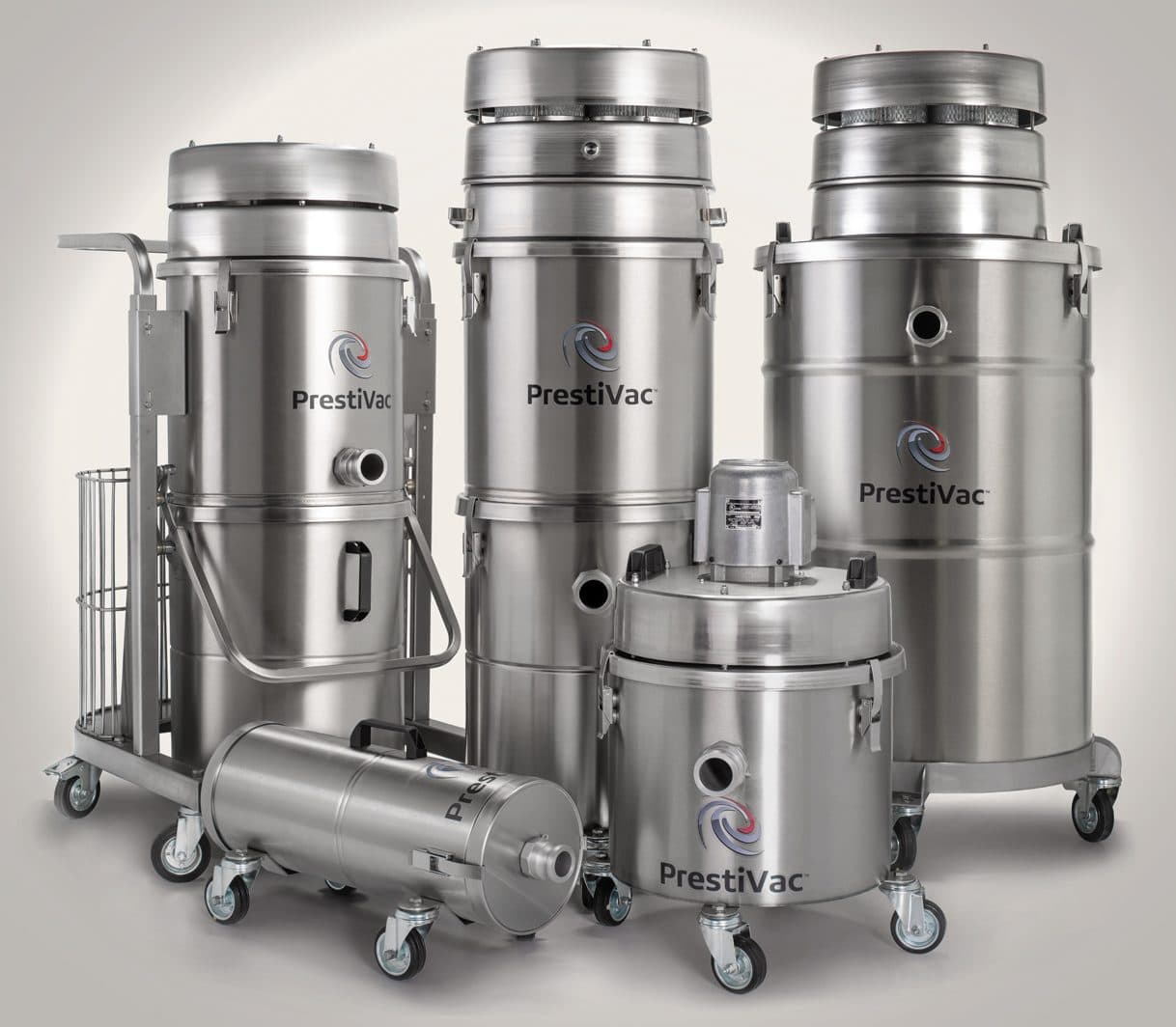
Industrial Vacuums
Continuous-duty recovery for demanding plants
Learn more
Representative case study
Managing Wood Dust in a Furniture Manufacturing
How a representative national furniture manufacturer closed the gap its dust collection system was never designed to cover — the fugitive fine fraction on structure, equipment and overhead steel.
Read the full case studyTalk to the manufacturer
Get the right explosion proof vacuum for your application.
Tell us what you need to vacuum and where. Our technical team will recommend the PrestiVac model best suited to your material, your classification and how hard you will work it — and because we build every unit ourselves, we can modify it to fit.
- Legally certified explosion proof
- Solid stainless steel construction
- Industry-best 3-year warranty
- Designed & manufactured in the USA
- 200+ vacuum versions