Executive Summary
A representative high-volume commercial bakery — the kind a national baked-goods producer operates around the clock — receives flour by bulk truck into silos, conveys it to mixers, and runs dusting flour across make-up lines. Fine flour escaped at every transfer: silo vents, sifter discharge, mixer charging, and the dusting applicators themselves, settling on beams, cable trays, motor housings and mezzanine floors.
Housekeeping ran on brooms and, above floor level, on compressed-air blowdown at sanitation intervals — resuspending the finest fraction into exactly the airborne cloud that makes flour dangerous, and redepositing it on freshly cleaned surfaces. The facility's Dust Hazard Analysis flagged the elevated accumulations, the blowdown practice and the unrated shop vacuums in service near flour-handling equipment.
The engineered response: explosion-proof HEPA vacuums stationed at the mixing mezzanine and silo/sifter area, wet/dry industrial units for the wash-down-adjacent production floor, static-dissipative hoses and grounded stainless tools throughout, and a zoned cleaning schedule tied to the DHA — elevated surfaces on a defined frequency instead of a sanitation-day scramble.
Project Overview
- Facility type
- High-volume commercial bakery, 24/5 operation
- Processes
- Bulk flour receiving, silo storage, sifting, conveying, mixing, make-up, baking, packaging
- Environment
- Food production plant with sanitation regime
- Dust generation points
- Silo vents, sifter discharge, mixer charging, dusting-flour applicators
- Housekeeping challenge
- Fine flour on elevated structure and equipment between sanitation cycles
- Potential ignition sources
- Unrated vacuum motors, static from insulating hoses, electrical equipment, hot surfaces near ovens
Industry Background
Flour has been exploding in mills and bakeries since the nineteenth century — flour-mill disasters are among the oldest documented dust explosions on record. The mechanism hasn't changed: flour is a fine, dry organic powder, and suspended in air at sufficient concentration it deflagrates. Every bulk transfer in a modern bakery — truck to silo, silo to sifter, sifter to mixer — liberates a fine airborne fraction that eventually settles somewhere.
The event that reshaped enforcement in this industry family was the 2008 catastrophic sugar refinery explosion in the southeastern United States, after which OSHA reissued its Combustible Dust National Emphasis Program. Food and agricultural processors have their own commodity standard, NFPA 61, whose requirements — including the housekeeping ones — now carry into the consolidated NFPA 660.
Bakeries add a practical twist: sanitation. Food-safety cleaning is frequent and wet in many zones, which tempts facilities to treat dust as covered by the sanitation regime. It isn't — the combustible-dust hazard lives precisely in the places sanitation reaches last: overhead structure, equipment tops, motor housings, cable trays. Those surfaces need their own method and their own schedule.
The Challenge
- Safety
- Fine flour on beams, trays and equipment tops built the classic fuel layer for a secondary explosion — the mechanism behind the industry's worst events.
- Operations
- Sweeping and blowdown were recursive: resuspended flour resettled, so the same surfaces were cleaned repeatedly per sanitation cycle.
- Compliance
- The DHA flagged elevated accumulation, prohibited cleaning methods and unrated equipment — direct exposure under the OSHA Combustible Dust NEP.
- Maintenance
- Flour ingress shortened motor and bearing life around the mixing area; blowdown drove fines deeper into equipment.
- Employee exposure
- Flour dust is a recognized respiratory sensitizer; blowdown put it airborne at breathing height during every cleaning pass.
- Production interruptions
- Deep cleaning of elevated areas required line stoppage and lift equipment, so it was deferred — which deepened the accumulation problem.
Hazard Analysis
Flour satisfies the explosion pentagon with everyday ingredients. Fuel: the fine fraction escaping every transfer. Oxygen: ambient. Dispersion: blowdown, sweeping, or the mechanical vibration of conveyors and sifters. Confinement: silos, ducting, equipment enclosures and the building volume. Ignition: unrated electrics, static discharge, and hot surfaces near the ovens. Housekeeping controls the fuel term; engineered recovery removes ignition from the cleanup itself.
The secondary-explosion mechanism drives everything about elevated surfaces. A small initiating event — inside a sifter, a duct, a motor housing — lofts the settled layers from beams and trays into a room-scale cloud, and the second event dwarfs the first. Published OSHA and NFPA guidance treats layers as thin as 1/32 of an inch over a modest fraction of a room as a credible hazard; a bakery's overhead steel can reach that between deep cleans.
Static electricity is the quiet ignition source in flour handling. Fine organic powder moving fast through an insulating hose generates charge exactly where dust concentration is highest — inside the recovery path. The control is continuity: conductive hose bonded through wand, canister and chassis, verified to ground rather than assumed.
Food facilities carry one more design input: the recovery equipment works alongside a sanitation regime. Stainless construction, wash-down tolerance and wet/dry capability keep the combustible-dust program compatible with the food-safety one instead of competing with it.
| Pentagon element | Present as |
|---|---|
| Fuel | Fine flour and sugar dust from receiving, sifting, conveying and dusting |
| Oxygen | Ambient plant atmosphere |
| Dispersion | Compressed-air blowdown, sweeping, conveyor and sifter vibration |
| Confinement | Silos, ducting, equipment enclosures, building volume |
| Ignition | Unrated vacuum motors, static discharge, hot surfaces near ovens |
Site Assessment Findings
- Measurable flour layers on overhead steel, cable trays and motor housings above the mixing area
- Compressed-air blowdown in routine use for elevated and hard-to-reach surfaces
- Consumer-grade shop vacuums — sparking motors, plastic hoses, no grounding — near flour-handling equipment
- Dusting-flour overspray accumulating under make-up lines faster than the sanitation cycle addressed it
- Collected dust and sweepings handled in open containers
- Elevated-surface cleaning undocumented and effectively deferred to annual shutdowns
Recommended Solution
The specification split the plant by zone. For the flour-handling core — silo and sifter area, mixing mezzanine — explosion-proof HEPA vacuums in stainless construction: ignition engineered out of the recovery path, and a tested 99.99% final stage so captured fines stay captured instead of re-entering plant air.
For the production floor, where sanitation is wet and spills are mixed, wet/dry industrial units handle flour, wash-down water and the occasional sugar-syrup mess with the same grounded tool set — one method for operators regardless of what's on the floor.
Around the equipment, a zoned schedule keyed to the DHA: elevated surfaces on a defined frequency with vacuum-only methods, blowdown formally retired, extension wand kits so overhead steel is reachable without lifts for routine passes, and sealed handling of collected material.
Equipment Used
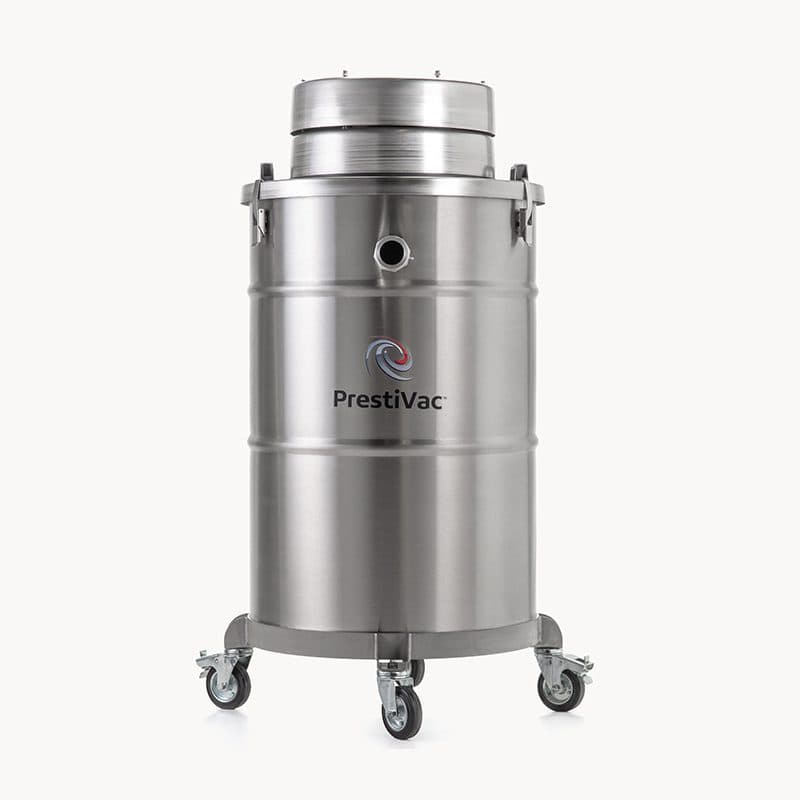
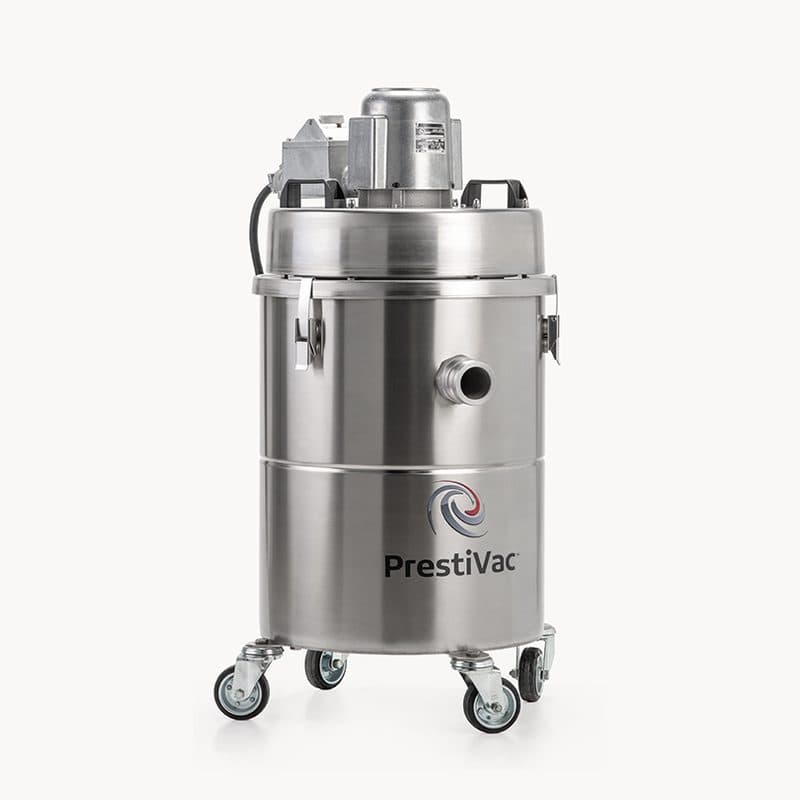
Explosion-proof HEPA vacuums, stainless construction (EVX series, e.g. EVX-15 EX)
Flour-handling core: silo, sifter and mixing mezzanine recovery
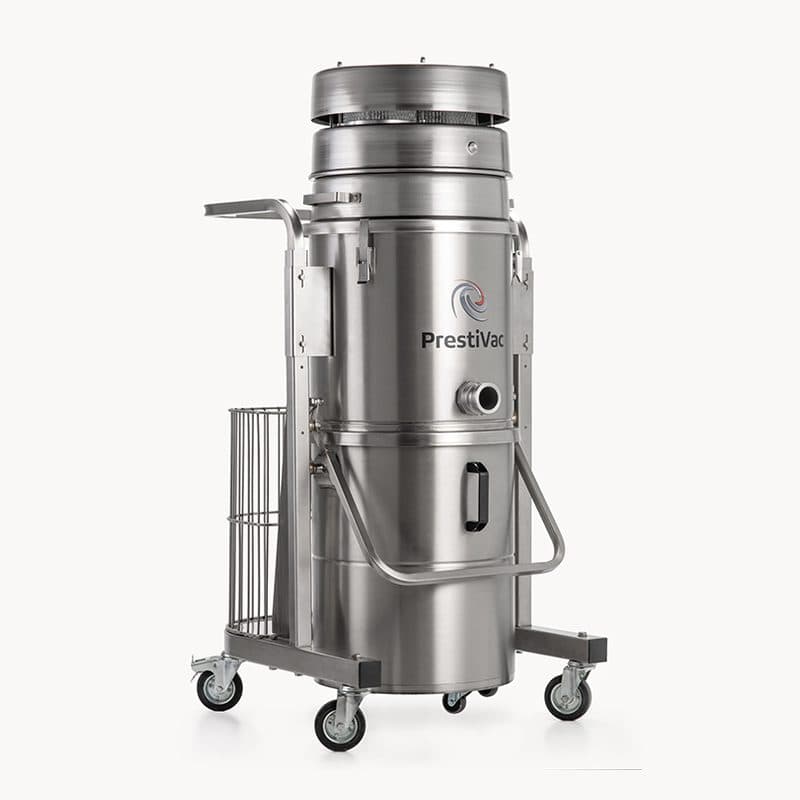
Wet/dry industrial vacuums (AV series, e.g. AV1)
Production-floor housekeeping alongside the sanitation regime
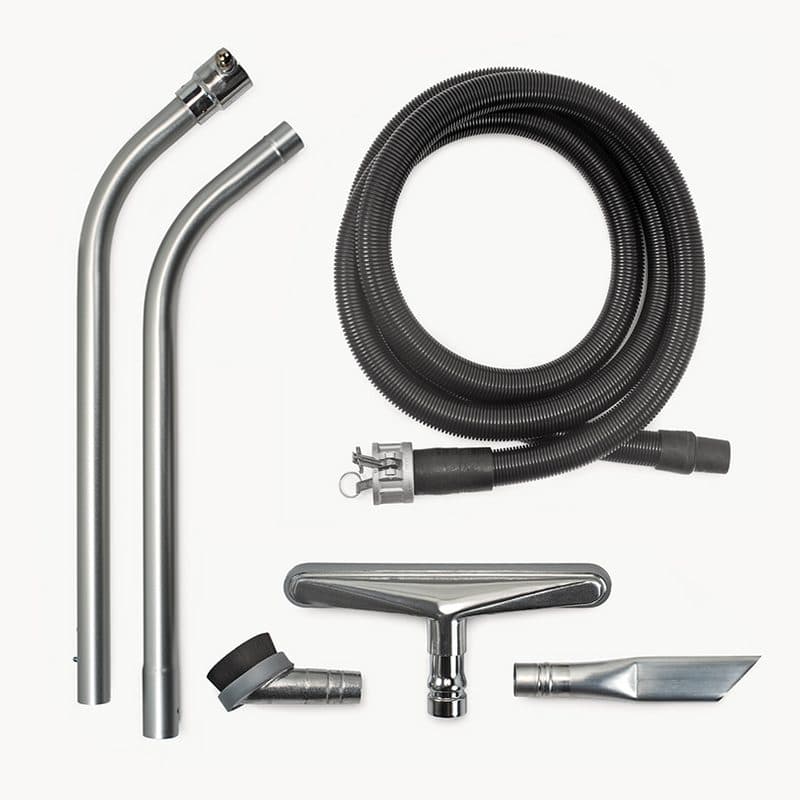
Static-dissipative hose assemblies
Continuous conductive path from pickup point to canister
Grounded stainless wands, floor tools and crevice nozzles
Non-sparking, sanitation-compatible contact at the pickup point
Extension wand kits for elevated surfaces
Routine overhead passes without lift equipment
Tested HEPA final-stage filtration (99.99% at 0.3 µm)
No fine-flour re-entrainment into plant air
Bonding and grounding kits
Verified chassis-to-ground connection at every station
Sealed collection containers
Contained transfer of collected flour dust to disposal
Installation & Implementation
- 1
Assessment
Walk-down of transfer points and elevated accumulation; method audit against the DHA and the sanitation master schedule.
- 2
Planning
Zone map with equipment assignments, elevated-surface frequencies and routes to disposal — meshed with sanitation windows.
- 3
Training
Operator sessions on why blowdown is retired, grounding checks, wet/dry changeover and sealed disposal.
- 4
Commissioning
Grounding continuity per station; suction and filtration verification against specification.
- 5
Operator education
Zone method cards at point of use; elevated-surface checklist per frequency.
- 6
Maintenance program
Condition-based filter service and periodic grounding re-verification folded into PM and sanitation records.
Before vs After
| Aspect | Before | After |
|---|---|---|
| Cleaning method | Brooms at floor level, blowdown overhead | Grounded vacuum recovery, floor to overhead steel |
| Recovery equipment | Unrated consumer shop vacuums | Explosion-proof HEPA units + wet/dry industrial vacuums |
| Ignition sources in recovery path | Sparking motors, static-generating hoses | Engineered out; bonded conductive path throughout |
| Captured fines | Resuspended and redeposited | Retained at HEPA 99.99% |
| Elevated surfaces | Deferred to annual shutdowns | Defined frequency with extension-wand routine |
| Collected material | Open sweepings containers | Sealed containers to disposal |
Compliance Improvements
The engineered program supports compliance with the housekeeping requirements NFPA 61 established for agricultural and food processing facilities — vacuum-based methods, control of ignition sources in the recovery path, defined frequencies for elevated surfaces — as those requirements carry into the consolidated NFPA 660.
It supports the expectations enforced under OSHA's Combustible Dust National Emphasis Program, the enforcement regime reissued after the 2008 sugar refinery disaster: documented schedules, appropriate equipment, and the retirement of practices that suspend dust clouds.
Stainless, wash-down-tolerant construction keeps the combustible-dust program compatible with the plant's food-safety regime. Component certifications and listings vary by model and configuration; documentation is supplied per application, and the program is described throughout as supporting compliance rather than conferring it.
Operational Improvements
- Cleaning became single-pass: vacuum capture at the source ends the resuspend-and-resettle cycle that made sweeping and blowdown recursive across every sanitation window.
- Elevated surfaces moved from an annual-shutdown project to a routine — extension-wand passes on a defined frequency keep overhead steel inside its accumulation target without lifts or line stoppage.
- Equipment around the mixing area benefits by mechanism: less airborne flour means less ingress into motors and bearings, and retiring blowdown stops driving fines deeper into housings.
- Operator exposure during cleaning drops by design — capture at the nozzle with HEPA-retained exhaust replaces the methods that put a known respiratory sensitizer at breathing height. (Improvements are stated by mechanism; this representative scenario publishes no fabricated percentages.)
Technical Explanation
Why HEPA matters for flour specifically: the hazardous and the sensitizing fraction is the same fine fraction a coarse filter passes. A tested 99.99% at 0.3 µm final stage is what makes the vacuum an exposure control and a fuel-removal tool at once — anything less is redistribution.
Why wet/dry units carry the production floor: bakery floors alternate between dry flour, wash-down water and sugary spills within a shift. A unit engineered for both states keeps one method and one grounded tool set in operators' hands instead of a decision tree.
Why the grounding path is continuous and verified: flour moving through an insulating hose is a textbook charge generator. Conductive hose bonded through wand, canister and chassis — checked at commissioning and on a PM cycle — keeps charge at ground potential instead of storing it where dust concentration peaks.
Why elevated-surface frequency is the heart of the schedule: the secondary-explosion fuel lives overhead. Defined passes with extension wands attack the mechanism directly — the 1/32 inch guidance is a trigger the program is designed never to reach.
Frequently Asked Questions
Is flour dust really explosive?
Yes — flour-mill explosions are among the oldest documented dust explosions, dating to the nineteenth century. Fine flour suspended in air at sufficient concentration deflagrates; settled flour is the fuel for secondary events.
Doesn't our sanitation program already cover this?
Sanitation and combustible-dust housekeeping overlap but don't coincide. The dust hazard concentrates where sanitation reaches last — overhead structure, equipment tops, motor housings — and those surfaces need their own method and defined frequency.
Why is compressed-air blowdown a problem?
Blowdown converts settled layers into exactly the airborne cloud that makes flour dangerous, then redeposits the fines elsewhere. Combustible-dust standards heavily restrict it; vacuum recovery is the accepted alternative.
What standard applies to a bakery?
NFPA 61 is the agricultural and food processing commodity standard, now carried into the consolidated NFPA 660, with NFPA 652's Dust Hazard Analysis obligation as the baseline. OSHA enforces housekeeping under its Combustible Dust National Emphasis Program.
Can one vacuum handle flour dust and wash-down water?
Wet/dry industrial units are configured for exactly that alternation and suit the production floor. The dry flour-handling core — silo, sifter, mixing mezzanine — is where explosion-proof HEPA units earn their place.
How do we clean overhead steel without lifts every time?
Extension wand kits make routine elevated passes a floor-level task on a defined frequency; lift-assisted deep cleans become periodic verification rather than the only line of defense.
Is flour dust a health issue as well as an explosion issue?
Yes — flour dust is a recognized respiratory sensitizer, which is a second reason capture-at-source with HEPA-retained exhaust beats methods that put dust airborne at breathing height.
How is collected flour dust disposed of?
Sealed, per the site's waste procedures — collected fines and spent filters travel in closed containers so the last step doesn't undo the program.
Key Takeaways
- Flour is a classic combustible dust — the hazard is as old as milling, and the fine fraction from every transfer is the fuel.
- Sanitation is not a combustible-dust program: the hazard lives on the elevated surfaces sanitation reaches last.
- Retire blowdown first — it manufactures the dispersed cloud the standards exist to prevent.
- Zone the equipment: explosion-proof HEPA units for the flour-handling core, wet/dry industrial units where sanitation runs wet.
- Elevated-surface frequency with extension wands attacks the secondary-explosion mechanism directly.
- Grounding is verified, not assumed — fine organic powder generates static like metal fines do.
Classification
- Industry
- Food Processing
- Application
- Bulk Flour Handling & Mixing
- Hazard
- Combustible Organic Dust
- Material
- Flour
- Process
- Bulk Handling & Mixing
- Dust Class
- Combustible Organic Dust
- Facility Type
- High-Volume Commercial Bakery
- Relevant Standards
- NFPA 660, NFPA 61, NFPA 652, OSHA NEP
- Products Featured
- EVX Series explosion-proof HEPA vacuums, AV Series wet/dry industrial vacuums, Extension wand kits, Static-dissipative hose & tool kits
- Target Personas
- Plant Manager, EHS Manager, Sanitation Manager, Maintenance Manager