Executive Summary
A representative automotive components plant — the kind a major North American vehicle producer relies on for lightweight castings — die-casts and finish-machines magnesium housings, brackets and structural parts. Magnesium buys the vehicle weight; it charges for it in handling discipline: it is among the most ignitable of the common structural metals, with documented chip-fire risk even during machining, and Class D fire behavior that removes water and CO2 from the response toolkit.
The facility's dust and swarf handling had grown by habit rather than specification: dry sweeping around finishing cells, an unrated shop vacuum in the deburr area, and — the finding that most alarmed the Dust Hazard Analysis — wet magnesium swarf accumulating in closed drums, where water contact evolves hydrogen with nowhere to go. The plant had unknowingly been storing two hazards: an ignitable dry fraction on its surfaces, and a pressurizing flammable gas in its containers.
The engineered response held magnesium's two contradictory demands at once. Ignition control: air-operated explosion-proof vacuums with wetted collection, grounded and bonded end to end, magnesium-dedicated so fines never meet iron oxides. Hydrogen management: everything wet is vented — separators, transfer containers, sludge handling — with prompt, scheduled disposition so no wet accumulation ever stands. Dry sweeping and closed-drum storage were both retired the same week.
Project Overview
- Facility type
- Automotive magnesium die casting & machining plant
- Processes
- Die casting, trimming, CNC finish machining, deburring, surface finishing
- Environment
- Multi-cell production; wet and dry machining mixed by part
- Dust generation points
- Deburr and finishing cells, trim presses, machining enclosures, swarf handling
- Housekeeping challenge
- Ignition-sensitive fines plus hydrogen-evolving wet swarf
- Potential ignition sources
- Unrated vacuum motors, static discharge, sparking tools, hot chips from dry machining
Industry Background
Magnesium earned its place in vehicles the honest way: it is the lightest structural metal, and every kilogram removed from a housing or bracket compounds through the vehicle. Die casting produces the near-net shape; trimming, machining and deburring finish it — and every one of those finishing steps liberates magnesium particulate, from hot chips at the cutter to fine dust at the deburr wheel.
Magnesium's hazard profile is the sharpest in the structural-metals family. Its fine fractions ignite with very little energy, and unlike aluminum — where the chips are largely an operations problem — magnesium's ignitability reaches into coarser material: chip fires during dry machining are a documented industry hazard, which is why coolant strategy and fire response planning are part of magnesium machining practice, not afterthoughts. Burning magnesium is a Class D metal fire that reacts with water and can sustain combustion even in carbon dioxide.
Collection carries the metal's signature complication. Wetting is how ignition is controlled — wet-type collection is the established NFPA 484 practice for magnesium fines — but wet magnesium evolves hydrogen. The standard's answer is not to choose between the hazards but to manage the sequence: wet the fines on entry so no dry, ignitable accumulation forms, then vent everything downstream and handle the sludge promptly, because the one absolute rule of wet magnesium is that it is never sealed airtight.
The Challenge
- Safety
- Ignition-sensitive fines on finishing-cell surfaces, plus wet swarf evolving hydrogen inside closed drums — two live hazards created by the handling methods themselves.
- Operations
- Dry sweeping around cells was recursive and slow; swarf and sludge handling had no defined schedule, so material stood between shifts.
- Compliance
- The DHA flagged unrated equipment, dry-sweeping methods and unvented wet storage — findings squarely inside NFPA 484/660's magnesium provisions and the OSHA Combustible Dust NEP.
- Maintenance
- Fines migrating into machine ways and electrical enclosures shortened equipment life; hot-chip events during dry machining threatened the cells themselves.
- Employee exposure
- Fine metal dust at cleaning time, lofted by sweeping exactly at operator height.
- Production interruptions
- Any magnesium fire event means evacuation-scale response — the cost of prevention is trivial beside the cost of the alternative.
Hazard Analysis
Magnesium assembles the explosion pentagon with less energy required at the ignition corner than any other metal in this library. Fuel: fine magnesium from deburring, finishing and dry machining. Oxygen: ambient. Dispersion: sweeping, blowdown and the turbulence of swarf handling. Confinement: machining enclosures, ducting and the building volume. Ignition: static discharge, unrated equipment, sparking tools — and magnesium's own hot chips, generated by the process itself when dry machining runs lean on coolant.
The Class D fire behavior reframes the entire response side. Water reacts with burning magnesium; CO2 can sustain rather than smother it; only Class D agents apply, and even those are a last resort. When the extinguisher is this constrained, prevention stops being a preference and becomes the whole program: no dry accumulation anywhere, no ignition source in the recovery path, and collected material converted to a managed state immediately.
The hydrogen ledger is magnesium's unique entry. Wet fines and swarf evolve hydrogen through slow reaction with water — harmless when vented and handled promptly, and genuinely dangerous when sealed into a closed drum where pressure and flammable gas accumulate together. That converts container specification and disposition scheduling from logistics details into safety controls.
The thermite consideration completes the picture: magnesium fines mixed with iron oxides — mill scale, rust from steel handling — form thermite-sensitive combinations. Dedicated, labeled magnesium-only recovery equipment removes that pathway by rule, exactly as alloy dedication does in additive manufacturing.
| Pentagon element | Present as |
|---|---|
| Fuel | Fine magnesium from deburring, finishing and dry machining — plus reactive wet swarf |
| Oxygen | Ambient plant atmosphere |
| Dispersion | Dry sweeping, blowdown, swarf transfer turbulence |
| Confinement | Machining enclosures, ducting, building volume — and unvented drums |
| Ignition | Static discharge, unrated equipment, sparking tools, hot chips |
Site Assessment Findings
- Fine magnesium accumulation on and around deburr and finishing cells
- Dry sweeping in routine use; an unrated shop vacuum serving the deburr area
- Wet magnesium swarf stored in closed, unvented drums — hydrogen evolving with nowhere to go
- No dedicated equipment separation between magnesium and steel-part cells
- Collected fines handled dry and open during transfers
- No defined disposition schedule — wet material standing between shifts
Recommended Solution
The specification centered on air-operated explosion-proof vacuums with wetted collection, dedicated to the magnesium cells: no electrical components anywhere on the unit, fines wetted the moment they enter so no dry, ignitable accumulation ever exists inside the vessel — and the entire wet side vented by design, because with magnesium the wetting that solves ignition creates the hydrogen that venting solves.
Around the units: static-dissipative hoses bonded through grounded stainless tools, verified at commissioning and on a PM cycle; magnesium-only labeling so the equipment never crosses into steel-handling areas where iron oxides wait; and vented transfer containers replacing the closed drums, with a prompt-disposition schedule so wet material moves through the system instead of standing in it.
The program rules made it stick: dry sweeping and blowdown retired plant-wide in the magnesium areas; swarf and sludge handling put on defined frequencies with vented containers as the only permitted vessels; and coolant-strategy coordination with the machining cells, since the same discipline that prevents hot-chip fires at the cutter feeds cleaner, safer material to the recovery side.
Equipment Used
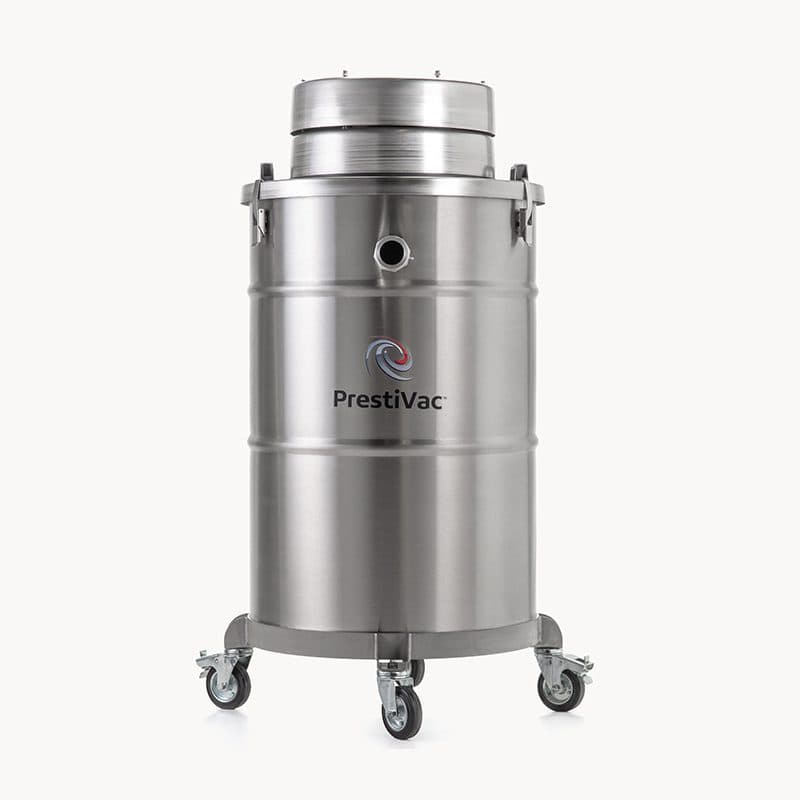
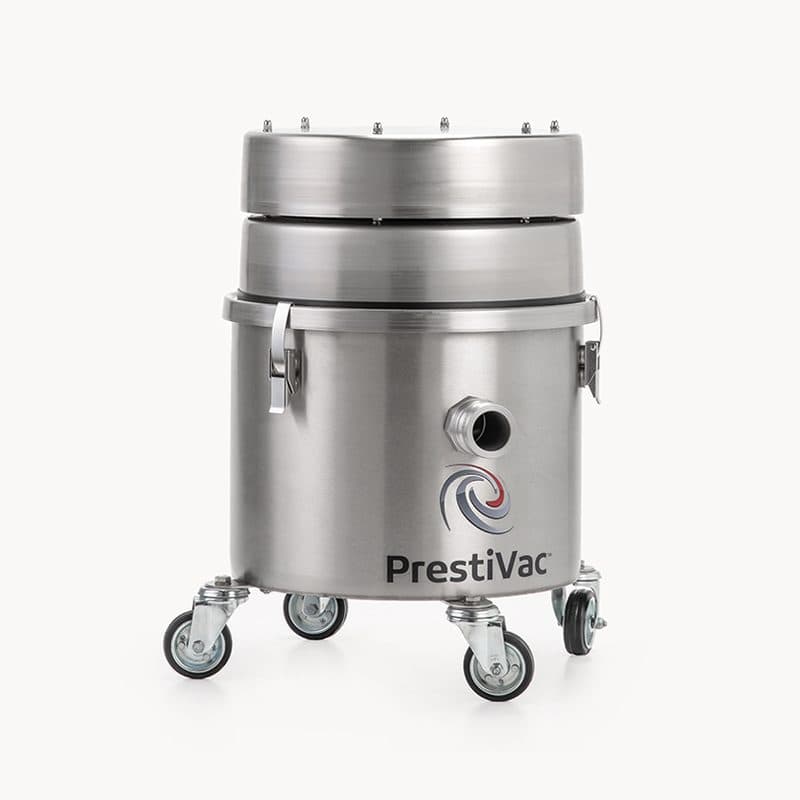
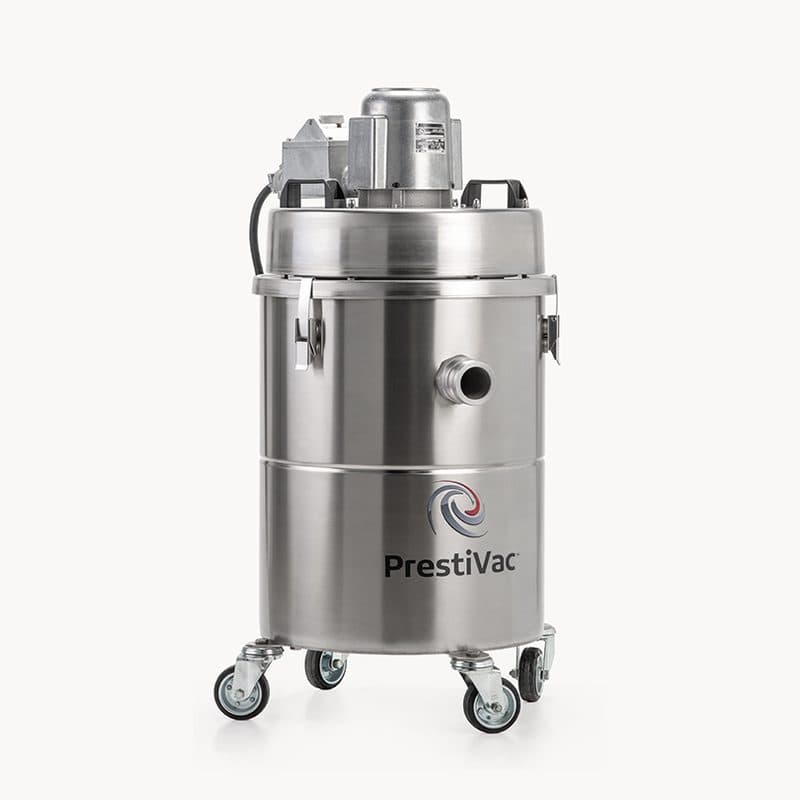
Air-operated explosion-proof vacuums with vented wet collection (AVX series, e.g. AVX-55 EX)
Fines wetted on entry; hydrogen vented, never trapped; zero electrical components
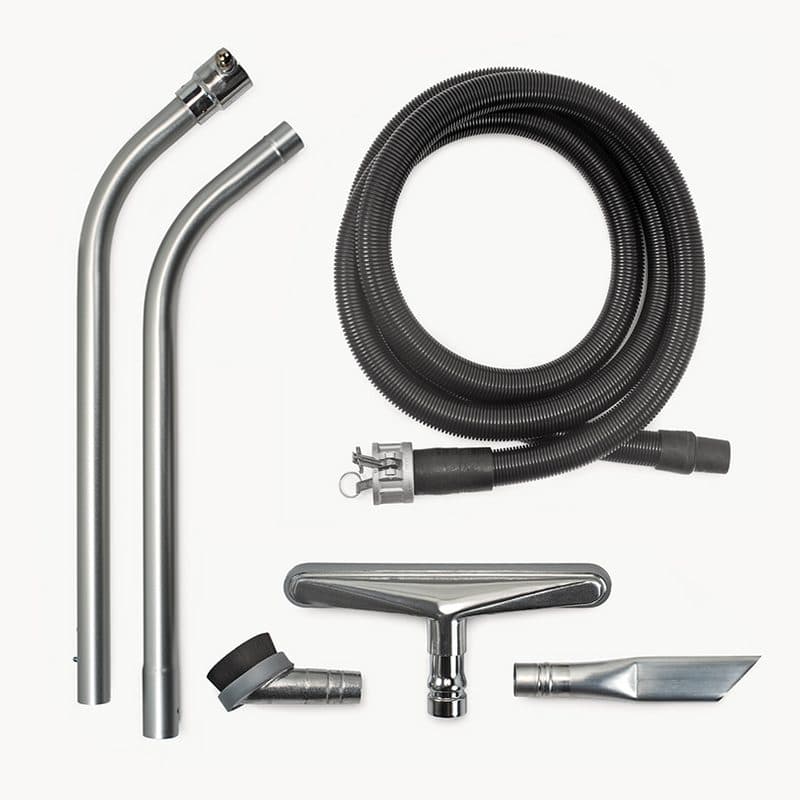
Static-dissipative hose assemblies
Continuous conductive path from pickup point to canister
Grounded stainless wands and detail nozzles
Non-sparking contact at deburr and finishing cells
Vented transfer and sludge containers
Wet magnesium moves and stores vented — never airtight
Magnesium-dedicated equipment labeling
No crossover into steel areas; the thermite pathway closed by rule
Bonding and grounding kits with verification points
Charge control checked at commissioning and on PM
Class D extinguishing agents staged at cells
The last resort the program is designed never to need
Installation & Implementation
- 1
Assessment
Walk-down of casting, trim and finishing cells; swarf-stream audit from cutter to disposition; method review against NFPA 484's magnesium provisions.
- 2
Planning
Cell-by-cell equipment assignment; vented-container specification; disposition schedule for wet material.
- 3
Training
Operator sessions on the hydrogen rule, grounding checks, Class D response posture and dedicated-equipment discipline.
- 4
Commissioning
Grounding continuity per station; wet-collection and venting verification against specification.
- 5
Operator education
Cell method cards; the never-airtight rule posted at every container station.
- 6
Maintenance program
Sludge disposition, separator service and grounding re-verification folded into PM on defined frequencies.
Before vs After
| Aspect | Before | After |
|---|---|---|
| Fines recovery | Dry sweeping and an unrated shop vacuum | Air-operated EX vacuums with vented wet collection |
| Wet swarf storage | Closed, unvented drums evolving hydrogen | Vented containers on a prompt-disposition schedule |
| Ignition sources in recovery path | Sparking motor, static-generating hose | No electrical components; bonded conductive path throughout |
| Equipment separation | Shared cleaning gear across metal families | Magnesium-dedicated, labeled units |
| Collected material state | Dry fines standing; wet material sealed | Wetted on entry; vented and promptly dispositioned |
| Housekeeping basis | Habit-driven, undocumented | Cell schedules aligned to the DHA |
Compliance Improvements
The engineered program supports compliance with the magnesium-specific provisions carried from NFPA 484 into NFPA 660: vacuum-based methods with ignition control in the recovery path, wet collection with hydrogen venting, dedicated equipment, and the prohibition on practices that suspend fines — with NFPA 652's Dust Hazard Analysis obligation as the baseline.
It supports the housekeeping expectations enforced under OSHA's Combustible Dust National Emphasis Program: documented methods and frequencies, appropriate equipment, and the retirement of dry sweeping and blowdown.
Air-operated units align with the intent of NEC Class II requirements by removing electrical ignition sources entirely, and the architecture is consistent with ATEX and IECEx zone principles where those frameworks apply. Component certifications and listings vary by model and configuration; documentation is supplied per application, and the program is described throughout as supporting compliance rather than conferring it.
Operational Improvements
- The standing-hazard inventory went to zero by mechanism: fines are wetted on entry instead of accumulating dry, and wet material moves through vented containers on schedule instead of pressurizing in drums.
- Cleaning became single-pass at the cells — vacuum capture ends the sweep-and-resettle cycle, and the deburr area stopped feeding fines into machine ways and electrical enclosures.
- Fire-response posture simplified: with no dry accumulations, no unvented wet storage and no ignition sources in the recovery path, the staged Class D agents guard against a scenario the program actively prevents.
- Operator exposure during cleaning drops by design — capture at the nozzle replaces the sweeping that lofted fine metal dust at breathing height. (Improvements are stated by mechanism; this representative scenario publishes no fabricated percentages.)
Technical Explanation
Why magnesium's specification starts stricter: it is the metal where the usual simplification — chips are operations, fines are safety — breaks down. Ignitability reaches into coarser fractions, chip fires are a documented machining hazard, and fine-fraction ignition energy is very low. The recovery path is built to add nothing: air-operated drives, verified grounding, non-sparking contact.
Why wet collection despite the hydrogen: a dry magnesium accumulation inside a vessel is the scenario NFPA 484 exists to prevent, and wetting on entry eliminates it. The hydrogen consequence is real but designable-around — evolution is gradual, and vented containers with prompt disposition keep concentration trivial. The failure mode isn't wetting; it's wetting and then sealing.
Why the never-airtight rule is absolute: a closed drum of wet magnesium swarf accumulates flammable gas and pressure together, converting stored waste into a device. Vented containers make the rule physical; the disposition schedule makes it temporal — material moves before chemistry matters.
Why dedication mirrors additive manufacturing's alloy rule: magnesium fines plus iron oxides form thermite-sensitive mixtures, and shared cleaning equipment is exactly how the two meet. Labeled, magnesium-only units close the pathway by rule rather than vigilance — the same logic that keeps titanium and nickel apart in an AM powder room.
Frequently Asked Questions
Is magnesium dust really more dangerous than aluminum dust?
It is generally more ignition-sensitive — among the most ignitable structural metals, with documented chip-fire risk even during machining. Both are severe combustible metal dusts under NFPA 484/660; magnesium simply leaves less margin.
Why can't water or CO2 be used on a magnesium fire?
Burning magnesium reacts with water and can sustain combustion even in carbon dioxide — both can intensify a Class D metal fire. Only Class D agents apply, which is why the program's real answer is prevention: no dry accumulation, no ignition source, no standing wet storage.
If wet magnesium makes hydrogen, why wet the fines at all?
Because dry, ignitable fines inside a vessel are the worse hazard, and the hydrogen is manageable by design: wetting on entry per NFPA 484 practice, paired with vented containers and prompt disposition. The rule that makes it safe is simple — wet magnesium is never sealed airtight.
What was wrong with storing swarf in closed drums?
Wet magnesium swarf evolves hydrogen gradually; a sealed drum accumulates flammable gas and pressure together. Vented containers and a disposition schedule convert that standing hazard into a managed flow.
Why dedicate vacuums to magnesium only?
Magnesium fines mixed with iron oxides — rust, mill scale from steel areas — form thermite-sensitive combinations. Dedicated, labeled equipment closes that pathway by rule, exactly as alloy dedication does in metal additive manufacturing.
Does wet machining eliminate the hazard?
Coolant suppresses hot-chip ignition at the cutter — genuinely valuable — but it feeds wet, hydrogen-evolving swarf downstream. The machining strategy and the recovery strategy have to be designed together: suppression at the tool, venting and prompt disposition after it.
Why air-operated vacuums for magnesium?
Air operation removes every electrical component from the unit — nothing to classify, derate or fail sparking near the most ignition-sensitive structural metal. Combined with vented wet collection, it answers both halves of magnesium's specification.
How is collected magnesium disposed of?
Wetted, vented and promptly — sludge and swarf move through vented containers on a defined schedule to disposition, per the site's procedures. Standing accumulations, wet or dry, are what the entire program exists to eliminate.
Key Takeaways
- Magnesium is where the chips-versus-fines simplification breaks: ignitability reaches into coarser fractions, and chip fires are a documented machining hazard.
- Class D discipline means prevention is the whole program — water and CO2 are off the table once burning starts.
- Wet the fines, vent the consequence: wetted collection controls ignition; vented containers and prompt disposition manage the hydrogen.
- The never-airtight rule is absolute — a sealed drum of wet magnesium is a stored hazard, not stored waste.
- Dedicate equipment by metal family: magnesium plus iron oxide is a thermite pathway, and shared vacuums are how they meet.
- Design machining coolant strategy and recovery strategy together — suppression at the cutter, venting after it.
Classification
- Industry
- Automotive
- Application
- Die Casting & Finish Machining
- Hazard
- Combustible, Highly Reactive Metal Dust & Hydrogen Evolution
- Material
- Magnesium
- Process
- Die Casting, Machining & Deburring
- Dust Class
- Combustible Metal Dust (highly reactive)
- Facility Type
- Automotive Magnesium Components Plant
- Relevant Standards
- NFPA 660, NFPA 484, NFPA 652, OSHA NEP, NEC Class II
- Products Featured
- AVX Series air-operated explosion-proof vacuums, Vented wet collection configuration, Static-dissipative hose & tool kits, Vented transfer containers
- Target Personas
- Plant Manager, EHS Manager, Machining Cell Supervisor, Maintenance Manager