Executive Summary
A representative contract additive manufacturing facility — the kind serving aerospace and medical-implant customers — runs a fleet of laser powder bed fusion machines printing titanium alloy (Ti-6Al-4V) components. The process is built on powder built to be fine and free-flowing, which is precisely what makes it ignitable: every build unpacking, depowdering pass, sieving cycle and machine turnaround put fine titanium where it didn't belong.
The facility faced the AM industry's characteristic double bind. Safety: fine titanium is a combustible, reactive metal governed by NFPA 484, with the process condensate ('soot') deposited inside build chambers even finer and more reactive than the virgin powder. Economics: titanium AM powder is expensive enough that recovery and qualified reuse are standard practice — so the cleanup method had to protect both the people and the material. Its Dust Hazard Analysis flagged the unrated vacuum in the depowdering room and brush-and-tray handling around the sieving station.
The engineered response: air-operated explosion-proof vacuums with immersion separation dedicated to the titanium workflow — no electrical components anywhere on the unit, fines wetted the moment they enter — plus grounded stainless tools, static-dissipative hoses bonded end to end, HEPA-retained exhaust, and an alloy-dedication rule so recovery equipment never becomes a cross-contamination vector between material families.
Project Overview
- Facility type
- Contract metal AM producer — aerospace & medical
- Processes
- Laser powder bed fusion (LPBF), build unpacking, depowdering, sieving & reuse, machine turnaround
- Environment
- Dedicated AM production floor with powder-handling rooms
- Dust generation points
- Build chamber unpacking, depowdering stations, sieving, spills at transfer, chamber condensate
- Housekeeping challenge
- Fine reactive titanium on and around machines between builds
- Potential ignition sources
- Unrated vacuum motors, static from insulating hoses, sparking tools, electrical equipment
Industry Background
Metal additive manufacturing is powder metallurgy performed in public. Laser powder bed fusion spreads a thin layer of fine metal powder, melts a cross-section, and repeats — thousands of times per build. The powder is built to tens of microns for spreadability and packing, which places it squarely in the fine, ignitable range for reactive metals. With titanium, that means a combustible metal dust governed by its own standard, NFPA 484, now carried into the consolidated NFPA 660.
The process adds a hazard the datasheet doesn't show: condensate. Laser melting ejects spatter and vaporized metal that redeposits inside the chamber as an ultra-fine 'soot' — finer and more oxidation-hungry than the virgin powder, and the first thing an operator meets at unpacking. AM safety practice treats chamber condensate as the most reactive material in the building.
The economics run opposite to most housekeeping. In machining, dust is waste; in AM, unfused powder is inventory. Facilities routinely recover, sieve and requalify powder for reuse, because titanium powder is priced like the aerospace feedstock it is. The recovery method therefore has two customers: the EHS program, which needs ignition removed from the path, and the production program, which needs the material back in condition worth sieving.
The Challenge
- Safety
- Fine titanium and chamber condensate satisfied the fuel and ignition-sensitivity conditions; the unrated shop vacuum in the depowdering room was itself the leading ignition risk.
- Operations
- Brush-and-tray powder handling was slow, spill-prone and put the most reactive material through the most manual process.
- Compliance
- The DHA identified combustible metal dust, unrated equipment and undocumented methods — inspection exposure under the OSHA Combustible Dust NEP.
- Maintenance
- Powder migration into machine mechanisms and room ventilation drove unplanned service on the printer fleet.
- Employee exposure
- Fine metal powders — titanium among alloying partners like nickel and cobalt elsewhere in the fleet — demanded capture at source with HEPA-retained exhaust.
- Production interruptions
- Machine turnaround time was gated by cleanup; every extra hour of depowdering was an hour the laser wasn't building.
Hazard Analysis
Titanium assembles the explosion pentagon as readily as aluminum, with an extra edge on ignition sensitivity in fine fractions. Fuel: powder engineered fine on purpose, plus condensate finer still. Oxygen: ambient outside the inerted chamber. Dispersion: pouring, brushing, sieving, spills — the everyday verbs of AM powder handling. Confinement: chambers, sieving enclosures, room volume. Ignition: the recovery path is where unrated equipment traditionally adds it, and where engineering removes it.
Reactivity is what distinguishes titanium housekeeping. Burning titanium is a Class D metal fire: water and standard extinguishers can intensify it, which is why the correct posture is prevention — no dry accumulation, no ignition source, and fines converted to a wetted state before they can participate. That is the logic NFPA 484 encodes and immersion separation implements mechanically.
Static electricity dominates the ignition ledger in powder rooms. Fine metal powder moving through an insulating hose is a charge generator, and the discharge point is inside the collection vessel where concentration peaks. Continuous conductive construction — hose, wand, canister, chassis — bonded and verified to ground is the control, not an accessory.
The condensate deserves its own line in the DHA. It is finer than virgin powder, partially oxidized, and encountered during manual chamber cleaning — exactly where an air-operated, immersion-equipped vacuum with grounded tools replaces the brush that used to loft it.
| Pentagon element | Present as |
|---|---|
| Fuel | Fine titanium alloy powder and ultra-fine chamber condensate |
| Oxygen | Ambient atmosphere outside the inerted build chamber |
| Dispersion | Unpacking, depowdering, sieving, pouring, spills |
| Confinement | Build chambers, sieving enclosures, powder-room volume |
| Ignition | Unrated vacuum motors, static discharge, sparking hand tools |
Site Assessment Findings
- Fine titanium accumulation on and around depowdering stations and the sieving bench
- A consumer-grade vacuum — sparking motor, plastic hose, no grounding — in service in the powder room
- Brush-and-tray recovery of spilled powder, lofting fines at operator height
- Chamber condensate wiped dry with cloths during machine turnaround
- Collected powder and sweepings stored dry in open containers pending disposition
- No alloy dedication for cleaning equipment shared across material families
Recommended Solution
The specification centered on air-operated explosion-proof vacuums with immersion separation, dedicated to the titanium workflow. Air operation removes every electrical component from the unit — nothing to classify, derate or fail sparking in the powder room. Immersion separation passes the inlet stream directly into a liquid bath, so fines and condensate are wetted on entry and never exist inside the vacuum as a dry, ignitable accumulation.
Around the units: static-dissipative hoses bonded through grounded stainless wands and nozzles, verified to ground at commissioning and on a PM cycle; tested HEPA final-stage exhaust so what's captured stays captured; and sealed, wetted handling of collected material to disposition.
Two rules completed the program. Alloy dedication: recovery equipment is labeled and dedicated per material family, so the vacuum never becomes the cross-contamination path between titanium and nickel-alloy builds. And role separation: recoverable spilled virgin powder follows the sieving-and-requalification route the quality system defines, while vacuum-collected material and condensate follow the wetted-disposal route — the vacuum handles the hazard; the quality system decides what re-enters production.
Equipment Used
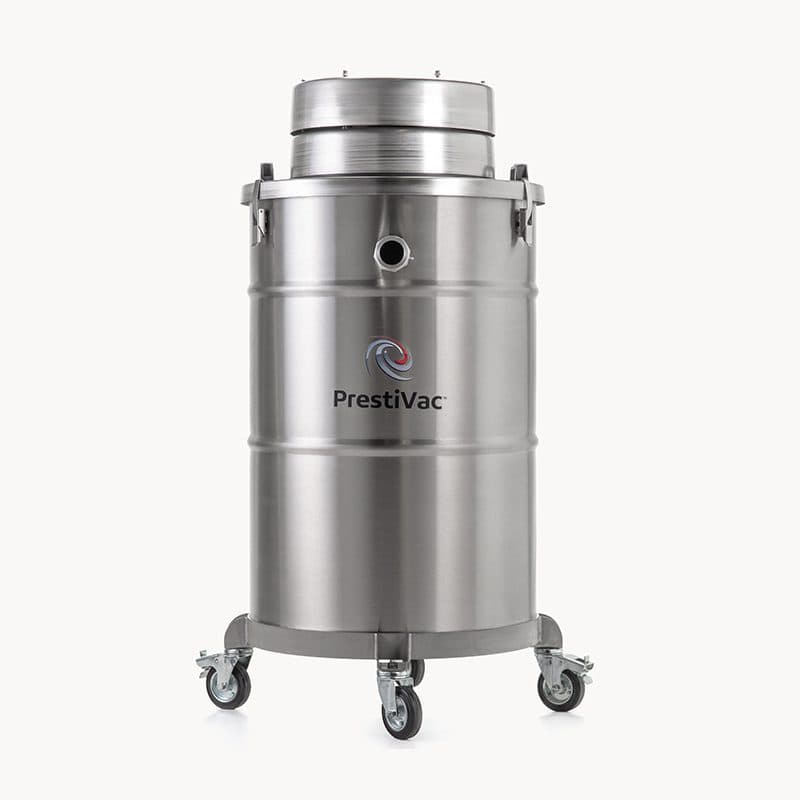
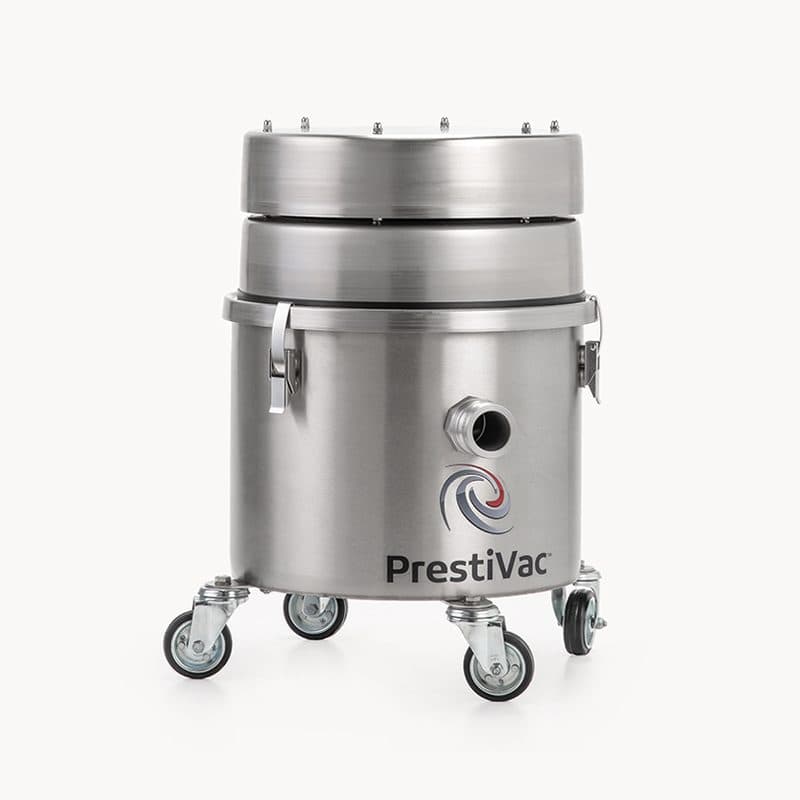
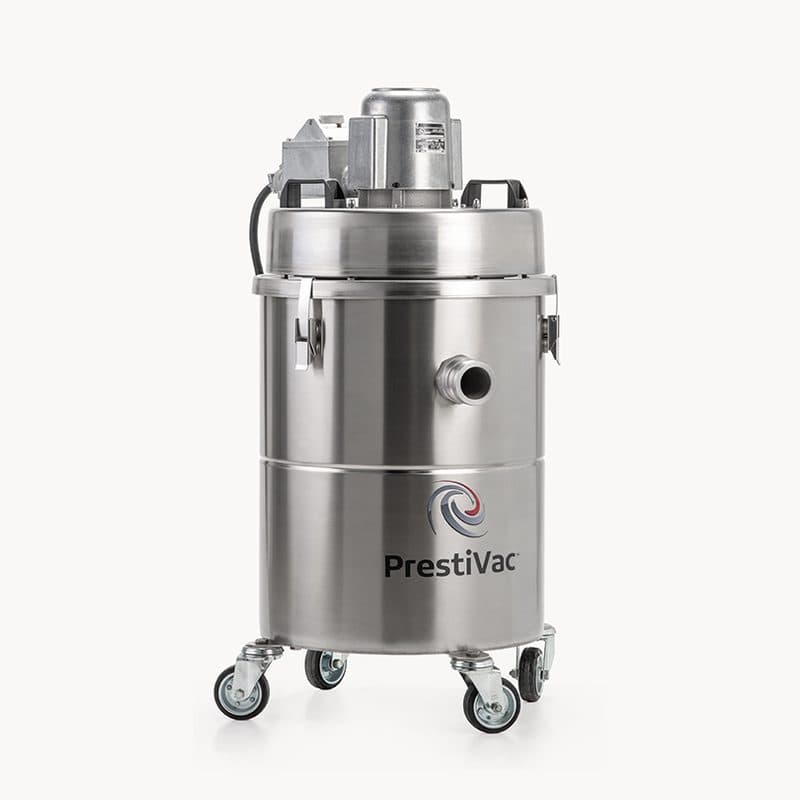
Air-operated explosion-proof vacuums with immersion separation (AVX series, e.g. AVX-55 EX)
Powder-room and chamber-turnaround recovery with zero electrical components; fines wetted on entry
Static-dissipative hose assemblies
Continuous conductive path from pickup point to canister
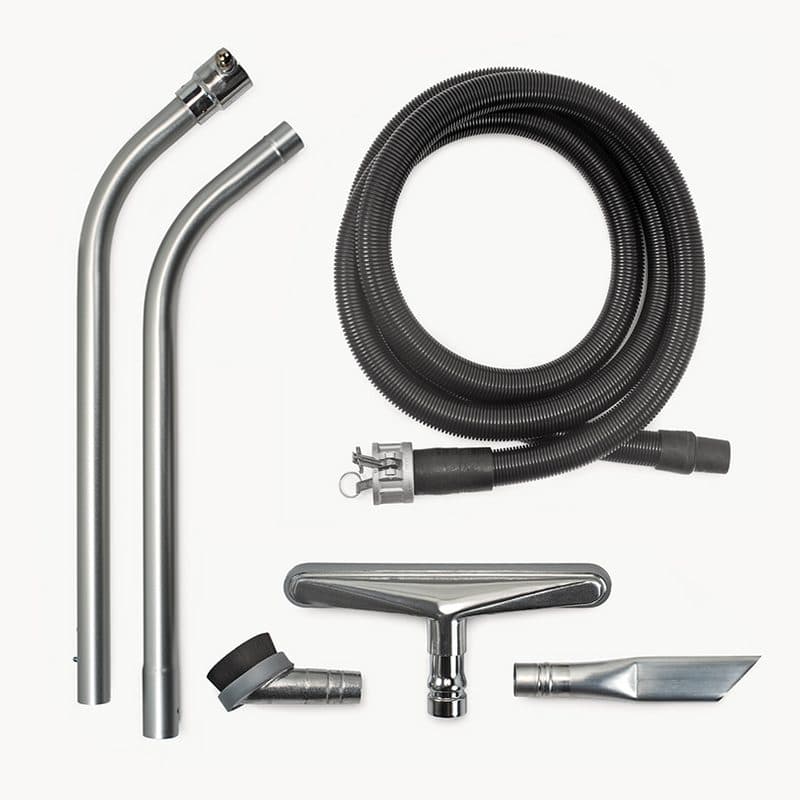
Grounded stainless wands, crevice and detail nozzles
Non-sparking contact inside chambers and around sieving stations
Tested HEPA final-stage filtration (99.99% at 0.3 µm)
Captured fines retained; exhaust cleaner than room air
Bonding and grounding kits with verification points
Charge control checked at commissioning and on PM
Sealed stainless collection containers
Wetted transfer of collected fines and condensate to disposition
Alloy-dedication labeling per material family
Recovery equipment never crosses between titanium and other alloys
Installation & Implementation
- 1
Assessment
Walk-down of powder rooms, depowdering and sieving stations; method audit against the DHA and the powder-reuse quality procedure.
- 2
Planning
Equipment assignment per material family; turnaround sequence integrating vacuum recovery into machine changeover.
- 3
Training
Operator sessions on condensate handling, grounding checks, immersion-bath service and wetted disposal.
- 4
Commissioning
Grounding continuity per station; suction and separation verification against specification.
- 5
Operator education
Point-of-use method cards for chamber turnaround and spill response.
- 6
Maintenance program
Immersion-bath change-out, condition-based filter service and grounding re-verification folded into PM.
Before vs After
| Aspect | Before | After |
|---|---|---|
| Powder-room recovery | Unrated shop vacuum and brush-and-tray handling | Air-operated EX vacuums with immersion separation |
| Chamber condensate | Wiped dry with cloths | Vacuum capture with grounded tools; wetted on entry |
| Ignition sources in recovery path | Sparking motor, static-generating hose | No electrical components; bonded conductive path throughout |
| Captured fines | Dry inside an unrated canister | Wetted in the immersion bath; HEPA-retained exhaust |
| Cross-alloy contamination risk | Shared cleaning equipment across material families | Alloy-dedicated, labeled recovery units |
| Collected material | Dry, open containers | Sealed, wetted transfer to disposition |
Compliance Improvements
The engineered program supports compliance with the combustible-metal provisions carried from NFPA 484 into NFPA 660: vacuum-based methods, ignition-source control in the recovery path, and wetted handling of fine reactive titanium — with the Dust Hazard Analysis obligation from NFPA 652 as the baseline it answers to.
It supports the housekeeping expectations enforced under OSHA's Combustible Dust National Emphasis Program: documented methods and frequencies, appropriate equipment, and the retirement of practices — dry brushing above all — that suspend fine powder at operator height.
Air-operated units align with the intent of NEC Class II area requirements by removing electrical ignition sources entirely, and the same architecture is consistent with ATEX and IECEx zone principles for facilities under those frameworks. Component certifications and listings vary by model and configuration; documentation is supplied per application, and the program is described throughout as supporting compliance rather than conferring it.
Operational Improvements
- Machine turnaround tightened by mechanism: vacuum recovery with detail nozzles replaces brush-and-tray passes, and single-pass capture ends the loft-and-resettle cycle inside chambers and around sieving stations.
- Powder economics improve at the margins where AM lives — cleaner segregation between recoverable virgin powder (to sieving and requalification) and vacuum-collected material (to wetted disposal) protects the reuse stream instead of contaminating it.
- Cross-contamination risk between alloy families drops by rule, not vigilance: dedicated, labeled recovery equipment removes the shared-vacuum pathway entirely.
- Operator exposure during cleanup drops by design — capture at the nozzle with HEPA-retained exhaust replaces the dry brushing that put the finest, most reactive fraction airborne. (Improvements are stated by mechanism; this representative scenario publishes no fabricated percentages.)
Technical Explanation
Why air-operated drives own the powder room: a venturi or turbine unit contains no motor, switch or wiring — the electrical-ignition question is removed rather than managed, which is the cleanest possible answer in a room whose defining material has very low ignition energy in fine fractions.
Why immersion separation fits titanium even better than most metals: burning titanium is a Class D fire that water and standard agents can intensify — so the strategy is to make burning impossible by state change. Wetting fines at the inlet means no dry accumulation ever exists inside the vessel; the bath is prevention, not suppression.
Why condensate drives tool selection: chamber soot is finer and more oxidation-hungry than virgin powder, and it lives on vertical and overhead chamber surfaces. Grounded detail nozzles on a bonded hose collect it at the surface instead of lofting it — the brush was the dispersion mechanism.
Why HEPA-retained exhaust is non-negotiable here: the fraction that matters for both the DHA and the exposure assessment is the fraction a coarse filter passes. A tested 99.99% at 0.3 µm final stage keeps the recovery loop from becoming a redistribution loop.
Frequently Asked Questions
Is titanium powder really that dangerous?
Fine titanium is a combustible, reactive metal dust with very low ignition energy in fine fractions — governed by its own standard, NFPA 484, now within NFPA 660. AM powder is engineered fine on purpose, which places it squarely in the range the standard exists for.
What is chamber condensate and why does it matter?
Laser melting ejects vaporized and spattered metal that redeposits inside the build chamber as an ultra-fine 'soot' — finer and more reactive than virgin powder. It's the first material an operator meets at unpacking, and it should be vacuum-captured with grounded tools, never brushed or wiped dry.
Why can't water be the answer for a titanium fire?
Burning titanium is a Class D metal fire; water and standard extinguishers can intensify it. That is exactly why the engineering posture is prevention — wetting fines on entry via immersion separation so a dry, ignitable accumulation never forms.
Why an air-operated vacuum instead of an electric explosion-proof one?
Air operation removes every electrical component from the unit — nothing to classify or fail sparking. In powder rooms handling fine reactive metals, it's the most robust answer available, and it aligns with classified-area requirements by construction.
Can vacuumed powder be reused in builds?
That's a quality-system decision, not a vacuum feature. In this program, recoverable virgin powder follows the sieving-and-requalification route; vacuum-collected material and condensate follow the wetted-disposal route. The vacuum handles the hazard — the quality procedure decides what re-enters production.
Why dedicate vacuums per alloy family?
Because shared cleaning equipment is a cross-contamination pathway between material families — a serious defect vector in aerospace and medical AM. Dedicated, labeled units remove the pathway by rule.
Does this apply to polymer 3D printing too?
Polymer powders (like nylon PA12) are combustible organic dusts with their own recovery requirements — grounded HEPA recovery applies, while immersion separation is specifically a reactive-metal practice. The material drives the specification.
How is collected titanium handled afterward?
Wetted and sealed to disposition, per the site's procedures. Immersion systems deliver it already wetted; the container transfer is part of the written method so the last step doesn't recreate the hazard.
Key Takeaways
- AM powder is engineered fine for the process — which is exactly what makes it ignitable; the datasheet and the DHA describe the same material.
- Chamber condensate is finer and more reactive than virgin powder: vacuum-capture it with grounded tools, never brush or wipe it dry.
- Air-operated explosion-proof vacuums remove the electrical-ignition question entirely — the cleanest answer a powder room can get.
- Immersion separation is prevention by state change: wetted on entry, titanium fines can't form the dry accumulation a Class D fire needs.
- Separate the streams: virgin powder to sieving and requalification, vacuum-collected material to wetted disposal — safety and powder economics stop competing.
- Dedicate recovery equipment per alloy family; a shared vacuum is a cross-contamination pathway.
Classification
- Industry
- Additive Manufacturing
- Application
- Metal 3D Printing Powder Recovery
- Hazard
- Combustible & Reactive Metal Powder
- Material
- Titanium
- Process
- Laser Powder Bed Fusion
- Dust Class
- Combustible Metal Dust (reactive)
- Facility Type
- Contract Metal AM Facility (Aerospace & Medical)
- Relevant Standards
- NFPA 660, NFPA 484, NFPA 652, OSHA NEP, NEC Class II, ATEX principles (where applicable)
- Products Featured
- AVX Series air-operated explosion-proof vacuums, Immersion separation configuration, Static-dissipative hose & tool kits, Sealed collection containers
- Target Personas
- AM Production Manager, EHS Manager, Quality Manager, Maintenance Manager