
Vacuum solutions engineered for plastics & rubber
The industry where two combustible dusts sit side by side — self-charging plastic dust on the polymer side, and carbon black on the rubber side. Plastics processing sheds insulating polymer fines that build their own static ignition, while rubber and tire compounding handle carbon black, among the most readily ignitable dusts in industry. Both call for bonded, grounded, HEPA-retained recovery.
Static & Ignition Aware
Polymer dust + carbon black
Self-Charging Dust
Insulating plastic fines
HEPA Filtration
Fine polymer & carbon retained
Built for Processing
Molding, extrusion, compounding
Explosion-Proof
Manufacturing specialists
1000+
Vacuums sold worldwide
USA
Designed & manufactured
Direct
Buy from the manufacturer
NFPA 660
ATEX / IECEx principles
Plastics & Rubber production process explorer
Every stage. Every challenge. The right vacuum solution.
A plastics or rubber operation blends, forms and finishes polymers and elastomers, shedding combustible dust that changes character between the plastic and rubber sides. Walk the stages and their dusts.
Stage 01 — Resin & compound handling
Pellets and powders arrive and are conveyed; plastic powder is combustible and, as an insulator, begins accumulating static from the first transfer.
Key challenges
Self-charging polymer meets carbon black
Self-Charging Plastic Dust
Plastics are insulators, so grinding and regrind produce combustible dust that builds its own static — a built-in ignition source demanding bonded, grounded recovery.
Carbon Black In Rubber
Rubber and tire compounding use carbon black, one of the most readily ignitable combustible dusts — grounded, rated, HEPA-retained recovery is essential.
Regrind & Fines
Grinding scrap and regrind is a primary fine-dust source across plastics processing, liberating the most ignitable fraction.
Compounding Dust
Compounding blends polymers with fillers and additives, shedding mixed fine dust that explosibility testing must characterize before it is specified for.
Ground Everything
Both self-charging plastic dust and readily-ignitable carbon black demand bonded, grounded, rated recovery — the discipline is non-negotiable on both sides.
Fine & Clinging
Plastic and carbon fines are fine and cling to equipment, so HEPA-retained recovery is essential to keep them contained.
Dust & materials knowledge center
What plastics & rubber manufacturing generate
Combustibility and severity are material- and particle-size-specific — testing and your Dust Hazard Analysis govern. Full directory: the full materials directory.
Applications in plastics & rubber
- Injection molding
- Blow molding
- Extrusion
- Thermoforming
- Rotomolding
- Plastic recycling
- Pellet production
- Resin transfer
- View all
Built for performance. Built for compliance.
View all products →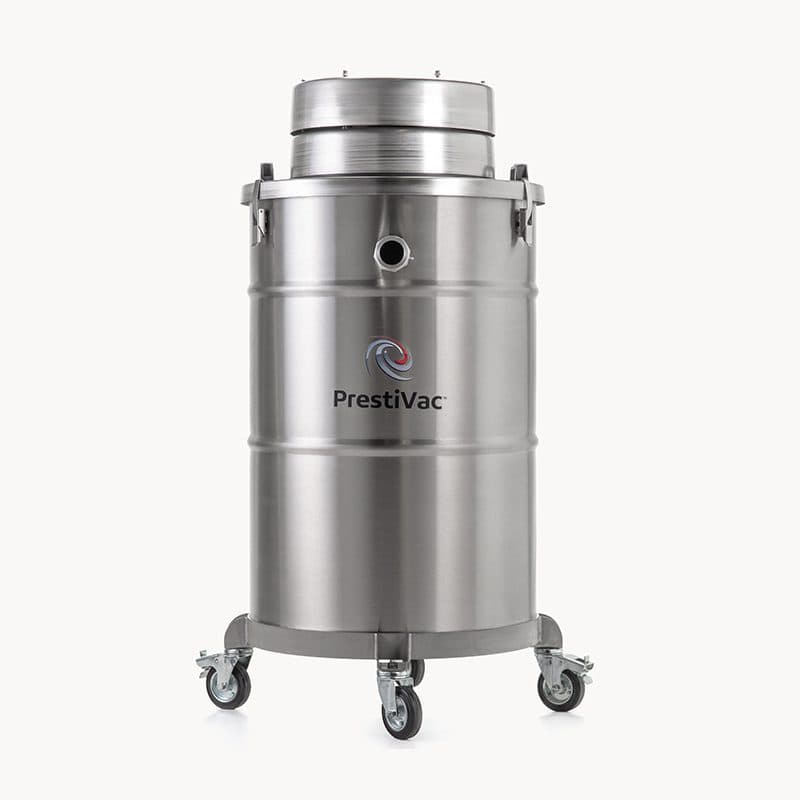
Explosion Proof Vacuums
Grounded, bonded recovery for combustible dust
Learn more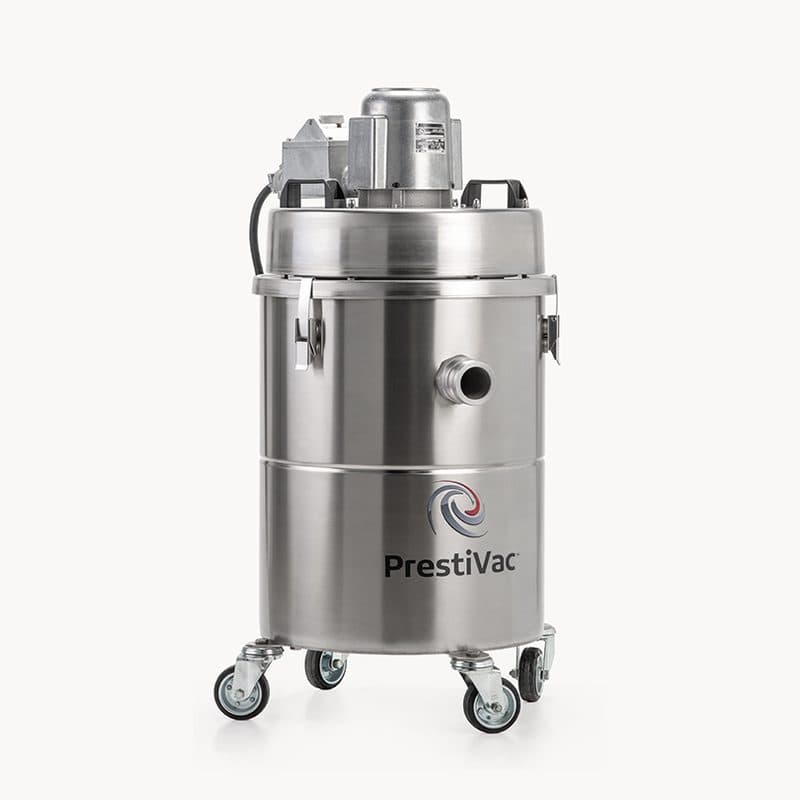
HEPA Vacuums
99.99% filtration for fine and hazardous dust
Learn more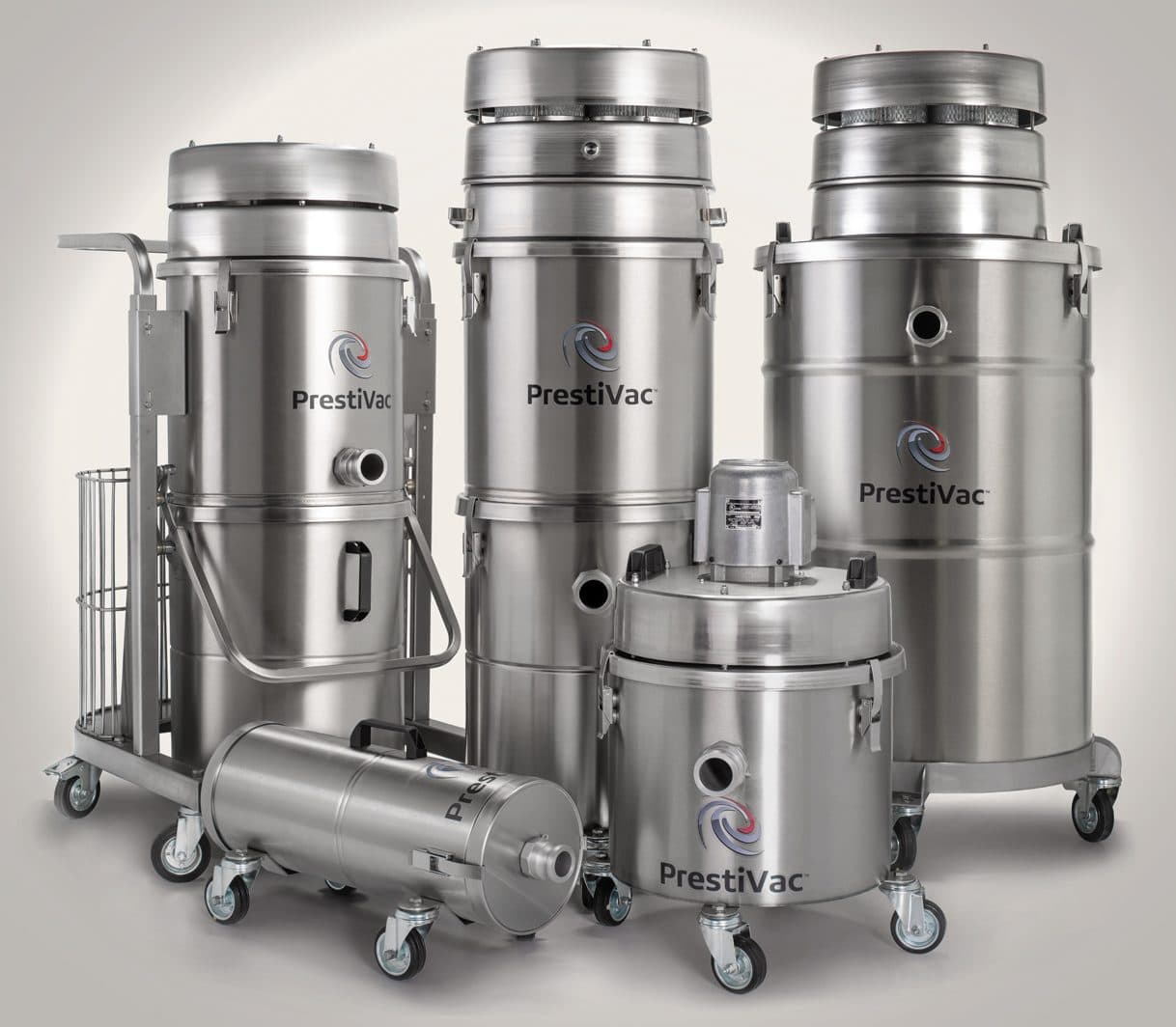
Industrial Vacuums
Continuous-duty recovery for demanding plants
Learn more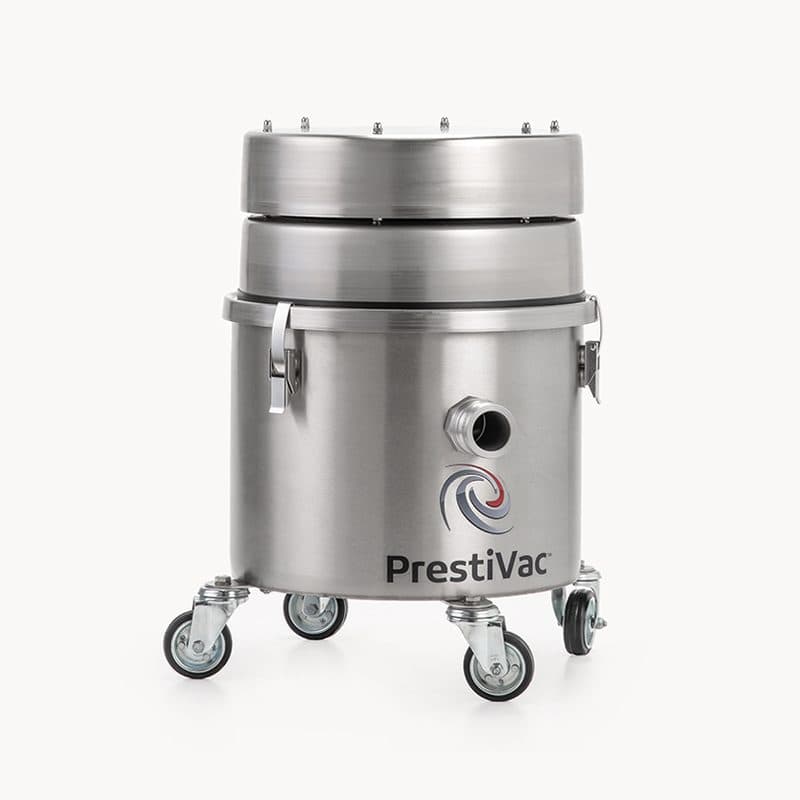
Pneumatic Vacuums
Air-operated — no electrical components
Learn more
Representative case study
Controlling Coating Powder in an Automotive
How a representative automotive components finisher brought fugitive coating powder and color-change cleanout under control — grounded recovery in a process that charges combustible polymer dust on purpose.
Read the full case studyTalk to the manufacturer
Get the right explosion proof vacuum for your application.
Tell us what you need to vacuum and where. Our technical team will recommend the PrestiVac model best suited to your material, your classification and how hard you will work it — and because we build every unit ourselves, we can modify it to fit.
- Legally certified explosion proof
- Solid stainless steel construction
- Industry-best 3-year warranty
- Designed & manufactured in the USA
- 200+ vacuum versions