
Vacuum solutions engineered for textiles & fibers
The industry whose dust is two hazards in one drift of lint — accumulated fiber dust is combustible and behind real lint fires and deflagrations, while cotton dust causes byssinosis, the 'brown lung' recognized under OSHA's cotton dust standard. From fiber opening to finishing, and across natural and synthetic fibers alike, recovery has to address the fire hazard and the respiratory one together.
Dual-Hazard Aware
Combustible and respiratory
Lint Is Combustible
Fiber dust deflagrates
HEPA Filtration
Fine fiber & lint retained
Built for Textiles
Opening to finishing
Explosion-Proof
Manufacturing specialists
1000+
Vacuums sold worldwide
USA
Designed & manufactured
Direct
Buy from the manufacturer
NFPA 660
ATEX / IECEx principles
Textiles & Fibers production process explorer
Every stage. Every challenge. The right vacuum solution.
A textile mill turns raw fiber into finished fabric, shedding lint and fine fiber at every mechanical step — most heavily where fiber is opened and carded. Walk the stages where capture matters.
Stage 01 — Fiber opening & carding
Opening and carding liberate the heaviest lint load in the mill; this is the primary dust source, where both the combustible and the respiratory hazard are most concentrated.
Key challenges
Combustion and brown lung, together
Byssinosis Risk
Cotton dust causes byssinosis ('brown lung'), a recognized occupational respiratory disease addressed by OSHA's cotton dust standard (1910.1043).
Lint Deflagrates
Accumulated fiber lint is a combustible dust — lint fires and dust deflagrations are a real and historic textile hazard.
Fine Fiber Everywhere
Opening, carding and napping shed lint continuously; it settles on every surface and collects in every duct throughout the mill.
Synthetic Fibers Too
Synthetic-fiber and flock dust is combustible plastic dust with its own static behavior — grounded, static-dissipative recovery applies.
Two Hazards, One Program
The same lint is both a combustion hazard and a respiratory one, so the housekeeping program is specified to satisfy both at once.
Lint Clogs & Accumulates
Fibrous dust mats and builds up quickly, so HEPA-retained recovery with frequent, disciplined housekeeping is essential.
Dust & materials knowledge center
What textile manufacturing generates
Combustibility and severity are material- and particle-size-specific — testing and your Dust Hazard Analysis govern. Full directory: the full materials directory.
Applications in textiles
- Cotton processing
- Textile manufacturing
- Fiber processing
- Nonwoven production
- Garment manufacturing
- View all
Built for performance. Built for compliance.
View all products →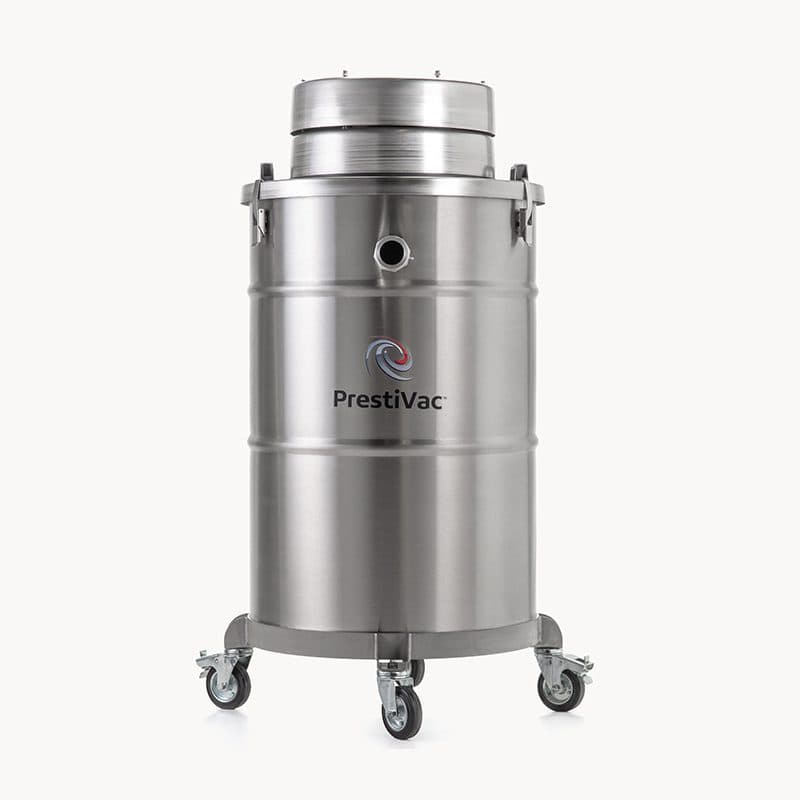
Explosion Proof Vacuums
Grounded, bonded recovery for combustible dust
Learn more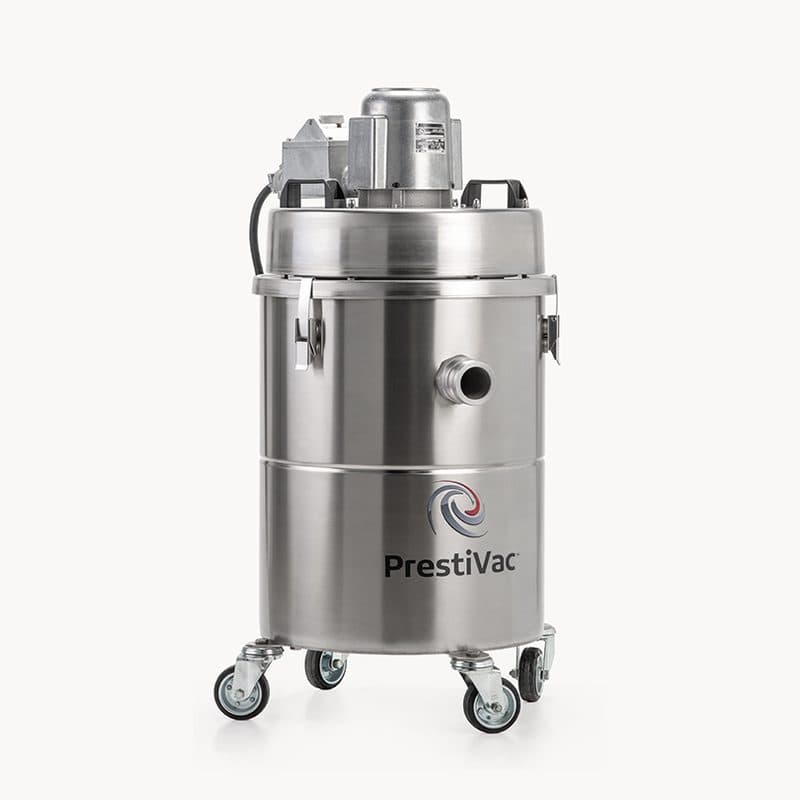
HEPA Vacuums
99.99% filtration for fine and hazardous dust
Learn more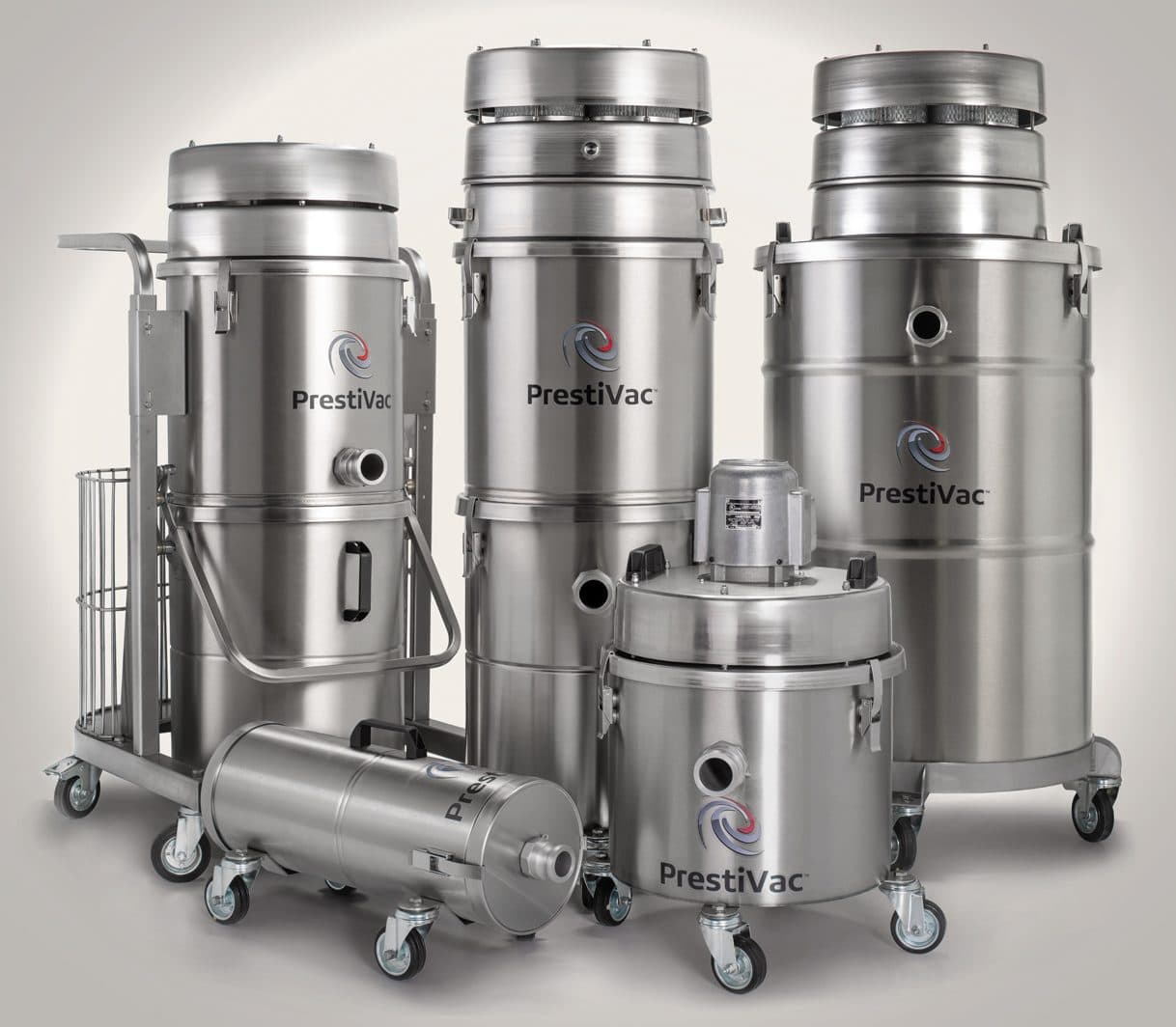
Industrial Vacuums
Continuous-duty recovery for demanding plants
Learn more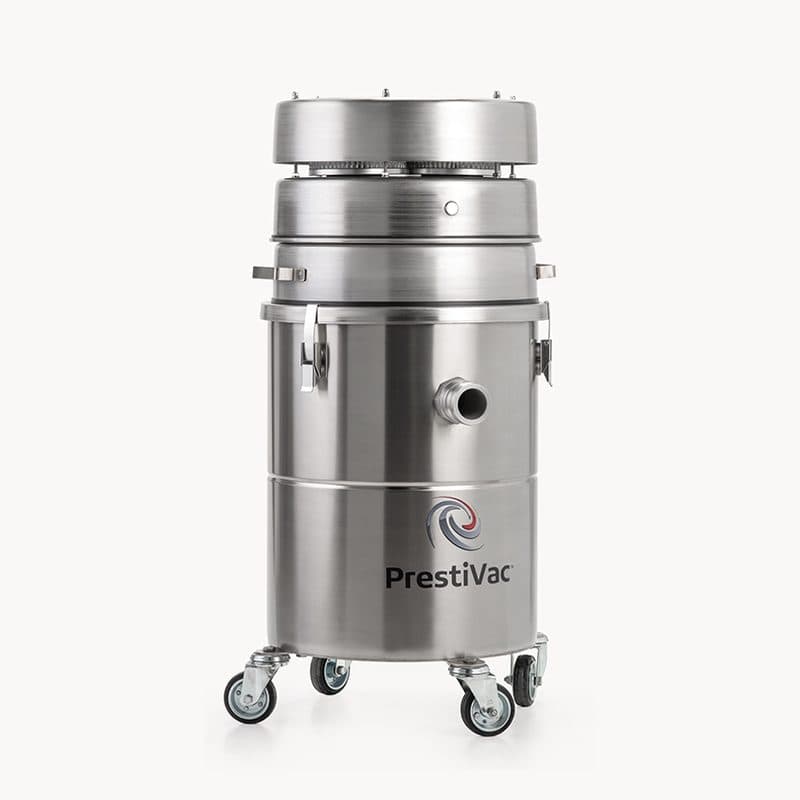
Central Vacuum Systems
Facility-wide housekeeping from fixed drops
Learn more
Representative case study
Controlling Paper and Corrugated Dust in a Converting Plant
A representative scenario: how a high-speed corrugated converting operation brought fibre dust under control without slowing the lines.
Read the full case studyTalk to the manufacturer
Get the right explosion proof vacuum for your application.
Tell us what you need to vacuum and where. Our technical team will recommend the PrestiVac model best suited to your material, your classification and how hard you will work it — and because we build every unit ourselves, we can modify it to fit.
- Legally certified explosion proof
- Solid stainless steel construction
- Industry-best 3-year warranty
- Designed & manufactured in the USA
- 200+ vacuum versions