Executive Summary
A representative grain cooperative — country elevator, storage annex and feed mill on one site — moves grain from harvest receiving through storage, grinding and load-out. Grain dust is the material that wrote the history of dust explosions, and it is the one dust family with its own dedicated OSHA standard: the grain handling facilities standard, 29 CFR 1910.272, which codifies what most industries only infer — including a 1/8-inch accumulation action level in designated priority housekeeping areas.
The cooperative's exposure map was the classic one. Bucket elevator legs — enclosed columns where suspended dust and friction ignition sources share a casing — sat at the center, ringed by the standard's priority areas. Around them: gallery and bin-deck floors accumulating layers across enormous horizontal footage, a feed mill grinding its own fine fraction, storage bins whose interior cleaning meant confined-space entry, and a harvest season that compresses a year of dust generation into weeks. Housekeeping ran on brooms, compressed air and an unrated shop vacuum.
The engineered response keyed the program to the standard's own geography: explosion-proof vacuum recovery on defined frequencies in the priority areas around the legs and grinding equipment — scheduled to stay ahead of the 1/8-inch action level, not to chase it — extension and long-reach tool kits that put gallery steel and bin-deck surfaces on routine, grounded equipment throughout, sealed disposal, and a bin-cleaning method built around reach instead of entry wherever the geometry allows.
Project Overview
- Facility type
- Country grain elevator, storage annex & feed mill
- Processes
- Receiving, elevating, storage, drying, cleaning, grinding & mixing, pelleting, load-out
- Environment
- Seasonal surge operation; enclosed legs, galleries and bin decks
- Dust generation points
- Receiving pit, elevator boots and heads, transfer spouts, grinding and pelleting, load-out
- Housekeeping challenge
- Priority-area accumulation against a codified 1/8-inch action level
- Potential ignition sources
- Slipping belts and hot bearings in legs, unrated equipment, static discharge, hot work
Industry Background
Grain handling is where combustible dust regulation began, because grain elevators are where the catastrophic events happened — enclosed structures, continuous dust generation at every transfer, and friction ignition sources built into the conveying machinery. The regulatory response is unusually specific: alongside NFPA 61 (agricultural and food processing, now carried into the consolidated NFPA 660), OSHA maintains a dedicated grain handling facilities standard, 29 CFR 1910.272, with housekeeping requirements written in numbers rather than principles.
The standard's signature is the action level: accumulations of 1/8 inch in designated priority housekeeping areas — the zones around bucket elevators and grinding equipment — trigger removal. Where general industry works from guidance treating 1/32 inch as a credible hazard, grain facilities have a codified trigger and codified places to watch. A housekeeping program in this industry is therefore partly a scheduling problem: clean the priority areas on a frequency that keeps them below the number, with documentation to show it.
The bucket elevator leg explains why the priority areas are where they are. A leg is an enclosed vertical casing in which buckets on a belt carry grain upward — meaning suspended dust, confinement, and mechanical friction share one volume. A slipping belt or an overheating bearing inside that casing is the textbook initiation scenario, which is why the standard pairs its housekeeping rules with equipment provisions like bearing and belt monitoring. The dust program and the maintenance program guard the same machine from two sides.
The Challenge
- Safety
- Dust layers on gallery floors, bin decks and ledges built the secondary-explosion fuel inventory above and around enclosed legs — the classic elevator scenario.
- Operations
- Harvest surge multiplied generation exactly when labor was scarcest; sweeping and blowdown redistributed dust instead of removing it.
- Compliance
- Priority areas around the legs and mill had no documented frequency keyed to the 1/8-inch action level — direct exposure under 1910.272 and the OSHA Combustible Dust NEP.
- Maintenance
- Dust worked into bearings, drives and switchgear; the same fines the housekeeping program missed became the maintenance program's failures.
- Employee exposure
- Grain dust at cleaning time — sweeping and compressed air put it airborne at breathing height, and bin interiors added confined-space entry risk.
- Production interruptions
- Any leg incident is a facility-scale event; housekeeping quality around the legs gated the whole site's risk posture.
Hazard Analysis
Grain dust assembles the explosion pentagon continuously and by design of the process. Fuel: fine grain and feed dust liberated at every transfer, grind and drop. Oxygen: ambient. Dispersion: transfer turbulence, blowdown, sweeping. Confinement: legs, spouts, bins, tunnels and the headhouse itself. Ignition: friction in the conveying machinery — slipping belts, hot bearings — plus unrated equipment, static discharge and hot work.
The leg is the concentrator. Inside its casing, dust concentration and ignition probability peak together, which is why the initiating event in the historic disasters so often traces to an elevator leg — and why 1910.272 aims its priority housekeeping areas and its mechanical monitoring provisions at the same geography. Housekeeping outside the leg controls the secondary event; monitoring inside the leg controls the primary one.
The secondary-explosion mechanism is what turns gallery floors and bin decks into the program's main square footage. A leg incident lofts every layer within reach; the pressure wave propagates through galleries and tunnels lofting more; the second and third events do the damage the first only started. The 1/8-inch action level exists to cap the fuel available to that chain — and the general 1/32-inch guidance still applies everywhere the priority designation doesn't.
Static electricity and equipment rating carry their usual weight: fine organic dust through insulating hoses generates charge, and an unrated vacuum motor is an ignition source deployed to the exact point of peak concentration. Grounded, bonded, explosion-proof recovery removes the housekeeping program itself from the ignition inventory.
| Pentagon element | Present as |
|---|---|
| Fuel | Fine grain and feed dust at every transfer, grind and drop |
| Oxygen | Ambient atmosphere throughout the facility |
| Dispersion | Transfer turbulence, blowdown, sweeping, harvest surge |
| Confinement | Elevator legs, spouts, bins, tunnels, headhouse |
| Ignition | Slipping belts, hot bearings, unrated equipment, static, hot work |
Site Assessment Findings
- Dust layers on gallery floors, bin decks and structural ledges approaching and exceeding action-level territory
- No documented cleaning frequency for the priority areas around elevator legs and grinding equipment
- Brooms and compressed air as primary methods; one unrated shop vacuum in the mill
- Boot pits accumulating spillage and fines between informal cleanups
- Bin interior cleaning performed by entry with shovels and brooms
- Collected dust and sweepings handled open, without sealed disposal
Recommended Solution
The program was keyed to the standard's own map. Priority areas first: explosion-proof HEPA vacuums assigned to the headhouse, leg surrounds and mill grinding areas, on documented frequencies scheduled to stay ahead of the 1/8-inch action level — the number becomes a ceiling the program never meets, not a trigger it responds to. Boot pits joined the same rotation with tools sized for spillage plus fines.
The horizontal footage got the reach it needed: extension and long-reach wand kits put gallery floors, bin decks, ledges and spouting exteriors on routine from standing positions, with lift-assisted deep cleans demoted to periodic verification. For bin interiors, the method shifted from entry-first to reach-first — long-reach recovery from manways and openings wherever geometry allows, so confined-space entry becomes the exception with its full permit process, not the default chore.
Grounded, bonded equipment throughout — static-dissipative hoses, stainless tools, verification at commissioning and on PM — with sealed containers closing the disposal end. Blowdown and dry sweeping were retired facility-wide, and the housekeeping schedule was cross-referenced with the maintenance program's bearing and belt monitoring, so the two halves of leg protection report into one risk picture. A central vacuum option was scoped for the mill building, where fixed grinding and pelleting equipment makes permanent inlet drops the long-term answer.
Equipment Used
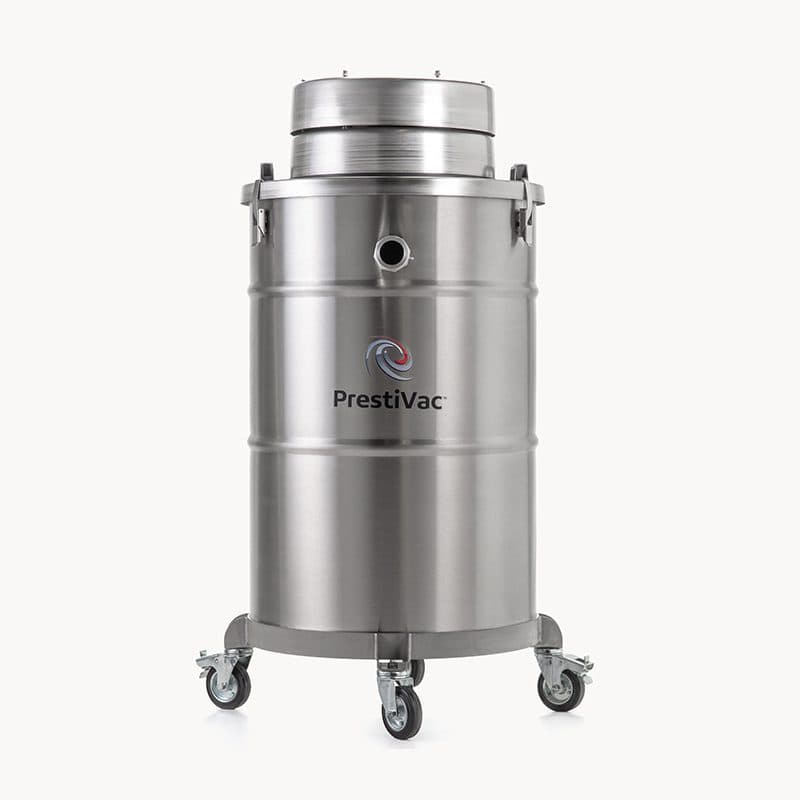
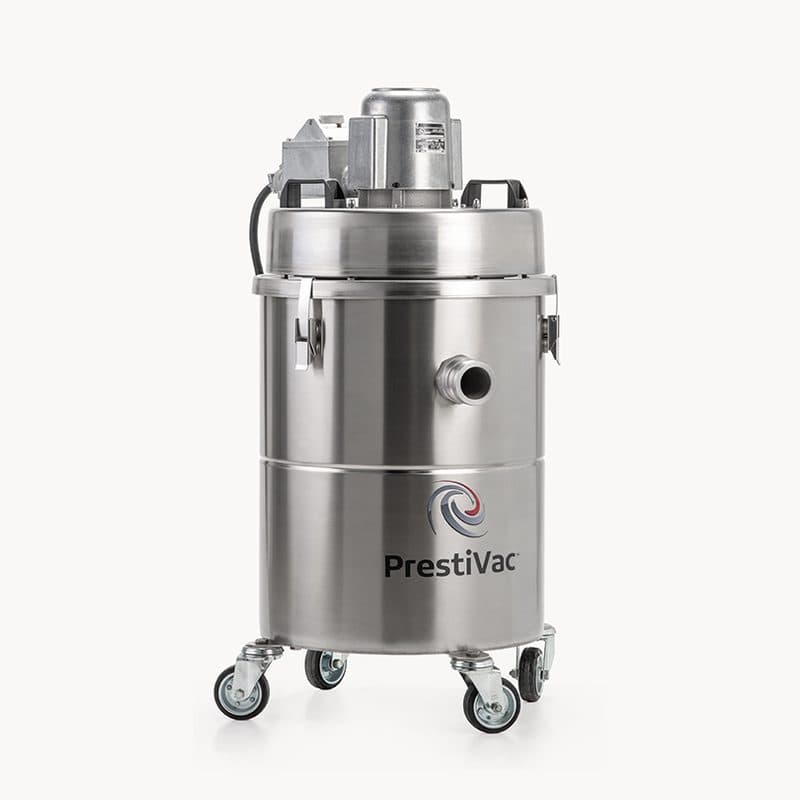
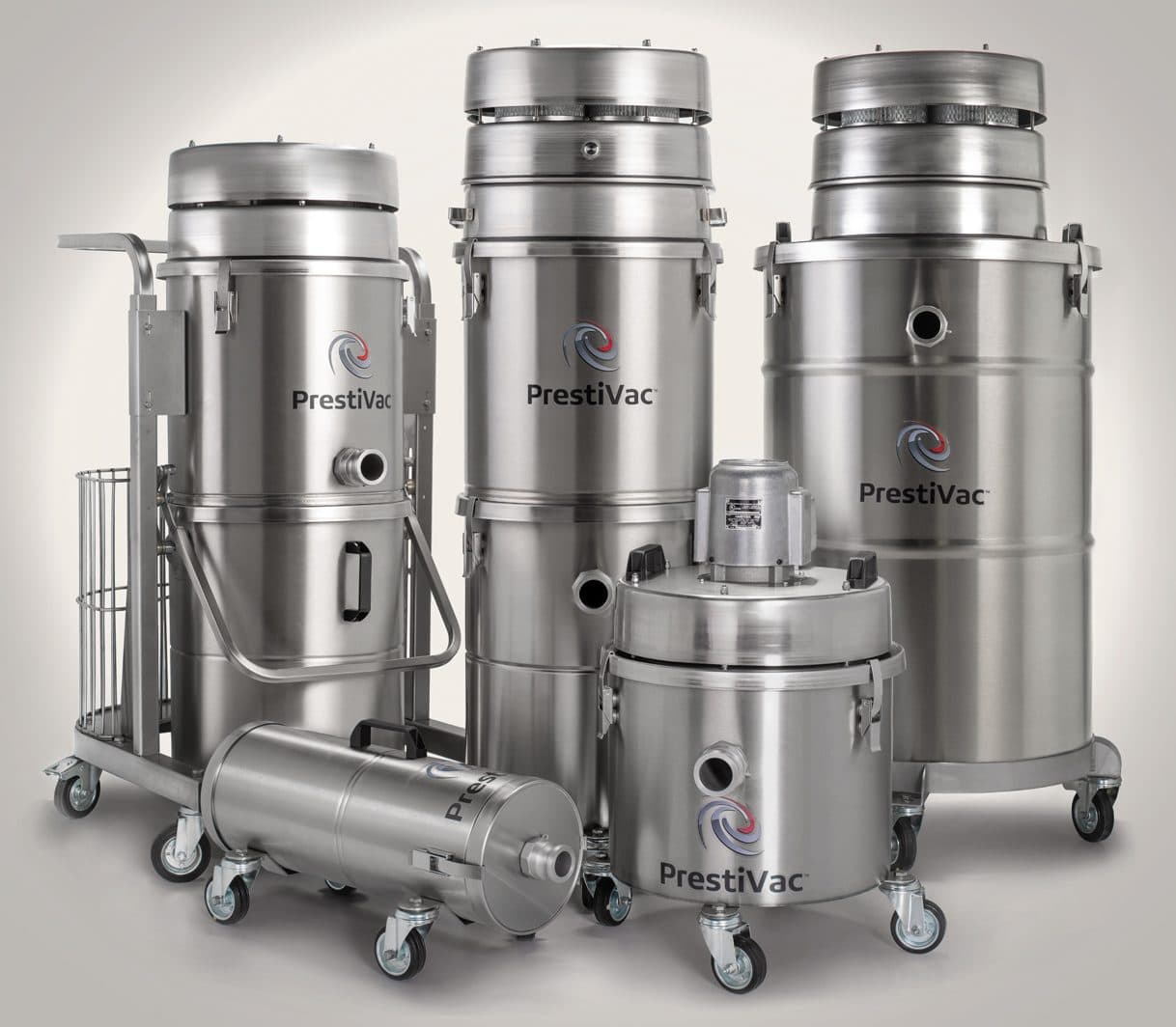
Explosion-proof HEPA vacuums (EVX series, e.g. EVX-15 EX)
Priority-area recovery — headhouse, leg surrounds, mill grinding areas
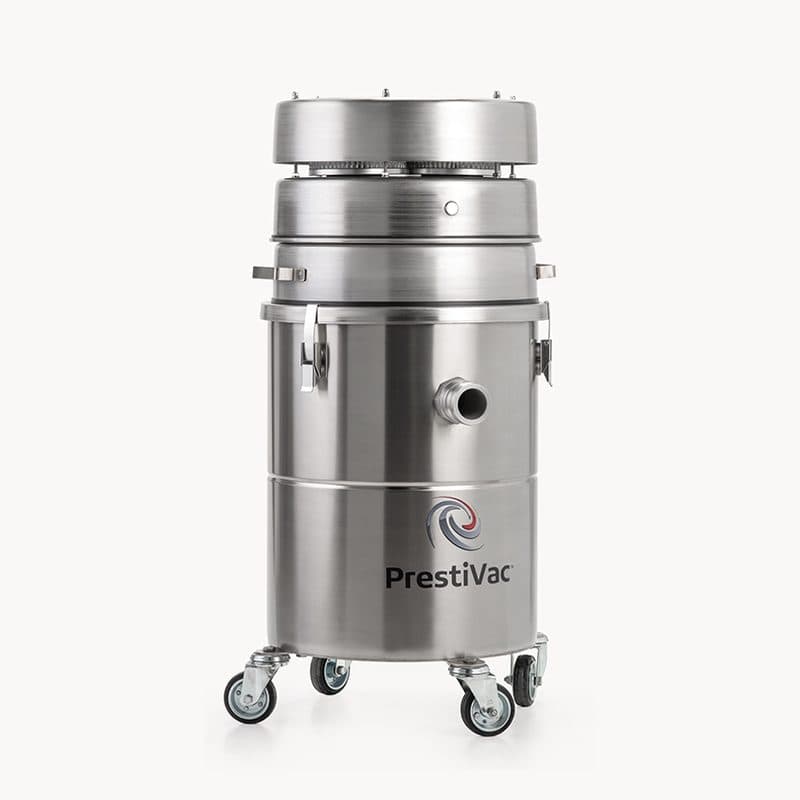
Industrial vacuums (AV series, e.g. AV1)
General-area housekeeping in offices, load-out and non-classified zones
Extension and long-reach wand kits
Gallery floors, bin decks, ledges and bin interiors from outside the space
Static-dissipative hose assemblies
Continuous conductive path from pickup point to canister
Grounded stainless floor tools and crevice nozzles
Boot pits, spout surrounds and structural ledges
Tested HEPA final-stage filtration (99.99% at 0.3 µm)
Fines retained — exposure control during cleaning
Bonding and grounding kits with verification points
Charge control checked at commissioning and on PM
Sealed collection containers
Contained transfer of collected dust to disposal
Installation & Implementation
- 1
Assessment
Facility walk-down mapping priority areas per 1910.272; accumulation survey of galleries, decks and boot pits; method audit.
- 2
Planning
Frequency map keyed to the action level; bin-cleaning reach-first method; central-system scoping for the mill.
- 3
Training
Operator sessions on priority-area schedules, grounding checks, bin-access rules and sealed disposal.
- 4
Commissioning
Grounding continuity per station; suction and filtration verification against specification.
- 5
Operator education
Zone method cards; priority-area checklist posted at the headhouse and mill.
- 6
Maintenance program
Housekeeping schedule cross-referenced with bearing and belt monitoring; filter service on condition.
Before vs After
| Aspect | Before | After |
|---|---|---|
| Priority areas | No documented frequency; accumulation chased reactively | Scheduled recovery keyed to stay ahead of the 1/8-inch action level |
| Cleaning method | Brooms and compressed air | Grounded explosion-proof vacuum recovery; blowdown retired |
| Recovery equipment | One unrated shop vacuum | Explosion-proof HEPA units with grounded tool sets |
| Elevated & horizontal surfaces | Deferred until shutdowns | Routine via extension and long-reach kits |
| Bin interiors | Entry-first with shovels and brooms | Reach-first recovery; entry the permitted exception |
| Collected material | Open sweepings containers | Sealed containers to disposal |
Compliance Improvements
The engineered program supports compliance with OSHA's grain handling facilities standard (29 CFR 1910.272): a written housekeeping program with documented frequencies for the designated priority areas, methods that remove rather than redistribute dust, and the action-level discipline the standard codifies.
It supports the agricultural and food processing requirements NFPA 61 established — vacuum-based housekeeping, ignition control in the recovery path, and accumulation management — as those requirements carry into the consolidated NFPA 660, with NFPA 652's Dust Hazard Analysis obligation as the baseline, and the expectations enforced under OSHA's Combustible Dust National Emphasis Program.
The reach-first bin method supports the site's confined-space program by reducing entry frequency; where entry remains necessary, the full permit process applies. Component certifications and listings vary by model and configuration; documentation is supplied per application, and the program is described throughout as supporting compliance rather than conferring it.
Operational Improvements
- Priority-area condition became a scheduled outcome instead of a periodic discovery — frequencies are set to keep accumulation below the action level, with documentation that shows it.
- Confined-space entries drop by method: reach-first bin cleaning turns entry into the permitted exception, taking the highest-risk routine task mostly off the board.
- Harvest surge stops breaking the program — single-pass vacuum recovery scales with throughput in a way broom-and-blowdown never did, because nothing gets redistributed to clean twice.
- Cleaning-time exposure drops by design: capture at the nozzle with HEPA-retained exhaust replaces the methods that put grain dust airborne at breathing height. (Improvements are stated by mechanism; this representative scenario publishes no fabricated percentages.)
Technical Explanation
Why the program is keyed to the standard's geography: 1910.272 tells grain facilities where the risk concentrates — the priority areas around bucket elevators and grinding equipment — and what number governs them. Building the vacuum schedule on that map means compliance and risk reduction are the same activity, documented once.
Why the leg gets guarded from two sides: housekeeping controls the fuel outside the casing; bearing and belt monitoring controls the ignition inside it. Cross-referencing the two schedules puts both halves of the classic initiation scenario in one risk picture — a dust program that ignores the mechanical side is only half a leg program.
Why reach-first bin cleaning matters beyond convenience: bin entry stacks confined-space risk on top of dust exposure, and every avoided entry is the largest single risk reduction available in the routine. Long-reach recovery from manways converts most bin cleaning into an outside job; the permit process remains for the genuine exceptions.
Why HEPA earns its place on grain: the fine fraction that stays suspended longest and travels farthest is the fraction that matters for both the deflagration chain and operator exposure — and it is exactly what a coarse filter passes back into the headhouse air. A tested 99.99% at 0.3 µm final stage keeps captured dust captured.
Frequently Asked Questions
What makes grain facilities different from other combustible-dust sites?
The rules are codified: OSHA's grain handling facilities standard (29 CFR 1910.272) sets a written housekeeping program requirement and a 1/8-inch accumulation action level in designated priority areas — numbers most industries only infer from guidance. NFPA 61, carried into NFPA 660, adds the commodity-specific engineering practice.
Where are the priority housekeeping areas?
The standard designates the zones around bucket elevators and grinding equipment — the geography where suspended dust and friction ignition sources concentrate. Your written program maps them for your site and sets frequencies that keep accumulation below the action level.
Why are elevator legs the classic initiation point?
A leg is an enclosed casing where dust concentration, confinement and mechanical friction — belts and bearings — share one volume. That's why housekeeping surrounds it and mechanical monitoring watches inside it; the two programs guard the same machine from two sides.
Is the 1/8-inch level a target?
It's a ceiling — an action level that triggers removal. A well-built program schedules recovery frequencies so priority areas never reach it, with the general 1/32-inch guidance still informing everywhere else.
How should bins be cleaned?
Reach-first wherever geometry allows: long-reach vacuum recovery from manways and openings, so confined-space entry becomes the permitted exception rather than the routine. Where entry is genuinely necessary, the full permit process applies.
Why not just use compressed air — it's fast?
Blowdown converts settled layers into exactly the suspended cloud the standards exist to prevent, redistributes fines into bearings and switchgear, and puts dust at breathing height. Vacuum recovery removes the material in one pass instead of relocating it.
What happens to housekeeping during harvest?
Generation surges, so the schedule surges with it — priority-area frequencies tighten during receiving season. Single-pass vacuum recovery is what makes that feasible; methods that redistribute dust fall behind precisely when it matters most.
Do grain facilities need explosion-proof vacuums everywhere?
Equipment follows area and task: explosion-proof HEPA units own the priority areas and dusty zones; standard industrial units can serve offices, load-out and non-classified areas. Your Dust Hazard Analysis and area classification govern the split.
Key Takeaways
- Grain has its own codified numbers: a written housekeeping program and a 1/8-inch action level in priority areas under 1910.272 — build the schedule to stay below the ceiling, not to chase it.
- The elevator leg is the concentrator: housekeeping outside the casing, bearing and belt monitoring inside it — one risk picture, two programs.
- Bin decks and gallery floors are the secondary-explosion inventory; extension and long-reach kits make their routine cheap enough to happen.
- Reach-first bin cleaning takes the riskiest routine task mostly off the board — entry becomes the permitted exception.
- Retire blowdown: it manufactures the cloud and feeds fines into the machinery the maintenance program is trying to protect.
- Harvest surge is a scheduling fact — single-pass vacuum recovery is what lets the program scale with it.
Classification
- Industry
- Agriculture & Grain Handling
- Application
- Grain Elevator & Feed Mill Housekeeping
- Hazard
- Combustible Grain Dust
- Material
- Grain & Feed Dust
- Process
- Elevating, Storage, Grinding & Load-Out
- Dust Class
- Combustible Organic Dust
- Facility Type
- Country Elevator & Feed Mill
- Relevant Standards
- NFPA 660, NFPA 61, NFPA 652, OSHA 1910.272, OSHA NEP
- Products Featured
- EVX Series explosion-proof HEPA vacuums, Extension & long-reach wand kits, AV Series industrial vacuums, Central vacuum systems (mill option)
- Target Personas
- Elevator Superintendent, EHS Manager, Mill Manager, Maintenance Manager