
Vacuum solutions engineered for agriculture & grain handling
Grain dust wrote the history of dust explosions, and it's the one material family with its own codified housekeeping number — OSHA's grain handling standard sets a 1/8-inch action level in priority areas. Elevators, legs, galleries and mills each generate the fuel; the program's job is to keep removing it.
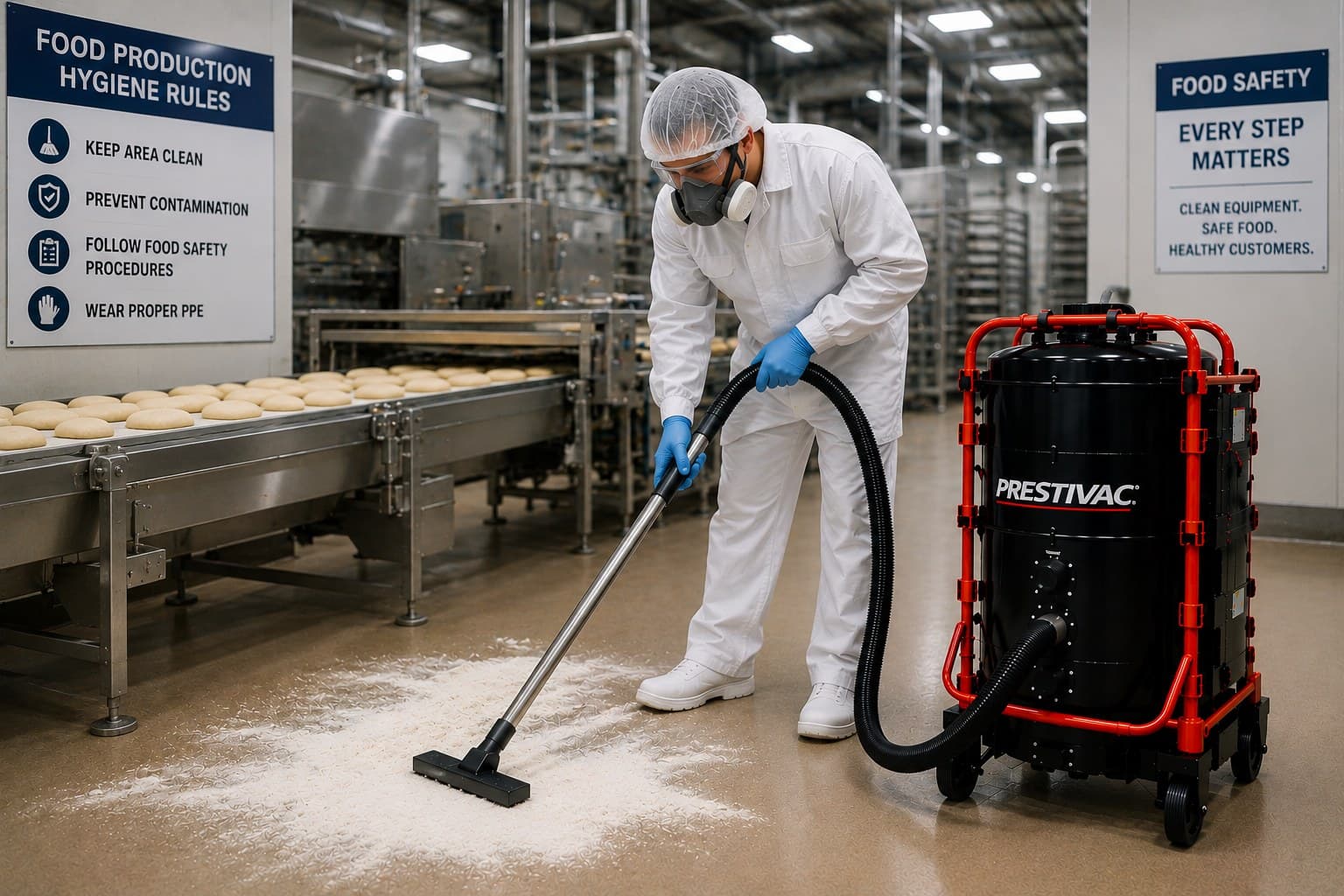
Explosion-Safe Design
Engineered to NFPA 61 / 660 practice
HEPA Filtration
Fines retained, not redistributed
Static Control
Grounded & bonded recovery
Built for Bulk
Headhouse to load-out
Explosion-Proof
Manufacturing specialists
1000+
Vacuums sold worldwide
USA
Designed & manufactured
Direct
Buy from the manufacturer
NFPA 660
ATEX / IECEx principles
Agriculture & Grain Handling production process explorer
Every stage. Every challenge. The right vacuum solution.
Grain liberates dust at every transfer between the receiving pit and the load-out spout — each stage below is a generation point, and the enclosed ones concentrate fuel and ignition together.
Stage 01 — Receiving & pit
Dump turbulence at intake is the first generation point — boot pits join the scheduled rotation with tools sized for spillage plus fines.
Key challenges
The original combustible dust, still earning its reputation
Historic hazard, codified rules
Grain elevator explosions shaped this field — NFPA 61 and OSHA's grain handling facilities standard (29 CFR 1910.272) both govern housekeeping directly.
The 1/8-inch action level
OSHA's grain standard sets a codified accumulation trigger in priority housekeeping areas — a number the program is designed never to reach.
Elevator legs concentrate risk
Enclosed bucket elevators combine suspended dust with friction ignition sources — slipping belts, hot bearings — making leg areas the classic initiation point.
Confined spaces
Bins and silos complicate cleaning; long-reach vacuum recovery reduces how often anyone has to enter at all.
Seasonal surge
Harvest compresses a year's dust generation into weeks — the housekeeping program has to scale with throughput.
Horizontal surface area
Bin decks, gallery floors and headhouse levels accumulate layers across enormous flat footage between cleanings.
Dust & materials knowledge center
Understand the grain dusts. Match the recovery.
Combustibility and severity are material- and particle-size-specific — testing and your Dust Hazard Analysis govern. Full directory: agricultural dusts.
Applications in agriculture
Built for performance. Built for compliance.
View all products →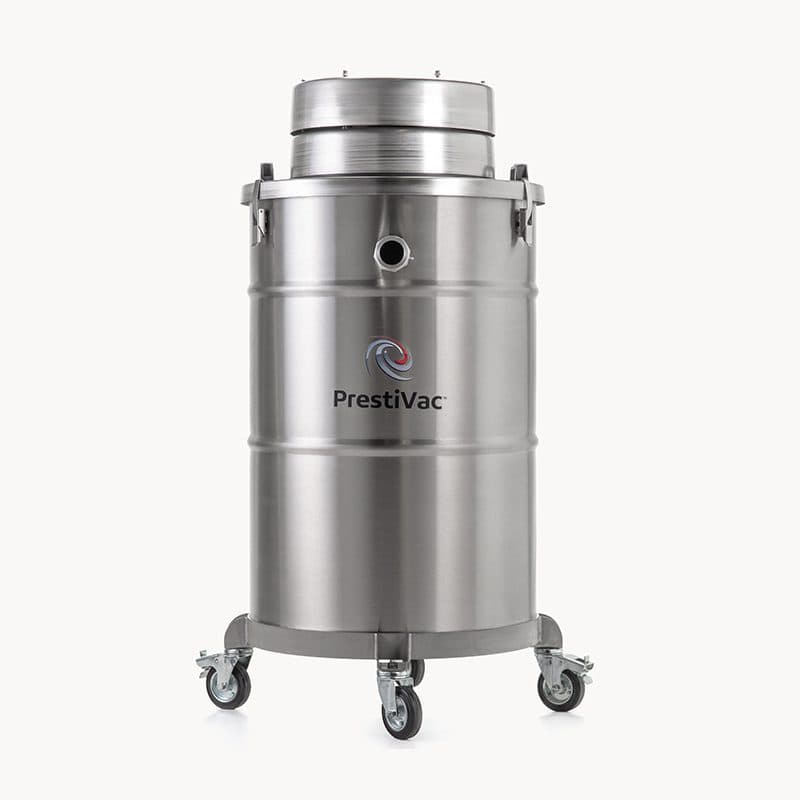
Explosion Proof Vacuums
Grounded, bonded recovery for combustible dust
Learn more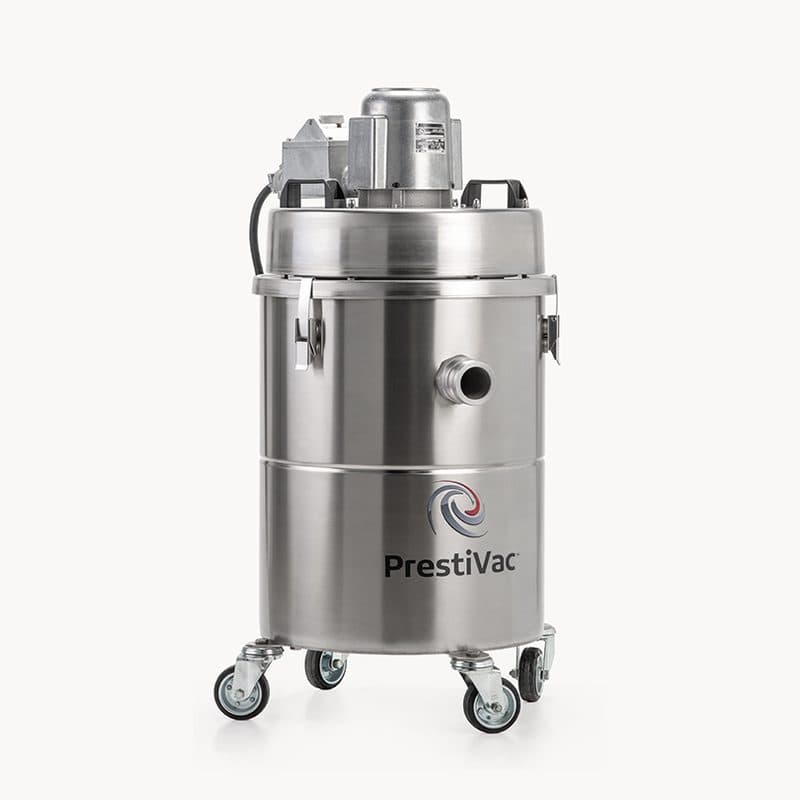
HEPA Vacuums
99.99% filtration for fine and hazardous dust
Learn more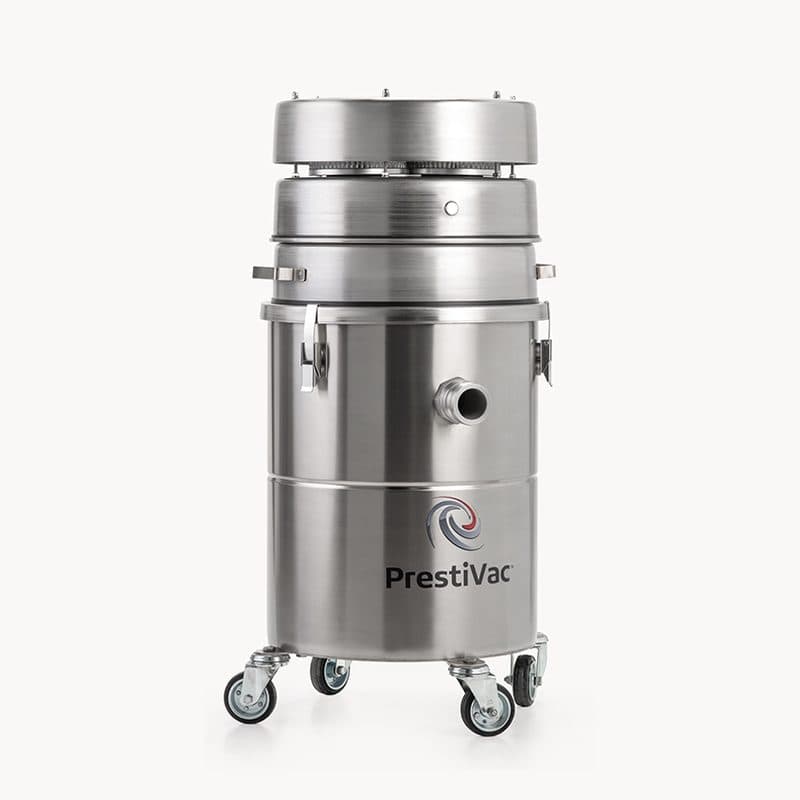
Central Vacuum Systems
Facility-wide housekeeping from fixed drops
Learn more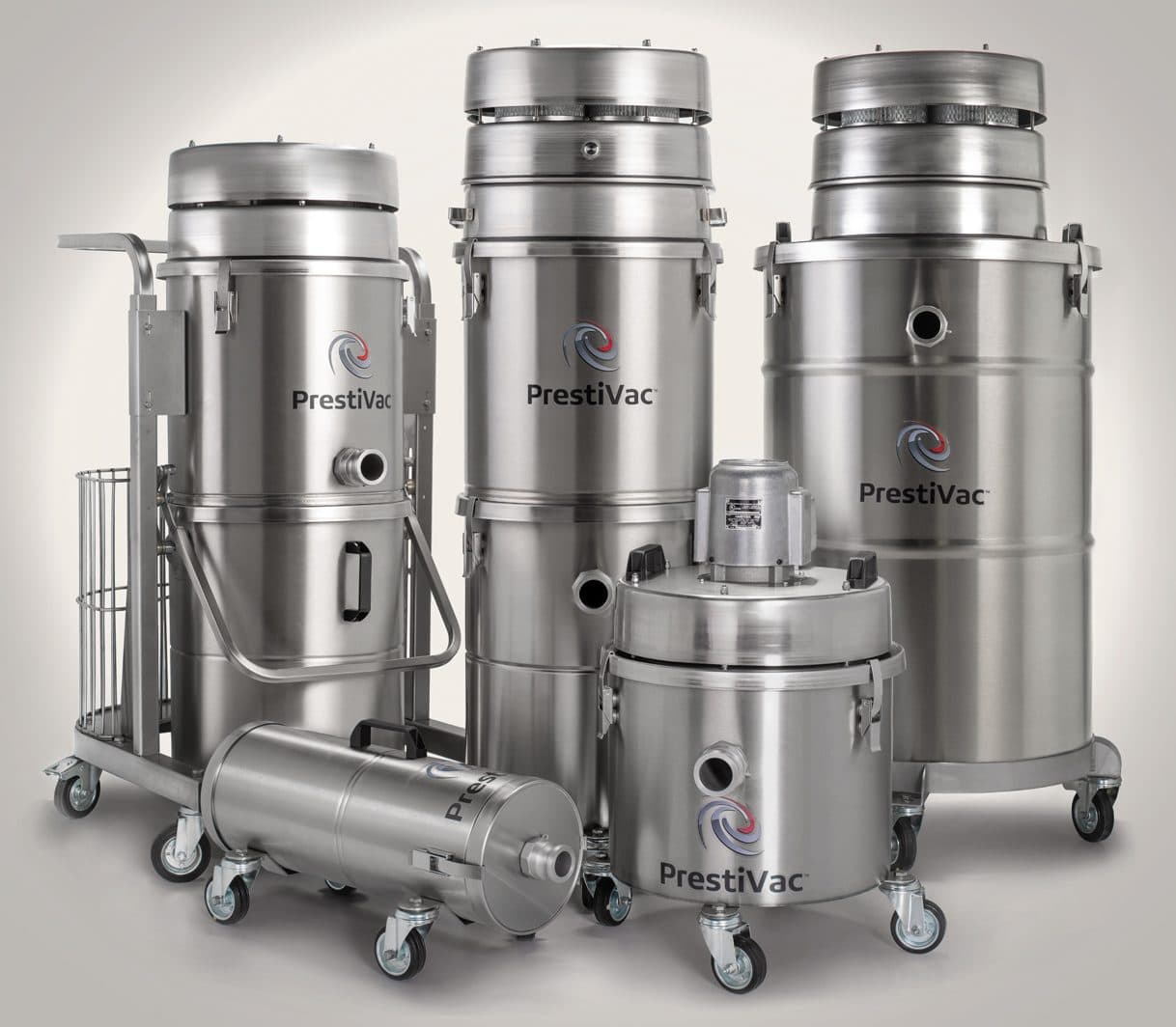
Industrial Vacuums
Continuous-duty recovery for demanding plants
Learn more
Representative case study
Managing Grain Dust in a Grain Elevator & Feed
How a representative grain cooperative runs housekeeping in the industry that wrote the rules — priority areas on the 1/8-inch action level, elevator legs treated as the initiation points they historically are, and bins cleaned without climbing in.
Read the full case studyTalk to the manufacturer
Get the right explosion proof vacuum for your application.
Tell us what you need to vacuum and where. Our technical team will recommend the PrestiVac model best suited to your material, your classification and how hard you will work it — and because we build every unit ourselves, we can modify it to fit.
- Legally certified explosion proof
- Solid stainless steel construction
- Industry-best 3-year warranty
- Designed & manufactured in the USA
- 200+ vacuum versions