Executive Summary
A representative specialty chemical compounder mills, screens and blends sulfur into formulations for rubber vulcanization and agrochemical products. Sulfur occupies a singular place in the combustible dust catalog: it is one of the few materials with its own dedicated NFPA standard — NFPA 655, Prevention of Sulfur Fires and Explosions, now carried into the consolidated NFPA 660 — and its minimum ignition energy is among the lowest reported for any common industrial dust, low enough that ordinary static discharges, including ones too weak for a person to notice, can exceed it.
That property reorders the whole program. For most dusts, static control is one line in the specification; for sulfur it is the specification. The plant's exposure map showed the familiar generation points — mill discharge, screen decks, blender charge and discharge, bag filling — but the audit's real findings were electrical: powder moving through insulating plastic scoops and drum liners, no bonding verification anywhere in the transfer chain, compressed-air blow-down around the screens, and an unrated shop vacuum whose motor was an ignition source parked at the point of peak concentration. A second consequence sharpened the stakes: sulfur that ignites burns to sulfur dioxide, so even a small smoldering event is a toxic-gas event, not just a fire.
The engineered response was grounding-first: bonded, verified transfer points; conductive and static-dissipative equipment end to end; air-operated explosion-proof HEPA vacuums in the classified process areas — zero electrical components anywhere in the recovery path; documented frequencies at the mill, screen and blender surrounds with extension kits putting elevated surfaces on routine; blow-down retired; and collected sulfur moved promptly in sealed, conductive containers, segregated from oxidizers, with disposition per the SDS.
Project Overview
- Facility type
- Specialty chemical compounding plant
- Processes
- Receiving, milling, screening, blending, bag & drum packaging
- Environment
- Classified dry-powder process areas; dedicated sulfur handling rooms
- Dust generation points
- Mill discharge, screen decks, blender charge/discharge, bag filling heads
- Housekeeping challenge
- Ignition energy so low that static control governs every step
- Potential ignition sources
- Static discharge, isolated conductors, unrated equipment, hot surfaces
Industry Background
Sulfur is a workhorse of the chemical economy — vulcanizing agent for rubber, feedstock for agrochemicals and pigments, additive across dozens of formulations — and it is handled dry, as milled powder and prilled granules whose handling abrades a fine fraction free. Wherever it is milled, screened, blended or packed, sulfur dust is generated as a matter of process design.
The regulatory landscape acknowledges how distinctive it is. Sulfur earned its own standard, NFPA 655, whose requirements for fire and explosion prevention now carry into the consolidated NFPA 660 alongside the commodity standards for metals, wood, and agricultural dusts — with NFPA 652's Dust Hazard Analysis obligation as the baseline and OSHA's Combustible Dust National Emphasis Program supplying enforcement attention. A compounder handling sulfur inherits both the general combustible-dust framework and the material's own legacy requirements.
What makes sulfur exceptional is ignition sensitivity. Minimum ignition energies reported for fine sulfur sit among the lowest of any industrial dust — of the same order as the static discharges generated by ordinary powder handling, and below what a person can reliably feel. In practical terms: the spark you would never notice walking across the floor, the charge accumulated by powder sliding through an insulating scoop, the isolated conductor of an ungrounded drum — any of these can be sufficient. Programs built for ordinary dusts treat static as one control among several; a sulfur program is a static-control program with housekeeping attached.
The Challenge
- Safety
- Dust layers on mill surrounds, cable trays and ledges built the secondary-event fuel inventory around a material that a static spark too small to feel can ignite.
- Operations
- Powder moved through insulating plastic scoops and drum liners — charge generators and isolated conductors installed directly into the transfer chain.
- Compliance
- No documented Dust Hazard Analysis coverage of the sulfur rooms, no bonding verification points, no defined cleaning frequencies — direct exposure under the NFPA 652 baseline and the OSHA NEP.
- Maintenance
- Fines migrated into switchgear and drive enclosures; the same dust the housekeeping program missed became the electrical program's contamination problem.
- Employee exposure
- Blow-down and sweeping put sulfur dust airborne at breathing height — an irritant exposure in normal times, and the feedstock for sulfur dioxide if anything ignites.
- Production interruptions
- Because burning sulfur generates SO2, even a small smolder means area evacuation — housekeeping quality gated the plant's tolerance for any ignition event at all.
Hazard Analysis
Sulfur assembles the explosion pentagon with unusual ease. Fuel: fine sulfur liberated at the mill, screens, blender and filling heads. Oxygen: ambient. Dispersion: transfer turbulence, blow-down, sweeping. Confinement: process rooms, enclosures, the mill and screen housings themselves. Ignition: this is where sulfur rewrites the analysis — the energy required is so low that the ignition column effectively fills itself from ordinary static electricity unless every element of the handling chain is bonded and grounded.
Static electricity deserves its own paragraph because for sulfur it is the analysis. Powder flowing through insulating materials — plastic scoops, drum liners, unbonded chutes — generates charge by contact and separation. An ungrounded metal drum becomes an isolated conductor storing that charge until something offers a path; the resulting spark carries energy comfortably above fine sulfur's reported ignition thresholds. Grounding and bonding are therefore not equipment features here; they are the mechanism by which the pentagon's ignition leg is removed.
The consequence side is also distinctive. Sulfur burns to sulfur dioxide — a toxic, choking gas — so the cost of even a contained smolder includes evacuation and exposure response, not just fire damage. This raises the value of two program elements most dusts treat as secondary: prompt disposition of collected material (no standing inventory of fuel inside equipment or containers) and sealed, conductive containers that neither accumulate charge nor feed a smolder with air.
Equipment rating completes the picture. An unrated vacuum motor is an ignition source deployed to the exact point of peak dust concentration — for sulfur, an unacceptable trade even briefly. Air-operated explosion-proof recovery removes the question categorically: no motor, no switchgear, no electrical components anywhere on the unit, with conductive construction carrying charge to verified ground continuously during operation.
| Pentagon element | Present as |
|---|---|
| Fuel | Fine sulfur at mill discharge, screens, blender and filling heads |
| Oxygen | Ambient atmosphere throughout the process rooms |
| Dispersion | Transfer turbulence, blow-down, sweeping |
| Confinement | Process rooms, mill and screen housings, enclosures |
| Ignition | Static discharge above sulfur's very low ignition energy; isolated conductors; unrated equipment |
Site Assessment Findings
- Powder transfers performed with insulating plastic scoops and unbonded drum liners
- No grounding or bonding verification points anywhere in the sulfur handling chain
- Dust layers on mill surrounds, screen housings, cable trays and structural ledges
- Compressed-air blow-down in routine use around the screen decks
- One unrated shop vacuum stationed in the blending room
- Collected dust and sweepings held open and unsegregated near packaging
Recommended Solution
Grounding architecture came first. Every transfer point in the sulfur chain was bonded, with verification points installed and a check-before-use rule added to the method cards: conductive scoops and grounded drums replaced the plastic, static-dissipative hose assemblies and grounded stainless tools ran end to end, and continuity checks moved onto the preventive-maintenance schedule. The principle was stated plainly in training — for this material, the ground strap is the safety system.
Recovery equipment matched the material's temperament: air-operated explosion-proof HEPA vacuums own the classified sulfur rooms, putting zero electrical components anywhere in the recovery path while conductive construction drains charge continuously to verified ground. Documented frequencies cover the mill, screen and blender surrounds; extension kits put cable trays, ledges and housing tops on routine from the floor; capture-at-source nozzles work the bag-filling heads on the run schedule. Compressed-air blow-down and dry sweeping were retired in the same order that introduced the vacuums.
The disposal path was rebuilt around what sulfur becomes when it burns. Collected material moves promptly — no standing inventory inside units or containers — in sealed, conductive containers that are grounded during transfer, segregated from oxidizer storage as the SDS requires, and dispositioned on a defined cadence. A small placard program marks the sulfur rooms' rules at the door: bonded transfers only, verified ground before operation, vacuum recovery only, sealed disposal always.
Equipment Used
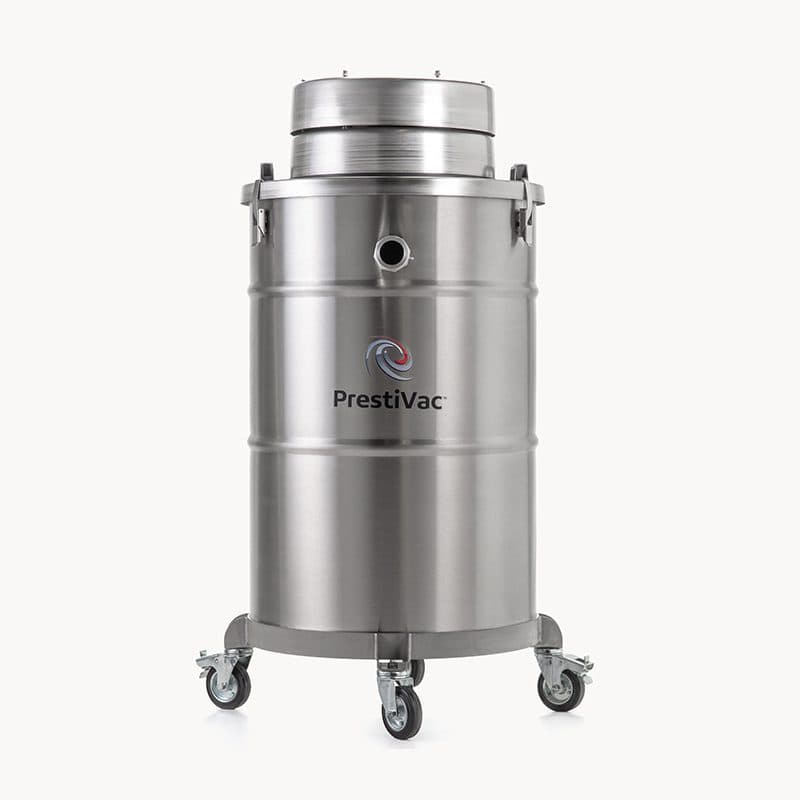
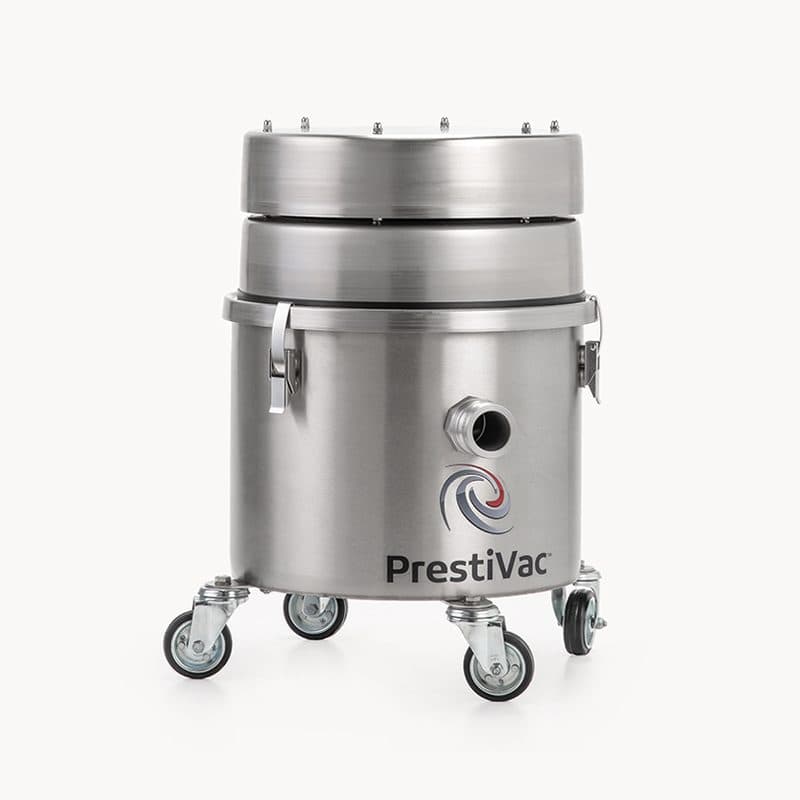
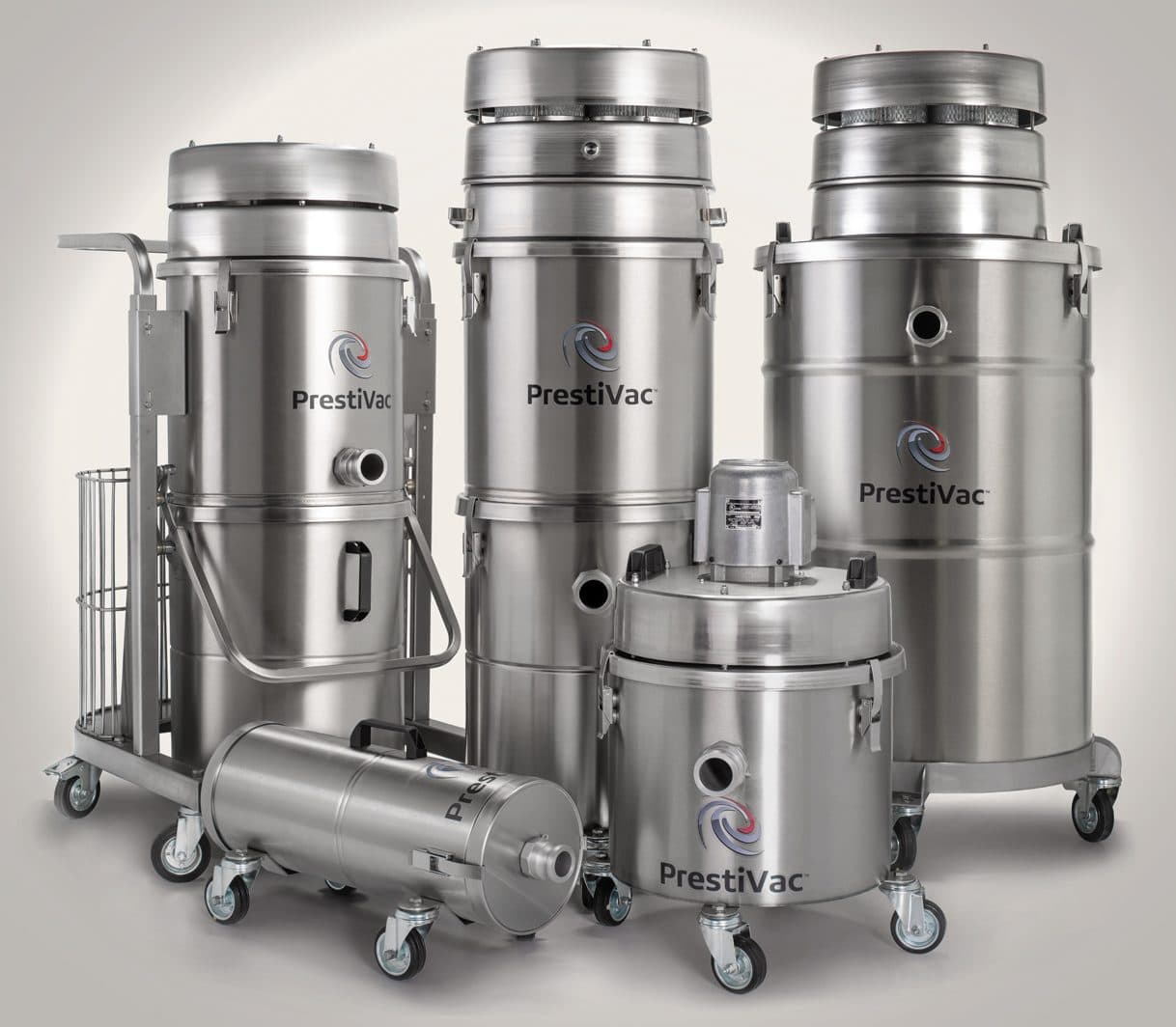
Air-operated explosion-proof vacuums (AVX series, e.g. AVX-55 EX)
Sulfur process rooms — zero electrical components, conductive path to verified ground
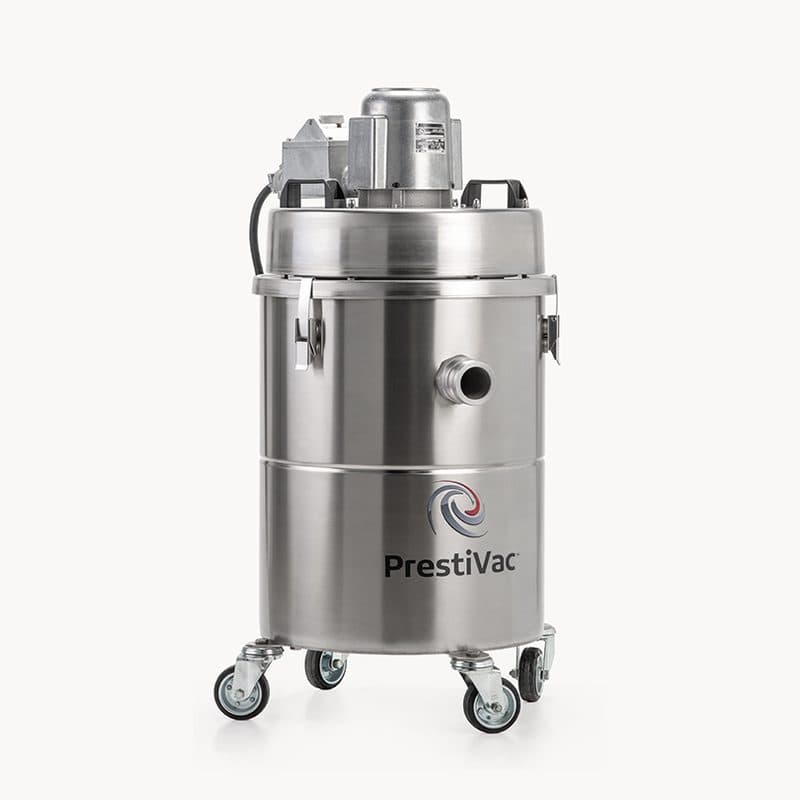
Explosion-proof HEPA vacuums (EVX series, e.g. EVX-15 EX)
Adjacent classified areas and packaging-side recovery
Industrial vacuums (AV series, e.g. AV1)
Non-classified support areas, offices and warehouse housekeeping
Static-dissipative hose assemblies
Continuous conductive path from pickup point to canister
Grounded stainless floor tools and crevice nozzles
Mill surrounds, screen housings and structural ledges
Bonding and grounding kits with verification points
Check-before-use continuity at every station; PM-scheduled re-verification
Tested HEPA final-stage filtration (99.99% at 0.3 µm)
Fines retained — exposure control during cleaning
Sealed conductive collection containers
Charge-safe, air-limiting transfer of collected sulfur to segregated disposal
Installation & Implementation
- 1
Assessment
DHA-aligned walk-down of the sulfur chain; static audit of every transfer point; accumulation survey of surrounds and elevated surfaces.
- 2
Planning
Grounding architecture map with verification points; frequency plan for mill, screen and blender surrounds; disposal cadence per the SDS.
- 3
Training
Operator sessions centered on the static story — why the ground strap is the safety system — plus method cards and disposal rules.
- 4
Commissioning
Grounding continuity verified at every station; suction and filtration checked against specification; air supply capacity confirmed for the AVX units.
- 5
Operator education
Door placards for the sulfur rooms; check-before-use bonding steps built into the job start routine.
- 6
Maintenance program
Continuity re-verification on PM; filter service on condition; container disposition cadence audited monthly.
Before vs After
| Aspect | Before | After |
|---|---|---|
| Static control | Plastic scoops and liners; no verification anywhere | Bonded, conductive chain with check-before-use continuity points |
| Cleaning method | Compressed-air blow-down and sweeping | Grounded vacuum recovery; blow-down retired |
| Recovery equipment | Unrated shop vacuum in the blending room | Air-operated explosion-proof HEPA units — zero electrical components |
| Elevated surfaces | Cable trays and housing tops untouched between shutdowns | On routine via extension kits from the floor |
| Collected material | Open sweepings held near packaging | Sealed conductive containers, grounded transfer, prompt segregated disposal |
| Documentation | No frequencies, no static checks on record | Scheduled frequencies and continuity verification on the PM system |
Compliance Improvements
The engineered program supports compliance with the sulfur-specific requirements NFPA 655 established — static control, ignition-source elimination and housekeeping for sulfur handling — as those requirements carry into the consolidated NFPA 660, with NFPA 652's Dust Hazard Analysis obligation as the baseline.
It supports the expectations enforced under OSHA's Combustible Dust National Emphasis Program and the general duty framework: documented cleaning frequencies, methods that remove rather than redistribute dust, rated equipment in classified areas, and a grounding program with verifiable continuity.
Materials handling follows the SDS throughout — including segregation of collected sulfur from oxidizer storage and prompt disposition. Component certifications and listings vary by model and configuration; documentation is supplied per application, and the program is described throughout as supporting compliance rather than conferring it.
Operational Improvements
- The ignition leg of the pentagon is engineered out rather than managed down: verified grounding at every transfer plus air-operated recovery removes both static accumulation and electrical equipment from the sulfur rooms entirely.
- Housekeeping stops manufacturing its own hazard — single-pass vacuum recovery replaces the blow-down that suspended fine sulfur at exactly the concentrations the program exists to prevent.
- Consequence exposure shrinks by disposal design: prompt, sealed, segregated disposition means no standing sulfur inventory waiting to smolder into an SO2 event.
- Cleaning-time exposure drops by method — capture at the nozzle with HEPA-retained exhaust replaces airborne-at-breathing-height sweeping. (Improvements are stated by mechanism; this representative scenario publishes no fabricated percentages.)
Technical Explanation
Why grounding is the program for sulfur: with reported ignition energies among the lowest of any industrial dust — below what a person can reliably feel as a static shock — the only robust posture is to deny charge anywhere to accumulate. Bonding, conductive materials and verified continuity convert static from a probabilistic hazard into an engineered-out one.
Why air-operated recovery fits this material: an AVX-class unit has no motor, no switch, no electrical component anywhere on the vacuum — the equipment-rating question is not answered but removed. Compressed air becomes the energy source, and the unit's conductive construction drains operational charge to ground continuously while it runs.
Why isolated conductors get special attention: an ungrounded drum or a foil-lined container in a powder stream stores charge silently until a path appears, then delivers it as a single spark — the exact failure mode sulfur cannot tolerate. The audit hunts for them; the method cards forbid creating new ones.
Why the disposal path is a safety system: sulfur's combustion product is sulfur dioxide, so collected material is a toxic-gas precursor as well as a fuel. Sealed conductive containers limit air to any incipient smolder, grounding during transfer prevents the spark, segregation from oxidizers removes the accelerant, and prompt disposition caps the inventory at risk.
Frequently Asked Questions
What makes sulfur different from other combustible dusts?
Ignition sensitivity. Reported minimum ignition energies for fine sulfur are among the lowest of any common industrial dust — of the same order as static discharges too weak for a person to notice. Controls that are adequate for ordinary dusts leave sulfur exposed; static control has to lead the program.
Does sulfur really have its own NFPA standard?
Yes — NFPA 655, Prevention of Sulfur Fires and Explosions, one of the commodity standards now consolidated into NFPA 660. Its requirements for static control, ignition-source elimination and housekeeping carry forward, with NFPA 652's Dust Hazard Analysis obligation as the baseline.
Why specify air-operated vacuums instead of electric explosion-proof units?
Both can be legitimate, but air-operated units answer sulfur's defining question categorically: with no electrical components anywhere on the unit, there is no motor or switchgear to rate, inspect or doubt. For the most ignition-sensitive rooms, removing the question outranks answering it.
Are plastic scoops and drum liners really a hazard?
For sulfur, yes. Insulating materials generate charge as powder slides over them and prevent it from draining; an unbonded metal drum then stores that charge as an isolated conductor. The eventual spark can exceed fine sulfur's ignition energy. Conductive, bonded, grounded transfer equipment is the fix.
What happens if collected sulfur ignites anyway?
Burning sulfur produces sulfur dioxide — a toxic gas — which is why the disposal path is treated as a safety system: sealed conductive containers that limit air to a smolder, grounding during every transfer, segregation from oxidizers, and prompt disposition so no inventory stands waiting.
Can we just wash the areas down instead?
Wet methods have a place in some plants, but they create slurry handling and drainage questions and leave the transfer-chain static problem untouched. Dry vacuum recovery with grounded, air-operated equipment removes the dust and the ignition mechanism together; the SDS governs any material-specific handling beyond that.
Is prilled sulfur safer than milled powder?
Coarse prills are less dispersible than milled fines, but handling abrades a fine fraction free — and it is the fines that govern the hazard. The program is specified for the dust the process actually creates, not the granule size on the purchase order.
Do we need explosion-proof equipment outside the sulfur rooms?
Equipment follows area classification and task: air-operated and explosion-proof HEPA units own the classified process rooms; standard industrial units can serve offices, warehouses and non-classified support areas. Your Dust Hazard Analysis and zoning govern the split.
Key Takeaways
- Sulfur's ignition energy is among the lowest of any industrial dust — static discharges too small to feel can exceed it, so static control leads the program rather than appearing in it.
- Sulfur has its own legacy standard — NFPA 655, carried into NFPA 660 — and inherits the NFPA 652 DHA baseline and OSHA NEP attention like every combustible dust.
- Hunt isolated conductors: plastic scoops, liners and ungrounded drums are charge generators and storage installed into the transfer chain.
- Air-operated explosion-proof recovery removes the equipment-ignition question categorically — zero electrical components in the sulfur rooms.
- The disposal path is a safety system: burning sulfur makes SO2, so sealed conductive containers, oxidizer segregation and prompt disposition cap the consequence.
- Retire blow-down first — it suspends fine sulfur at exactly the concentrations and locations the rest of the program exists to prevent.
Classification
- Industry
- Chemical Processing
- Application
- Sulfur Milling & Blending Housekeeping
- Hazard
- Combustible Sulfur Dust
- Material
- Sulfur
- Process
- Milling, Screening, Blending & Packaging
- Dust Class
- Combustible Inorganic Dust
- Facility Type
- Specialty Chemical Compounding Plant
- Relevant Standards
- NFPA 660, NFPA 655, NFPA 652, OSHA NEP
- Products Featured
- AVX Series air-operated explosion-proof vacuums, EVX Series explosion-proof HEPA vacuums, Static-dissipative hose & tool kits, Sealed conductive collection containers
- Target Personas
- Process Safety Engineer, EHS Manager, Plant Manager, Maintenance Manager