
Vacuum solutions engineered for recycling & waste processing
The one industry whose defining hazard is not knowing what's in the stream — a recycling feed is whatever arrived, so the dust it sheds can hold combustible metals, lithium cells that can enter thermal runaway, insulating plastic fines that charge themselves, and toxic residues, often all at once. Everything here follows one rule: characterize the stream, or treat it as worst-case.
Characterize First
Or handle as worst-case
Lithium-Aware
Battery recycling & thermal runaway
HEPA Filtration
Toxic and fine fractions retained
Built for Mixed Streams
Metal, battery, e-waste & plastic
Explosion-Proof
Manufacturing specialists
1000+
Vacuums sold worldwide
USA
Designed & manufactured
Direct
Buy from the manufacturer
NFPA 660
ATEX / IECEx principles
Recycling & Waste Processing production process explorer
Every stage. Every challenge. The right vacuum solution.
A recycling operation transforms unknown, mixed input into sorted output, shedding dust of unpredictable composition at every step. Walk the stages — the hazard is what you can't see in the feed.
Stage 01 — Intake & sorting
Material of unknown composition arrives and is sorted; the first dust is the most uncertain, so recovery here is specified conservatively until the stream is characterized.
Key challenges
When the feed is whatever arrived
The Uncharacterized Stream
You rarely know the full composition of a recycling feed — combustible metal, lithium, plastic and toxics may all be present, which is the central engineering challenge here.
Lithium Thermal Runaway
Battery recycling can contain live or damaged cells that ignite and self-sustain — a genuine fire and thermal hazard that goes well beyond dust deflagration.
Shredded Combustible Metals
Aluminum, magnesium and titanium fines from shredding carry full combustible-metal rules — grounded, rated, dedicated recovery regardless of the source material.
Toxic + Conductive E-Waste
Electronics recycling sheds lead and heavy metals (toxic) alongside copper and precious-metal fines (conductive) — a mix demanding HEPA retention and sealed handling.
Self-Charging Plastic Fines
Regrinding plastics produces insulating dust that builds static — its own ignition source — so grounded, static-dissipative recovery is required as in any polymer operation.
Default To Worst-Case
When the stream isn't characterized, recovery is specified to the most hazardous plausible component — the only defensible posture when the feed is unknown.
Dust & materials knowledge center
The mixed streams recycling handles
Combustibility and severity are material- and particle-size-specific — testing and your Dust Hazard Analysis govern. Full directory: the full materials directory.
Applications in recycling
- Metal recycling
- Battery recycling
- Plastic recycling
- E-waste recycling
- Wood recycling
- Glass recycling
- View all
Built for performance. Built for compliance.
View all products →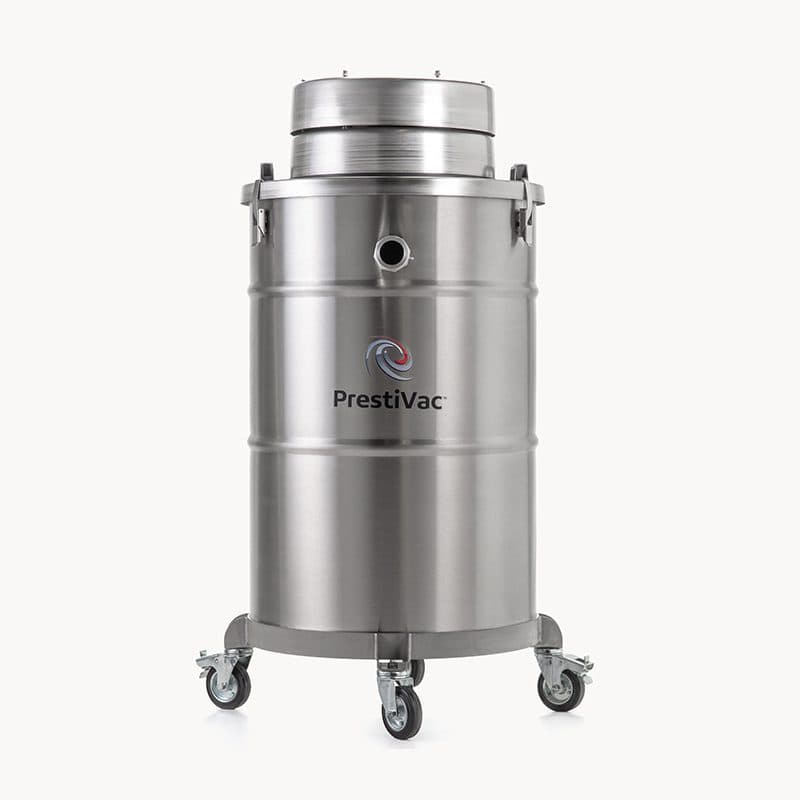
Explosion Proof Vacuums
Grounded, bonded recovery for combustible dust
Learn more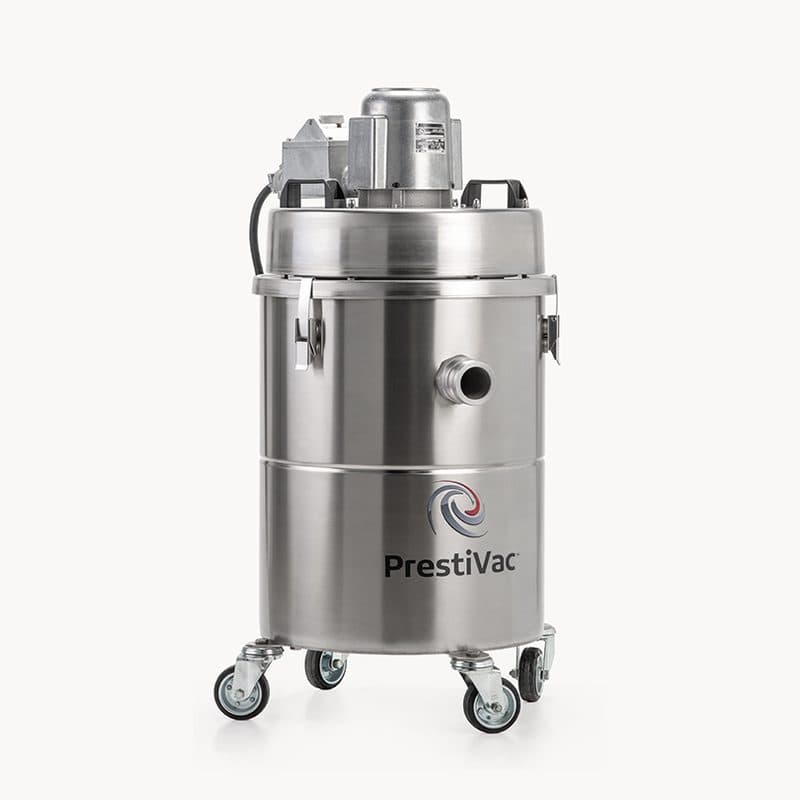
HEPA Vacuums
99.99% filtration for fine and hazardous dust
Learn more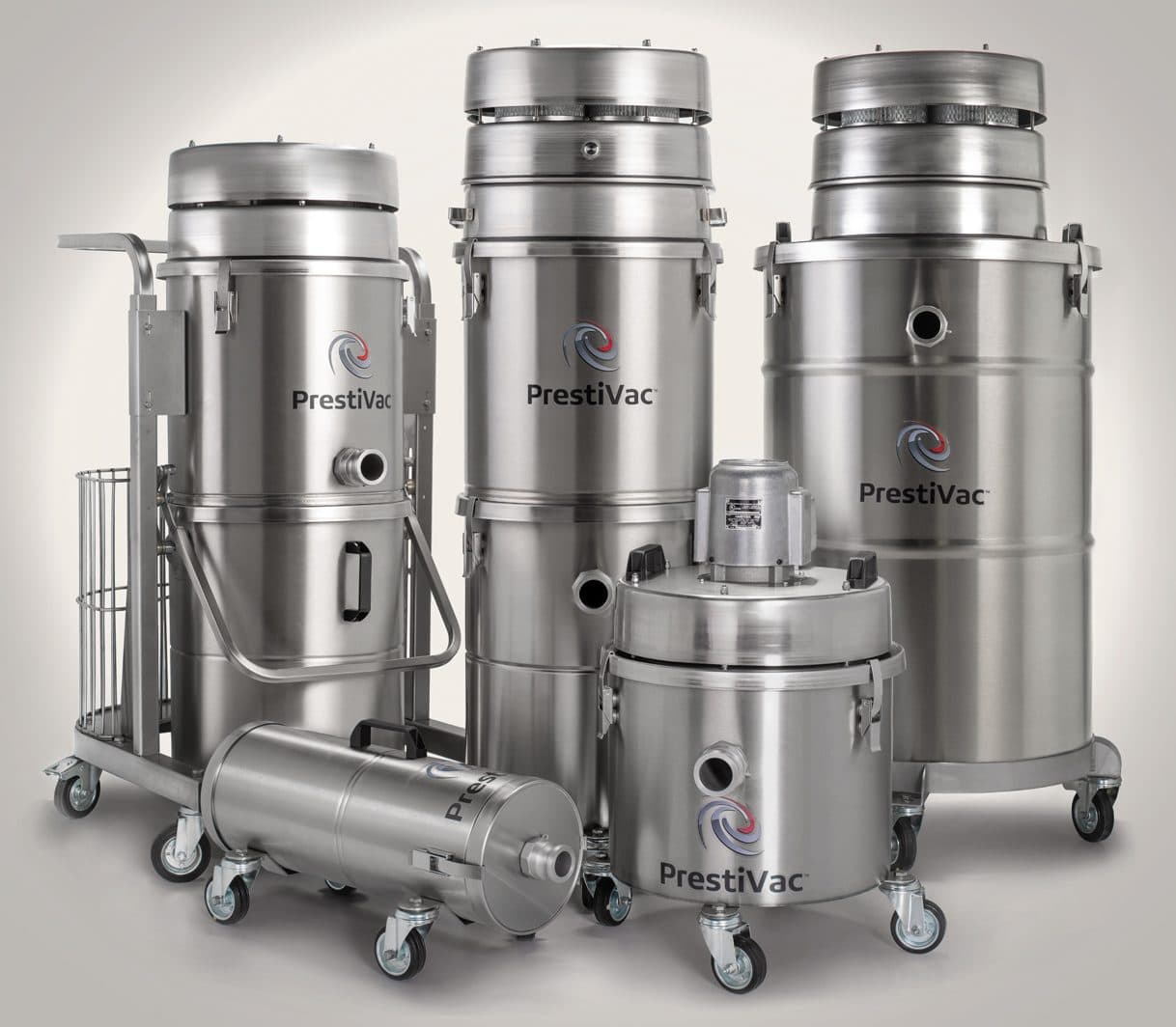
Industrial Vacuums
Continuous-duty recovery for demanding plants
Learn more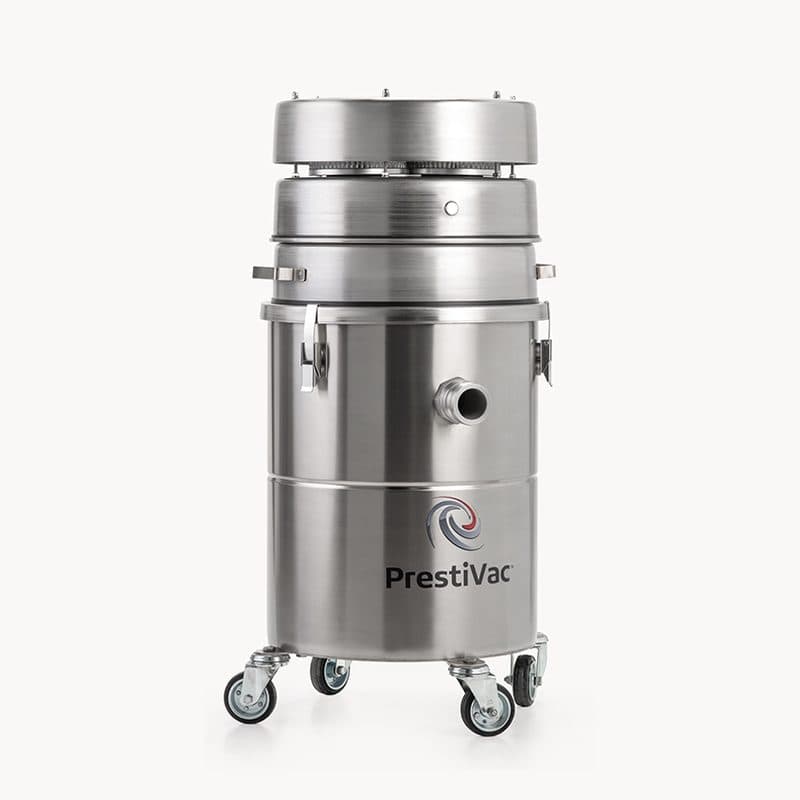
Central Vacuum Systems
Facility-wide housekeeping from fixed drops
Learn more
Representative case study
Coal and Biomass Dust Housekeeping at a Power
A representative scenario: controlling carbonaceous dust and its tendency to smoulder across a fuel handling and boiler house operation.
Read the full case studyTalk to the manufacturer
Get the right explosion proof vacuum for your application.
Tell us what you need to vacuum and where. Our technical team will recommend the PrestiVac model best suited to your material, your classification and how hard you will work it — and because we build every unit ourselves, we can modify it to fit.
- Legally certified explosion proof
- Solid stainless steel construction
- Industry-best 3-year warranty
- Designed & manufactured in the USA
- 200+ vacuum versions