
Drum & Container Filling Vacuum Solutions
As the container fills, the air it holds has to go somewhere — and it takes dust with it.
Filling a drum, pail or IBC with powder has a dust mechanic all its own: as product goes in, the air the container held is displaced out — and it carries fine dust with it, straight past the fill head. Add that these rigid containers are often filled with chemicals, pigments, resins and hazardous powders, and capture at the fill head becomes both a combustible-dust and an exposure control.
Explosion-Safe Design
Grounded recovery for combustible powder
HEPA Filtration
Chemical & hazardous powders retained
Built to Last
Rugged. Reliable. PrestiVac.
Maximum Uptime
Drum and IBC throughput
Overview
Rigid-container filling is a close cousin of bag and sack handling, but its signature is displacement dusting. As powder flows into a drum, pail or IBC, it displaces the air already inside, and that rising air escapes around the fill head carrying fine dust with it — a plume generated by the physics of filling rather than by spillage. The materials involved sharpen the concern: drums and IBCs are the workhorses of chemical, pigment, resin and additive handling, so the displaced dust is frequently combustible, and sometimes chemical, hazardous or potent. Capture is positioned at the fill head to catch the displaced plume, grounded and rated where the powder is combustible, and HEPA-retained and sealed where it is hazardous or exposure-limited.
Displacement Dusting
Air pushed out as the container fills
Chemical & Hazardous Powder
Grounded and HEPA-retained
Fill-Head Cleanliness
Station kept clear of spillage
Container Throughput
Drums, pails and IBCs
Challenges in drum & container filling
- Displacement dusting — air pushed out of the filling container carries dust
- Rigid drums, pails and IBCs behave differently from bags and sacks
- Chemical, pigment and resin powders are frequently combustible
- Hazardous and potent powders require containment and exposure control
- Spillage accumulates around the fill head between fills
- Fine powder rises into the operator's breathing zone at the fill point
Why vacuum recovery?
- Captures the displaced dust plume right at the fill head
- Grounded, rated equipment for combustible chemical and resin powders
- HEPA retention and sealed handling for hazardous and potent materials
- Reduces spillage and product loss around the station
- Keeps the operator's breathing zone clear during filling
- Supports combustible-dust and exposure-limit compliance with documented methods
Solution benefits
Better Safety
The displaced dust plume is captured before it reaches the operator.
Higher Productivity
Fill stations stay clean, so drumming and IBC filling keep moving.
Cost Savings
Less spillage means less product loss and less cleanup labor.
Cleaner Workplace
HEPA-retained exhaust keeps chemical and hazardous powders out of the air.
Recommended vacuums
View all vacuums →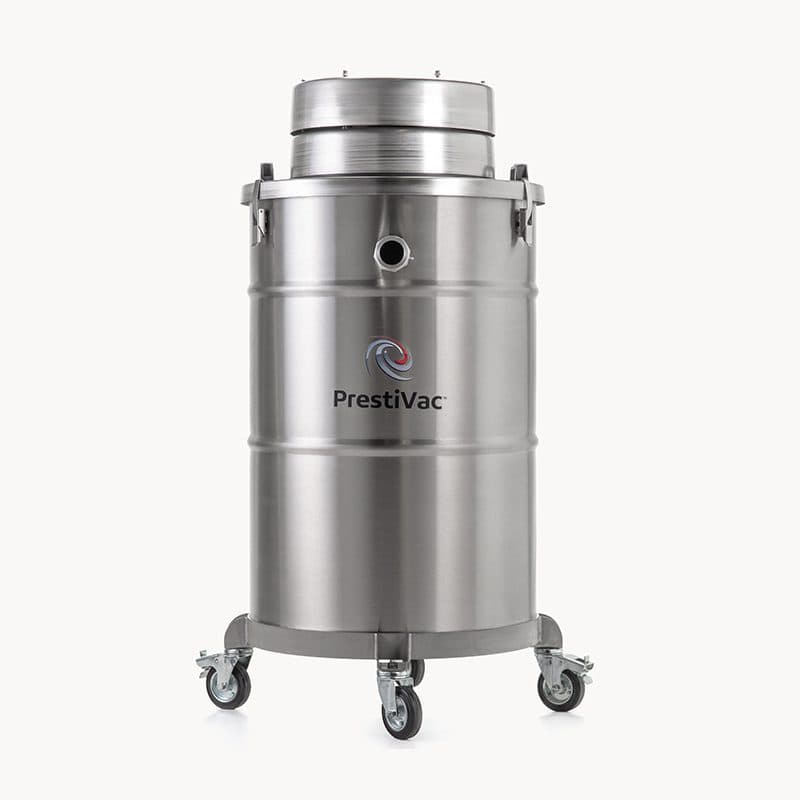
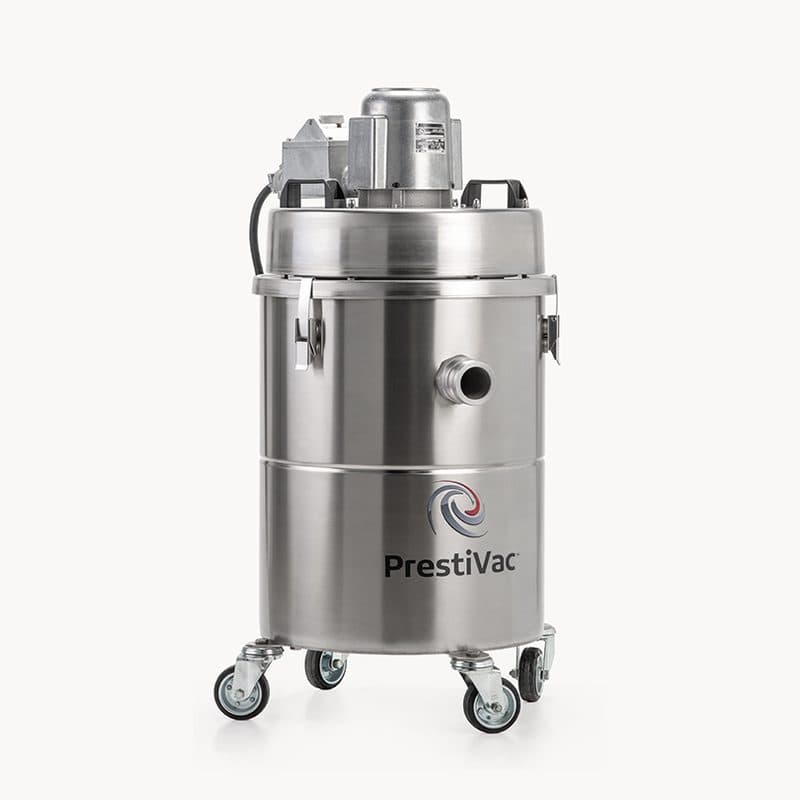
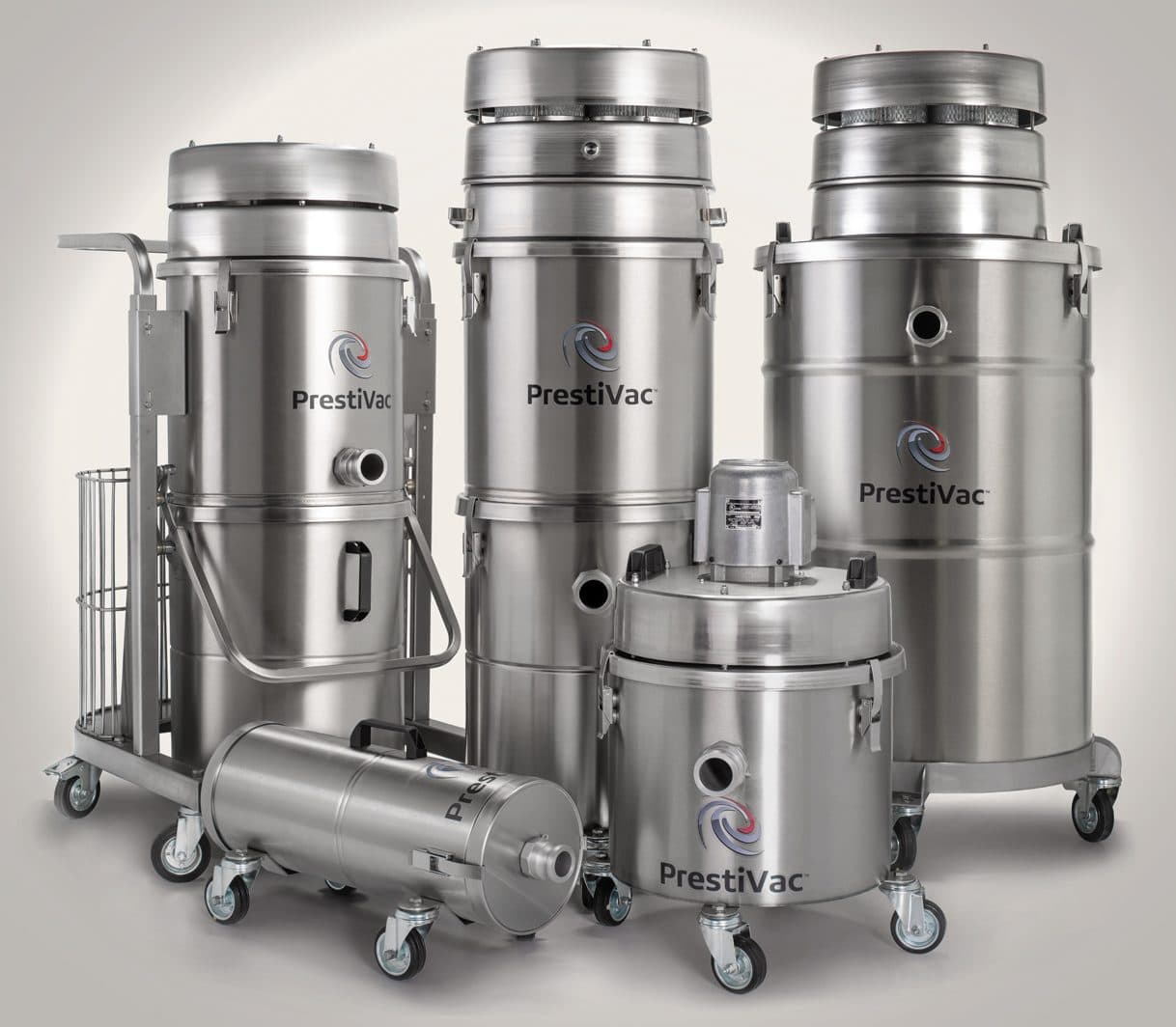
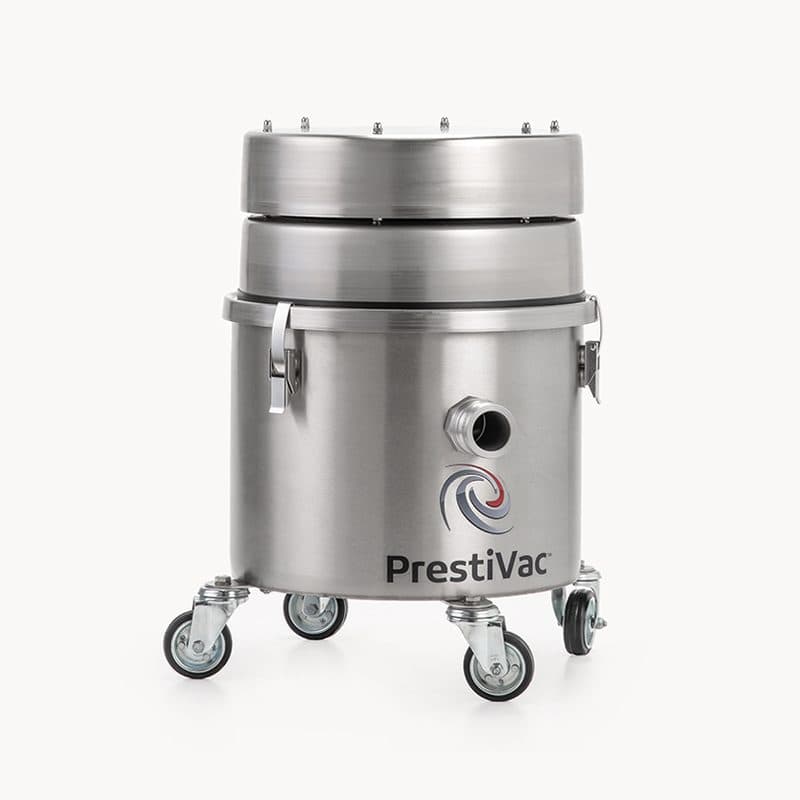
Typical system setup
- 01
Fill station
Drum, pail or IBC filling head at the source
- 02
Fill-head capture
Positioned to catch the displaced-air dust plume
- 03
Static-dissipative hose
Bonded, conductive path end to end
- 04
Rated vacuum unit
Explosion-proof for combustible powder; HEPA for hazardous materials
- 05
Sealed collection & disposal
Combustible and hazardous powders contained
Filling bags, sacks and FIBCs is the flexible-container companion — the bagging & dumping guide covers those.
Drum & Container Filling FAQ
What is displacement dusting?
As powder fills a rigid container, it pushes out the air the container already held, and that escaping air carries fine dust with it around the fill head. It is a dust plume created by the physics of filling rather than by spillage, which is why capture is positioned right at the fill head to catch the displaced air.
How is this different from bagging?
The mechanics overlap, but rigid drums, pails and IBCs behave differently from flexible bags and sacks, and drum and container filling skews toward chemical, pigment, resin and hazardous powders. Bag, sack and FIBC handling is covered in the bagging and dumping guide; this one focuses on rigid-container filling and its displacement dusting.
What about hazardous or chemical powders?
Because drums and IBCs are workhorses of chemical handling, the displaced dust is often combustible and sometimes hazardous or potent. Combustible powders call for grounded, rated recovery, while hazardous and exposure-limited materials are captured HEPA-retained and sealed, frequently with recovery dedicated to the material.
Where should capture be positioned?
At the fill head, where the displaced air escapes — that is where the plume forms, before it rises into the operator's breathing zone. Spillage that lands around the station is then cleared by scheduled housekeeping as the backstop, keeping combustible or hazardous powder from accumulating.
Talk to the manufacturer
Get the right explosion proof vacuum for your application.
Tell us what you need to vacuum and where. Our technical team will recommend the PrestiVac model best suited to your material, your classification and how hard you will work it — and because we build every unit ourselves, we can modify it to fit.
- Legally certified explosion proof
- Solid stainless steel construction
- Industry-best 3-year warranty
- Designed & manufactured in the USA
- 200+ vacuum versions