
Egg Powder Vacuum Solutions
Built for a powder where the microbiological requirement is as demanding as the fire one. Dried egg is fine, light and protein-rich, and a cleaning method that lifts it into the air fails on two counts at once — it disperses combustible fuel and it distributes a pathogen risk across the room.
Explosion-Safe Design
Grounded, bonded, conductive recovery path
Group G Organic Dust
Non-conductive combustible food powder
HEPA Filtration
Tested 99.99% at 0.3 um
Food-Sector Standards
NFPA 61 legacy carried into NFPA 660
Overview
Dried egg products — whole egg, white and yolk powders — are produced by spray drying and then milled, sifted, blended and packed. Each of those steps produces a fine airborne fraction, and the yolk-bearing powders carry enough fat to leave adherent residues on warm surfaces in the same way milk powder does.
What sets egg powder apart is that the housekeeping method has a food-safety consequence. Sweeping or blowing down redistributes a protein powder with a recognised pathogen association across surfaces, equipment and adjacent lines. A recovery method that retains what it collects is therefore doing three jobs at once: removing the fuel inventory that a primary event would loft, keeping the respirable fraction out of the air, and containing a material that must not be spread around the building.
Material type
Combustible organic protein dust, Class II Group G (non-conductive)
Where it is generated
Spray drying, milling, sifting, blending, pneumatic conveying and packing
Distinguishing property
Carries a microbiological dimension — dispersal is a contamination event as well as a fire risk
Governing standards
NFPA 660, consolidating the former NFPA 61
Industries & applications
What makes egg powder worth controlling
- Combustible organic dust: fine protein powder that suspends readily and carries deflagration conditions inside enclosures.
- Microbiological dispersal: sweeping or blowing down spreads a pathogen-associated powder across equipment and adjacent lines.
- Allergen cross-contact: egg is a major allergen, so redistribution is a labelling and recall exposure, not only a hygiene one.
- Fat-bearing residues in yolk powders: deposits adhere to warm surfaces rather than remaining loose.
- Overhead accumulation: light fines settle on beams, duct tops and above suspended ceilings, out of sight and out of the cleaning schedule.
- Static in dry handling: dry powder through chutes and pneumatic lines accumulates charge, so a bonded conductive path matters throughout.
Engineered recovery
- Retained-filtration recovery so a pathogen-associated powder leaves the building rather than being redistributed.
- Dedicated equipment per line, because egg is a major allergen and shared tooling is a cross-contact route.
- Explosion-proof construction across drying, milling and packing where the fine fraction is generated.
- Warm-surface cleaning for yolk-bearing grades, whose fat content makes deposits adhere.
- Grounded, bonded conductive flow path through dry handling and pneumatic transfer.
- Sealed container removal, keeping the emptying step away from product-contact areas.
Recommended products
View all products →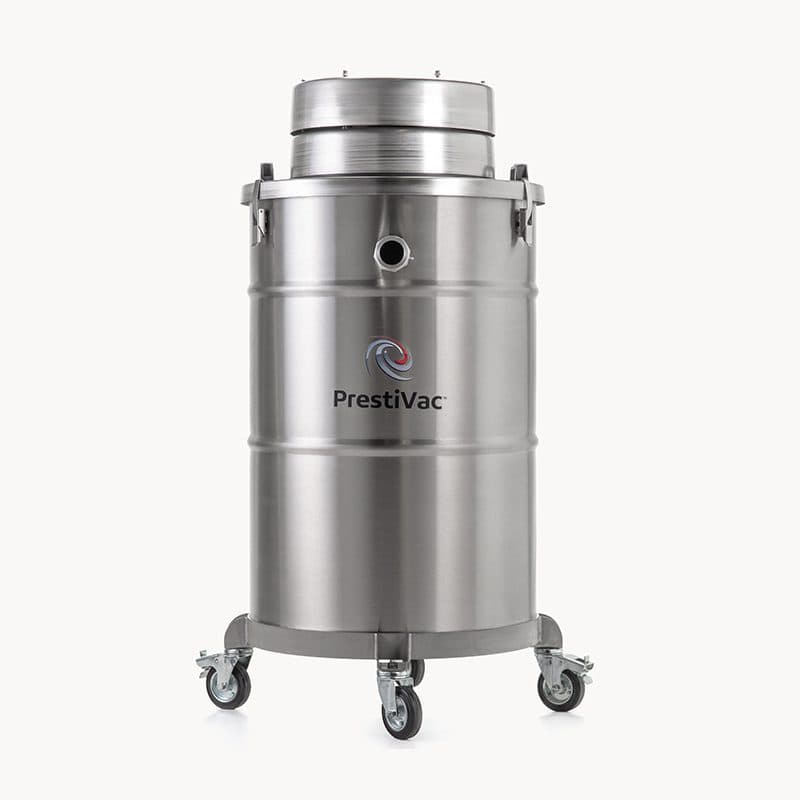
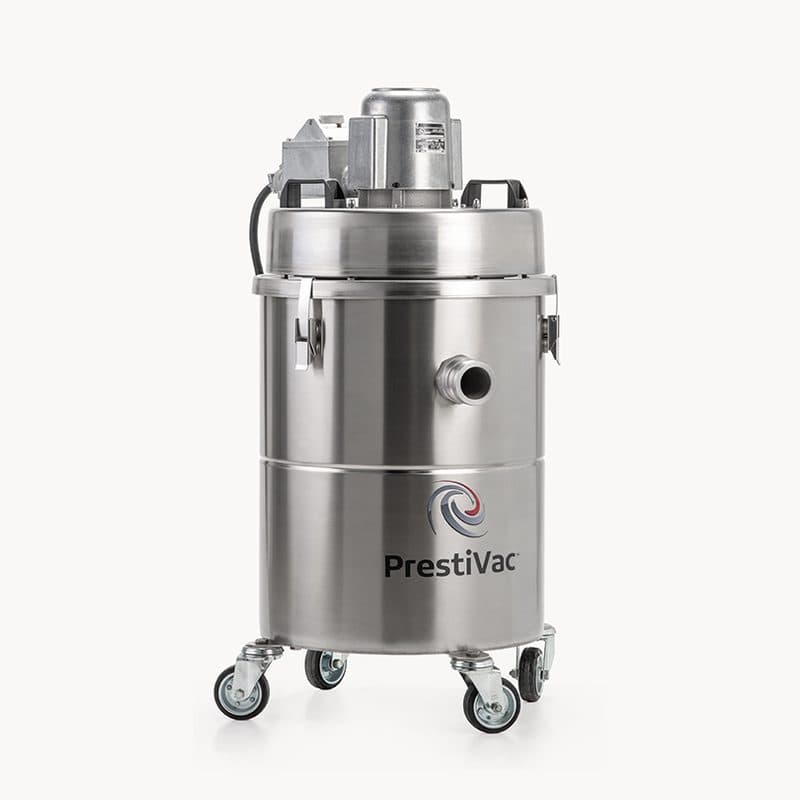
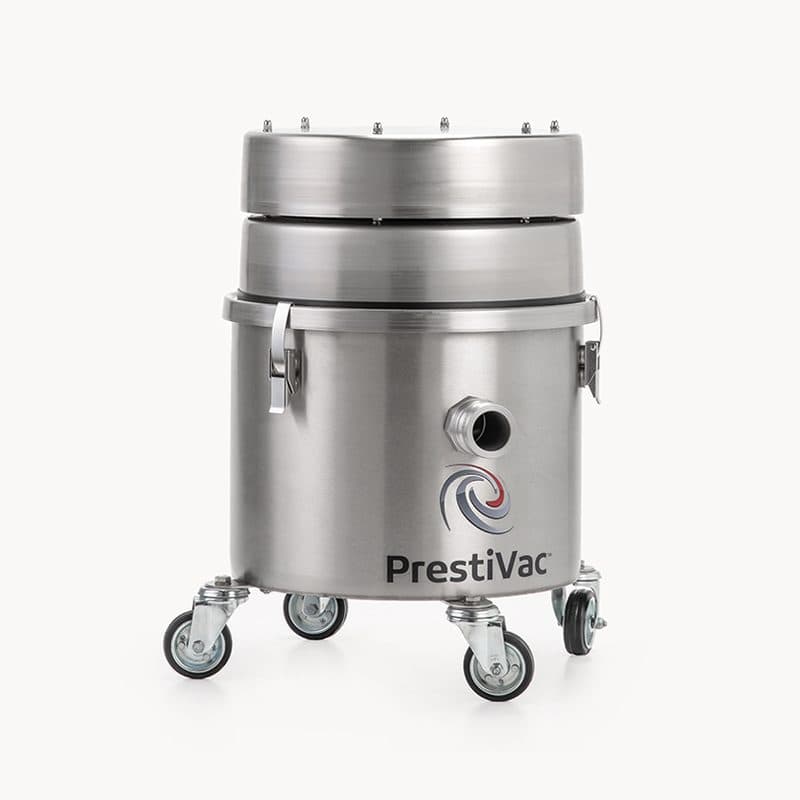
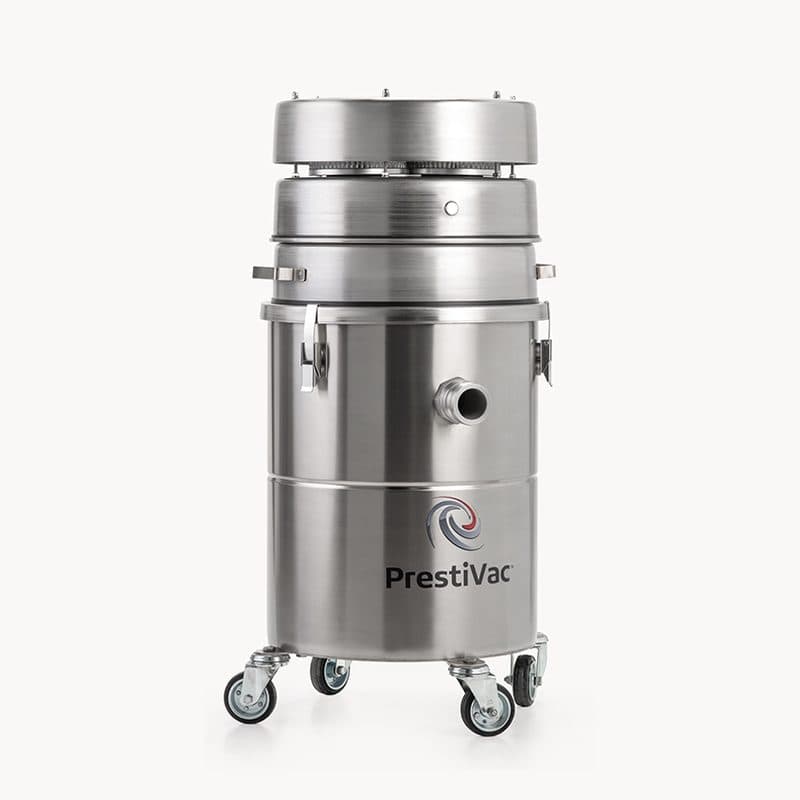
Typical system configuration
- 01
Treat cleaning as a food-safety control
Method matters more here than in most dust work: dispersal spreads a pathogen-associated allergen across the plant.
- 02
Identify the grade
Yolk-bearing powders carry fat and adhere to warm surfaces; white powders behave differently.
- 03
Confirm the classification
Your engineer assigns the classification for drying and powder handling areas.
- 04
Specify filtration for retention
The requirement is what the unit keeps, not what it picks up. A passing filter defeats both objectives.
- 05
Write segregation into the equipment plan
Allergen policy should drive whether units are shared, not be retrofitted afterwards.
Best practices
- Never sweep or blow down — with this material that is a contamination event, not just a dust one.
- Keep dedicated units or accessory sets per product line.
- Prioritise dryer, mill and packing enclosures over open floor.
- Clean warm surfaces before yolk-bearing deposits set.
- Verify the grounding path from tool to container as routine.
- Empty into sealed disposal outside the production area.
Egg Powder FAQ
Is egg powder combustible?
Yes. Dried egg powder is a fine organic protein dust and behaves as a combustible dust when dispersed, sitting in Class II Group G. Severity for your specific product is established by testing it as your process produces it.
Why does the cleaning method matter for food safety here?
Because sweeping and compressed-air blowdown disperse the powder rather than removing it. With a pathogen-associated, major-allergen material, that spreads contamination across equipment and adjacent lines. Vacuum recovery with retained filtration takes the material out of the building instead.
Do we need HEPA filtration for egg powder?
Retained absolute filtration is what stops the fine fraction being exhausted back into the room. In an operation where the same powder is a fire hazard, an allergen and a microbiological concern, a filter that passes fines defeats the purpose of cleaning at all.
Should egg lines have dedicated equipment?
Commonly, yes. Egg is a major allergen and shared equipment is a cross-contact route. Dedicated units or dedicated accessory sets per line are the usual arrangement, and the segregation policy should drive the equipment decision.
Talk to the manufacturer
Get the right explosion proof vacuum for your application.
Tell us what you need to vacuum and where. Our technical team will recommend the PrestiVac model best suited to your material, your classification and how hard you will work it — and because we build every unit ourselves, we can modify it to fit.
- Legally certified explosion proof
- Solid stainless steel construction
- Industry-best 3-year warranty
- Designed & manufactured in the USA
- 200+ vacuum versions