
Onion Powder Vacuum Solutions
Built for dehydration and milling lines handling a powder that is both hygroscopic and sugar-rich. Onion powder cakes readily, sticks to surfaces rather than shedding, and produces a fine fraction that travels well beyond the room where it was milled.
Explosion-Safe Design
Grounded, bonded, conductive recovery path
Group G Organic Dust
Non-conductive combustible food powder
HEPA Filtration
Tested 99.99% at 0.3 um
Food-Sector Standards
NFPA 61 legacy carried into NFPA 660
Overview
Dehydrated onion is milled to powders and granules, and the reduction steps generate the fine fraction that matters. Milling, sifting, blending and filling all put powder into the air, and the low bulk density means it stays there long enough to travel and settle across the building.
The distinguishing property is sugar content. Natural sugars make onion powder both strongly hygroscopic and tacky, so deposits draw moisture, become sticky and adhere to surfaces instead of shedding. That produces layers on equipment housings and overhead steel that ordinary cleaning does not remove, and a deposit that looks like a stable crust rather than an accumulation of combustible powder. Disturbance breaks it back into fines, which is precisely what a primary event would do at scale.
Material type
Combustible organic dust, Class II Group G (non-conductive)
Where it is generated
Dehydration, milling, grinding, sifting, blending and packing
Distinguishing property
High natural sugar content makes deposits tacky and strongly hygroscopic
Governing standards
NFPA 660, consolidating the former NFPA 61
Industries & applications
What makes onion powder worth controlling
- Combustible organic dust: a fine, low-density powder that suspends readily and carries deflagration conditions inside enclosures.
- Tacky hygroscopic deposits: sugar content makes accumulation adhere to surfaces and resist brushing.
- Deceptive crusting: a caked deposit looks stable but breaks back into suspendable fines under vibration or airflow.
- Milling concentration: grinding equipment produces the finest fraction alongside mechanical ignition sources.
- Overhead accumulation: light fines reach beams, duct tops and above suspended ceilings, out of the routine cleaning path.
- Cross-contact control: strong aromatics carry into adjacent products, making redistribution a product-integrity problem.
Engineered recovery
- Explosion-proof recovery for a sugar-bearing powder whose deposits adhere rather than shed.
- Contact tooling for tacky accumulation on warm equipment surfaces.
- HEPA-filtered collection so the travelling fine fraction leaves the building.
- Overhead recovery across the plant, since low bulk density carries fines well beyond milling.
- Grounded, bonded conductive path through dehydration, milling and filling.
- Dedicated tooling where aroma or colour carryover would affect adjacent products.
Recommended products
View all products →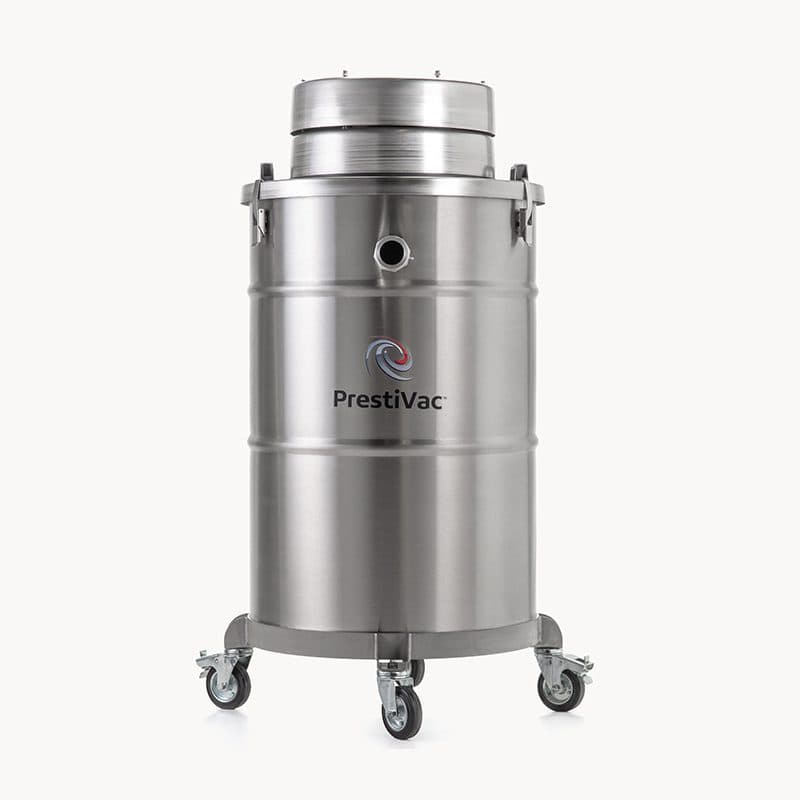
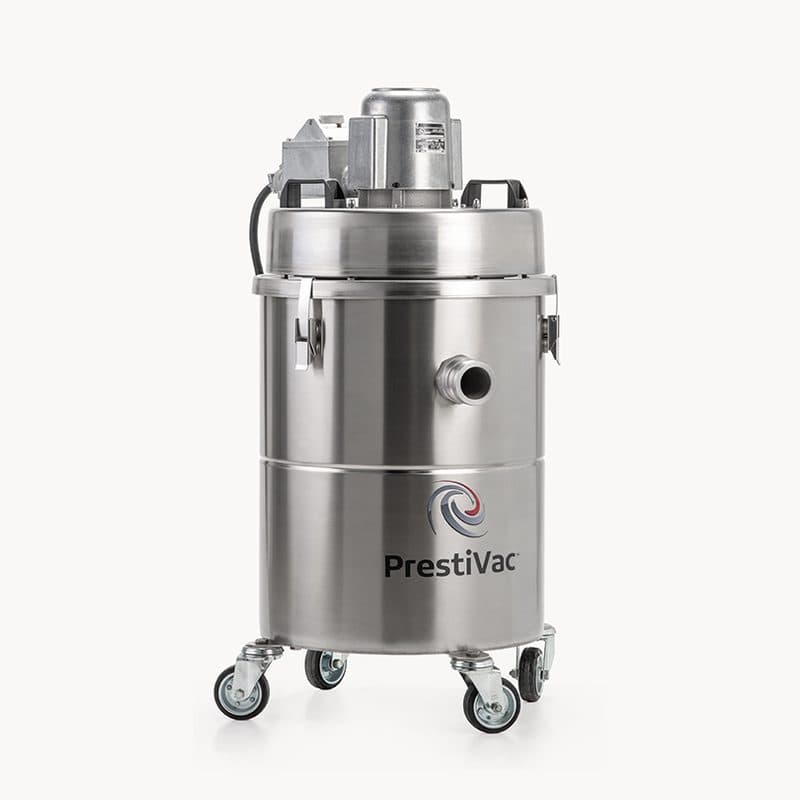
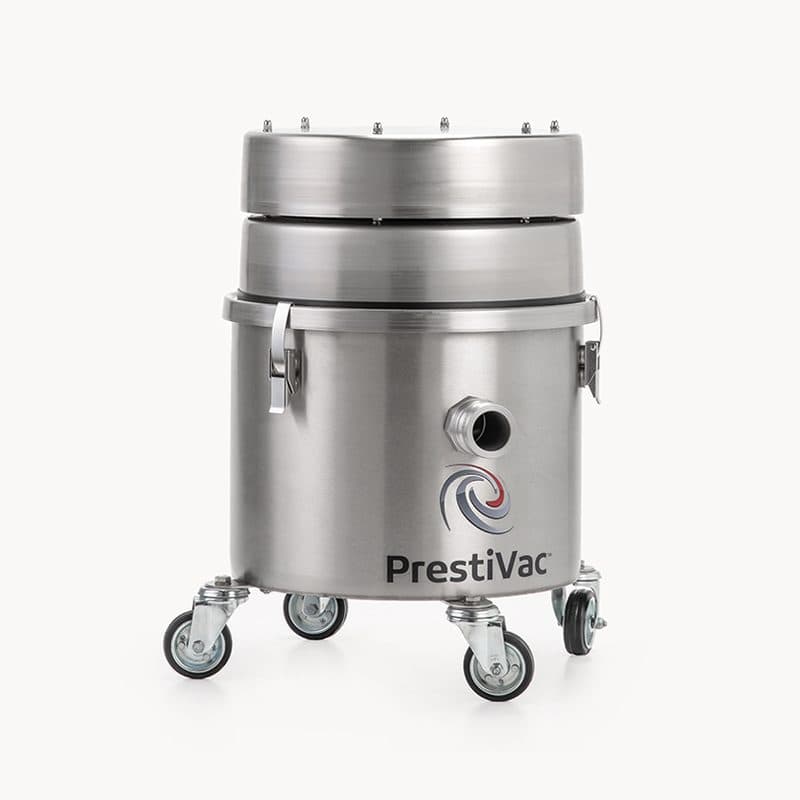
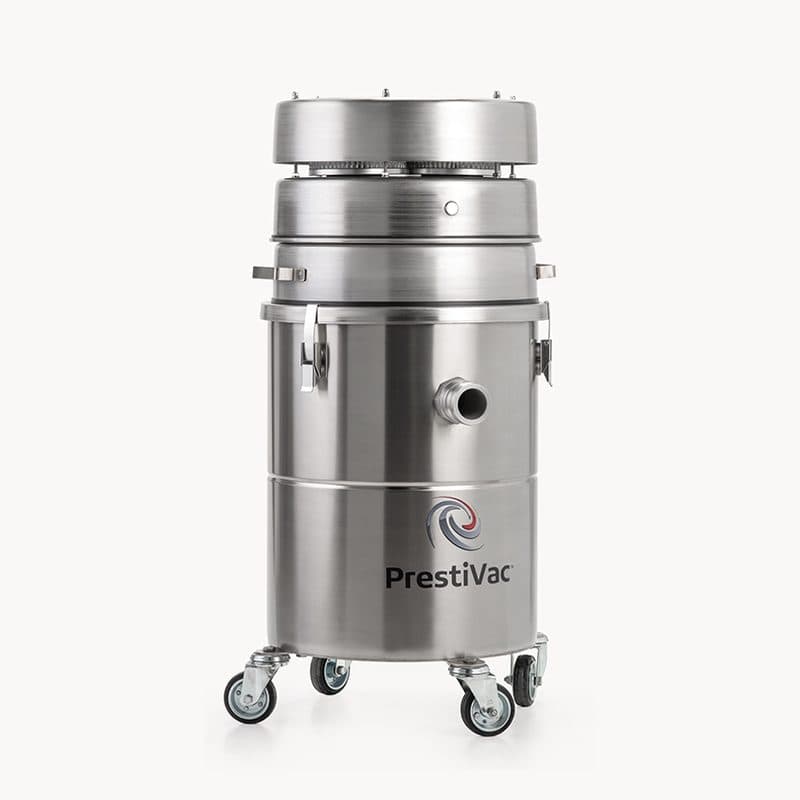
Typical system configuration
- 01
Identify the warm surfaces
Sugar content makes deposits tacky on warm equipment. Those layers grow steadily and resist brushing.
- 02
Treat crusts as inventory
A caked deposit looks stable but breaks back into fines under vibration.
- 03
Confirm the classification
Your engineer assigns the classification for dehydration and milling areas.
- 04
Specify contact tooling
Tacky deposits need mechanical removal; a suction-only kit smears rather than clears.
- 05
Extend the survey beyond the department
Low density carries fines into adjacent areas that are not on the cleaning schedule.
Best practices
- Remove tacky deposits before they build into layers that resist cleaning.
- Include adjacent rooms in the survey, not just the milling area.
- Never blow down — it relocates sticky fines into harder-to-reach places.
- Keep dedicated tooling where cross-contact matters.
- Check the grounding path across the full flow path.
- Empty into sealed disposal rather than tipping in place.
Onion Powder FAQ
Is onion powder combustible?
Yes. Dehydrated onion powder is a fine organic dust and behaves as a combustible dust when dispersed, sitting in Class II Group G. Sugar content and particle size affect severity, which is established by testing the material as your process produces it.
Why do onion powder deposits stick to everything?
Natural sugar content. It makes the powder hygroscopic and tacky, so deposits draw ambient moisture and adhere rather than shedding. That is why layers build on equipment housings and why brushing leaves a residue behind.
Is a caked deposit still a fire risk?
Yes. Caking changes the appearance, not the material. Vibration and airflow break the crust back into suspendable fines, so a caked accumulation is still a fuel inventory that a primary event could loft.
Can we blow down with compressed air between shifts?
It is the wrong tool for this material. Blowdown disperses the fines into a cloud and relocates deposits into places that are harder to reach, which increases both the fire risk and the cross-contact risk rather than reducing them.
Talk to the manufacturer
Get the right explosion proof vacuum for your application.
Tell us what you need to vacuum and where. Our technical team will recommend the PrestiVac model best suited to your material, your classification and how hard you will work it — and because we build every unit ourselves, we can modify it to fit.
- Legally certified explosion proof
- Solid stainless steel construction
- Industry-best 3-year warranty
- Designed & manufactured in the USA
- 200+ vacuum versions