
Paprika Dust Vacuum Solutions
Built for grinding and blending lines handling a powder that announces every housekeeping failure in colour. Paprika is fine, light and carries both sugar and oil content, so deposits are tacky, they stain, and they build on surfaces rather than shedding.
Explosion-Safe Design
Grounded, bonded, conductive recovery path
Group G Organic Dust
Non-conductive combustible food powder
HEPA Filtration
Tested 99.99% at 0.3 um
Food-Sector Standards
NFPA 61 legacy carried into NFPA 660
Overview
Dried peppers are milled to paprika powders across several grades, and the grinding operation produces the fine fraction that suspends most readily. Sifting, blending and filling liberate it again, and the low density carries it through the building on ordinary air movement.
Sugar and oil content give paprika two practical characteristics. Deposits are tacky and adhere to warm equipment surfaces rather than shedding, so layers build and resist ordinary cleaning. And the pigment stains, which means accumulation is unusually visible — a rare case where the housekeeping problem advertises itself. That visibility is worth using: where paprika deposits appear on high steel and duct tops is a direct map of where the finer, less visible fraction of every other powder in the building is settling too.
Material type
Combustible organic dust, Class II Group G (non-conductive)
Where it is generated
Grinding, milling, sifting, blending, filling and packing
Distinguishing property
Sugar and oil content produce tacky, strongly staining deposits that resist brushing
Governing standards
NFPA 660, consolidating the former NFPA 61
Industries & applications
What makes paprika dust worth controlling
- Combustible organic dust: a fine milled powder that suspends readily and carries deflagration conditions inside enclosures.
- Tacky adherent deposits: sugar and oil content make accumulation stick to warm surfaces and resist brushing.
- Staining: pigment carries into adjacent products and onto surfaces, making redistribution a visible quality failure.
- Mill concentration: grinding produces the finest fraction alongside mechanical ignition sources.
- Overhead accumulation: light fines settle on beams and duct tops, where deposits are visible but rarely cleaned.
- Cross-contact control: colour and aromatics carry into adjacent lines, so dispersal is a product-integrity problem.
Engineered recovery
- Explosion-proof recovery for a tacky, intensely staining powder that adheres to warm surfaces.
- Contact tooling for deposits that smear rather than lift under suction alone.
- HEPA-filtered collection so pigment-bearing fines are removed rather than spread.
- Dedicated units or accessory sets per colour family, since carryover is visible at trace levels.
- Overhead recovery guided by where staining appears — a visible map of where all fines settle.
- Grounded, bonded conductive path through milling, blending and filling.
Recommended products
View all products →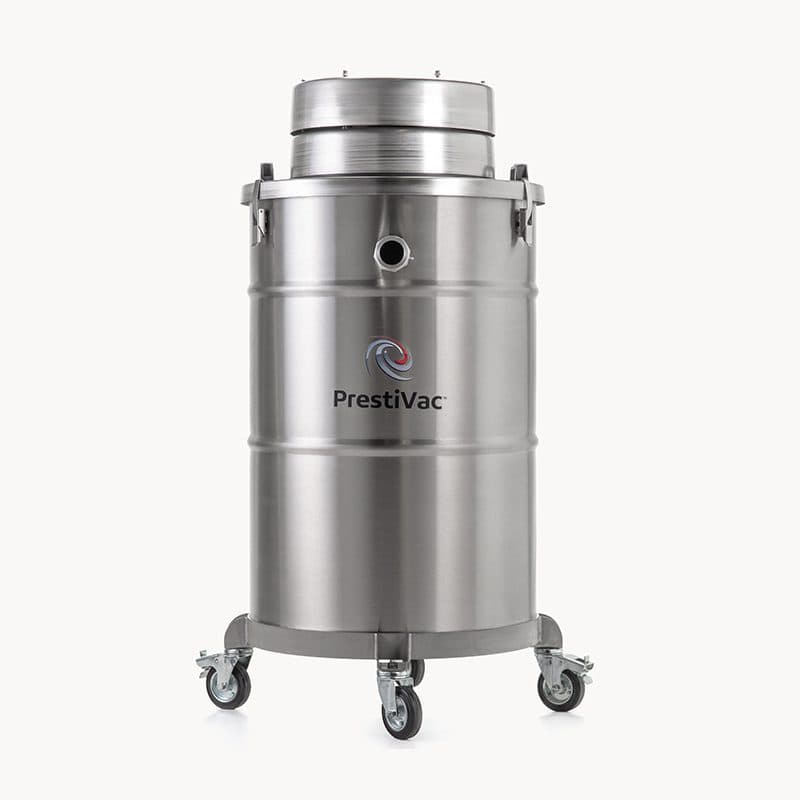
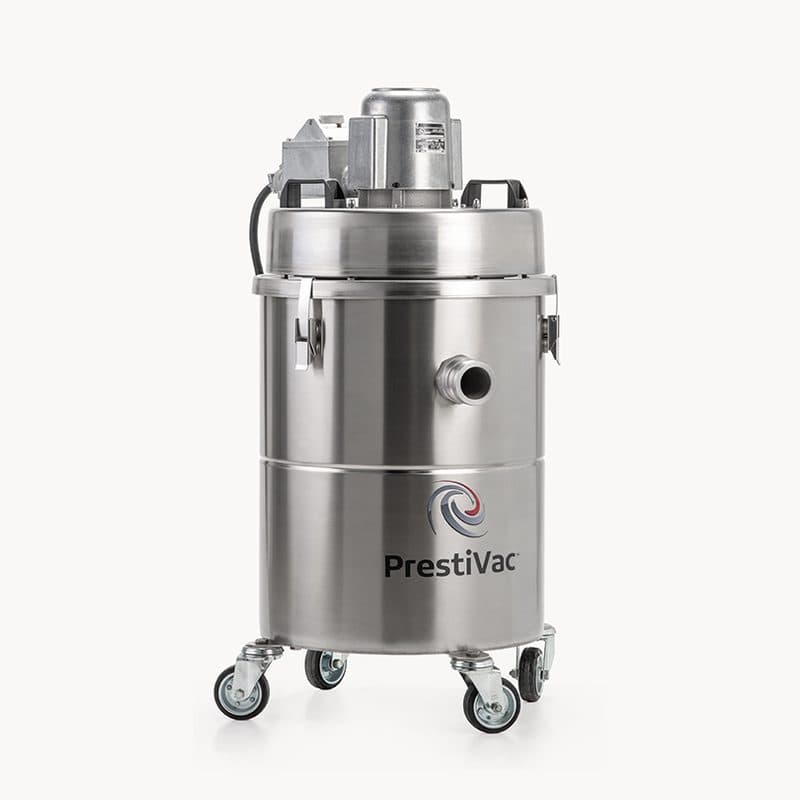
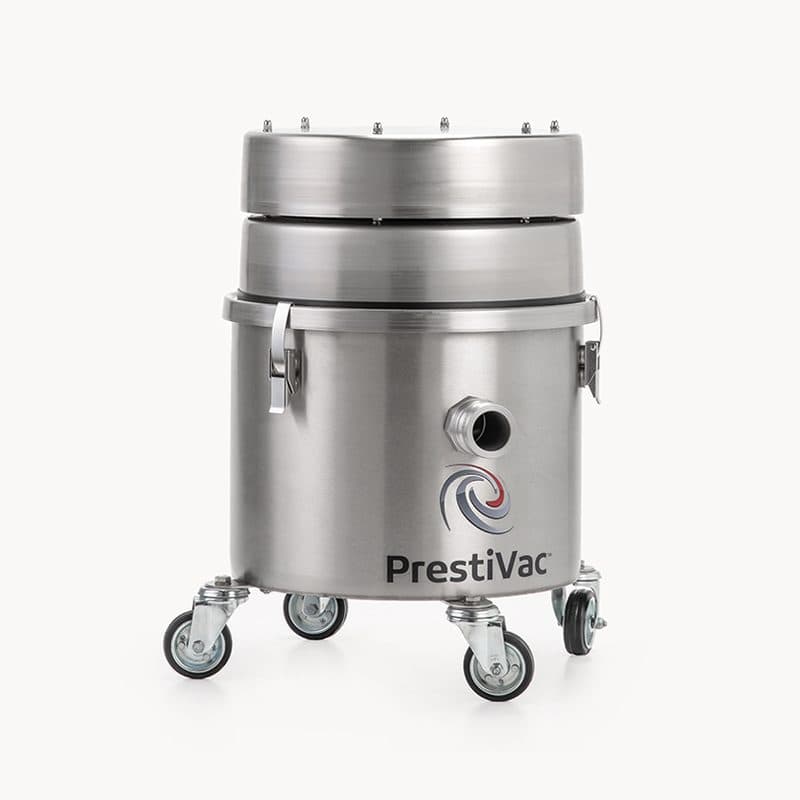
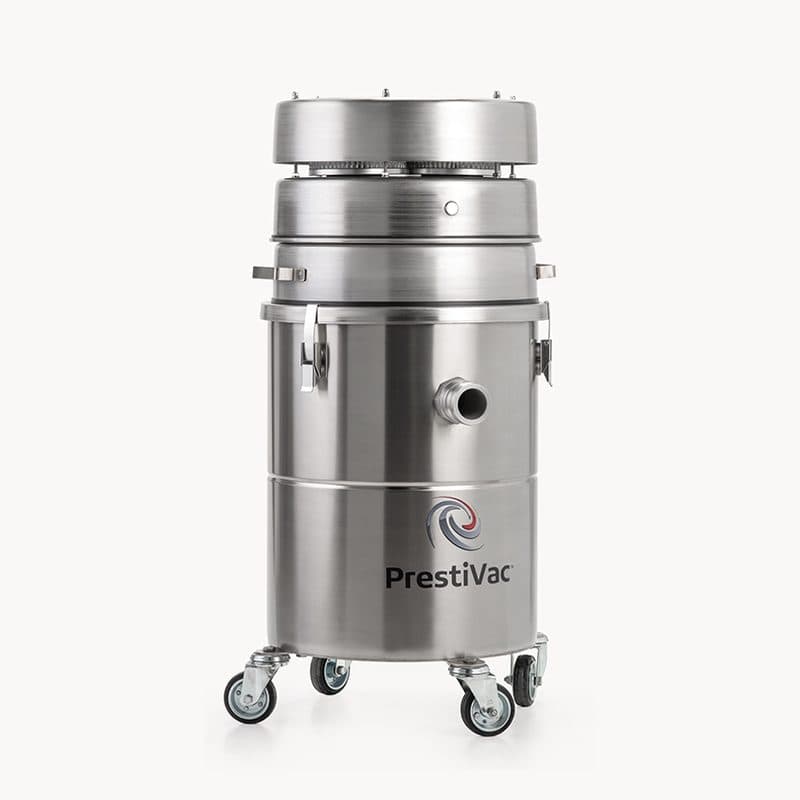
Typical system configuration
- 01
Use the staining as a survey tool
Where paprika shows on high steel is a visible map of where every finer, invisible dust is landing too.
- 02
Plan for tacky deposits
Sugar and oil content make accumulation adhere. Contact tooling is required.
- 03
Confirm the classification
Your engineer assigns the classification for grinding and blending areas.
- 04
Segregate by colour family
Trace carryover is immediately visible, so segregation policy is usually stricter than safety alone would set.
- 05
Schedule before layers set
Tacky deposits become progressively harder to remove the longer they are left.
Best practices
- Use visible staining to set the accumulation survey, not just to judge cleanliness.
- Remove tacky deposits with contact tooling before they set.
- Keep dedicated units or accessories per colour family.
- Never blow down — it spreads pigment across adjacent lines.
- Include high steel and duct tops in the schedule.
- Verify grounding continuity across the full flow path.
Paprika Dust FAQ
Is paprika dust combustible?
Yes. Ground paprika is a fine organic dust and behaves as a combustible dust when dispersed, sitting in Class II Group G. Sugar and oil content affect its behaviour, and severity for your grade is established by testing it.
Why do paprika deposits resist cleaning?
Sugar and oil content make the fines tacky, so they adhere to warm equipment surfaces instead of shedding. Brushing smears rather than removes them, and the layer keeps building between deep cleans.
Is the staining useful for anything?
It is, as a diagnostic. Where paprika shows up on high steel and duct tops is a visible map of where all the finer, less visible dust in the building is settling. Use it to set the accumulation survey rather than treating it purely as a cleanliness nuisance.
Can we use the same unit on other spice lines?
Only where colour and aroma cross-contact is acceptable, which it usually is not. Dedicated units or dedicated accessory sets per line are the common arrangement in spice operations.
Talk to the manufacturer
Get the right explosion proof vacuum for your application.
Tell us what you need to vacuum and where. Our technical team will recommend the PrestiVac model best suited to your material, your classification and how hard you will work it — and because we build every unit ourselves, we can modify it to fit.
- Legally certified explosion proof
- Solid stainless steel construction
- Industry-best 3-year warranty
- Designed & manufactured in the USA
- 200+ vacuum versions