
Pea Protein Vacuum Solutions
Built for plant-protein plants where capacity has often grown faster than the housekeeping programme around it. Pea protein isolate is a very fine, low-density powder that suspends on minimal air movement and settles across the whole building rather than near the equipment that released it.
Explosion-Safe Design
Grounded, bonded, conductive recovery path
Group G Organic Dust
Non-conductive combustible food powder
HEPA Filtration
Tested 99.99% at 0.3 um
Food-Sector Standards
NFPA 61 legacy carried into NFPA 660
Overview
Pea protein is produced by milling and separating pea flour into protein and starch fractions, frequently by air classification, then drying and blending to specification. Air classification is a process designed to separate by particle size, which means it concentrates and handles an exceptionally fine fraction as a matter of normal operation.
That fineness is the defining characteristic for housekeeping. The powder suspends on minimal air movement, stays airborne long enough to travel through the building, and settles on overhead surfaces well away from the equipment that released it. Plants in this sector have also frequently expanded capacity quickly, and a housekeeping programme sized for the original throughput will understate the accumulation rate at the current one — which is worth checking explicitly rather than assuming the existing schedule still fits.
Material type
Combustible organic protein dust, Class II Group G (non-conductive)
Where it is generated
Drying, milling, air classification, sifting, blending, conveying and filling
Distinguishing property
Air classification produces an extremely fine low-density fraction that travels throughout the building
Governing standards
NFPA 660, consolidating the former NFPA 61
Industries & applications
What makes pea protein worth controlling
- Combustible organic dust: an extremely fine protein powder that suspends readily and carries deflagration conditions inside enclosures.
- Air classification fines: the separation process concentrates and handles the finest fraction as normal operation.
- Building-wide travel: low density means the powder settles far from its release point, including on surfaces nobody associates with the process.
- Capacity growth outpacing housekeeping: schedules set at commissioning frequently no longer match current throughput.
- Overhead accumulation: fines reach beams, duct tops and above suspended ceilings across the whole plant.
- Static in dry handling: dry low-density powder through pneumatic lines accumulates charge, so a bonded conductive path matters throughout.
Engineered recovery
- Explosion-proof recovery specified for an extremely fine, low-density powder that settles building-wide.
- HEPA-filtered collection retaining a fraction that general-purpose filtration passes straight through.
- Building-wide overhead recovery rather than a schedule limited to the process area.
- Interval review against current throughput, since capacity in this sector often outgrows the cleaning plan.
- Grounded, bonded conductive path through air classification and pneumatic transfer.
- Source capture at dumping and blending, the largest repeated release points.
Recommended products
View all products →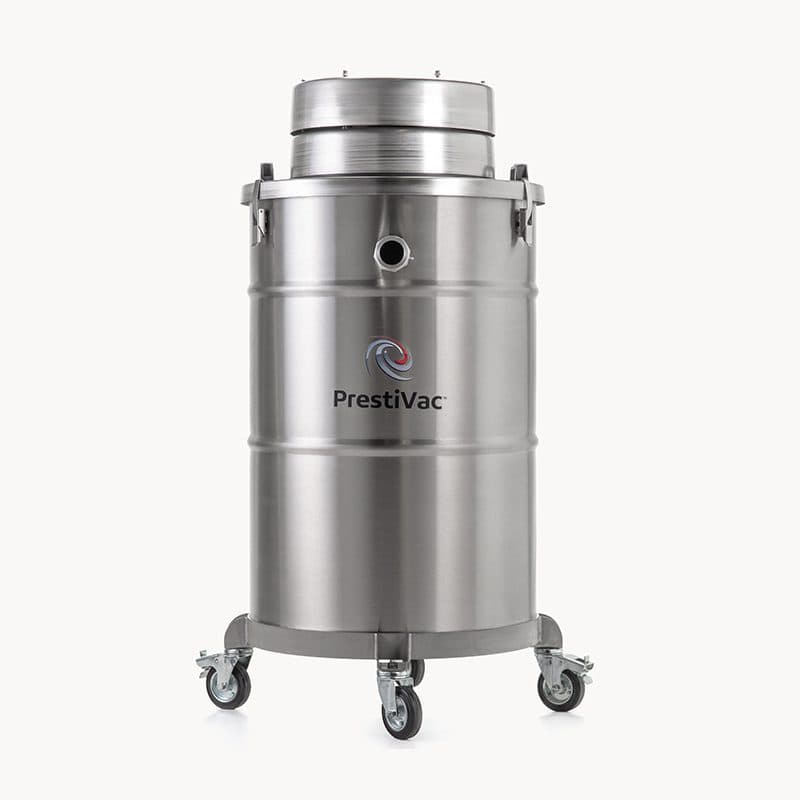
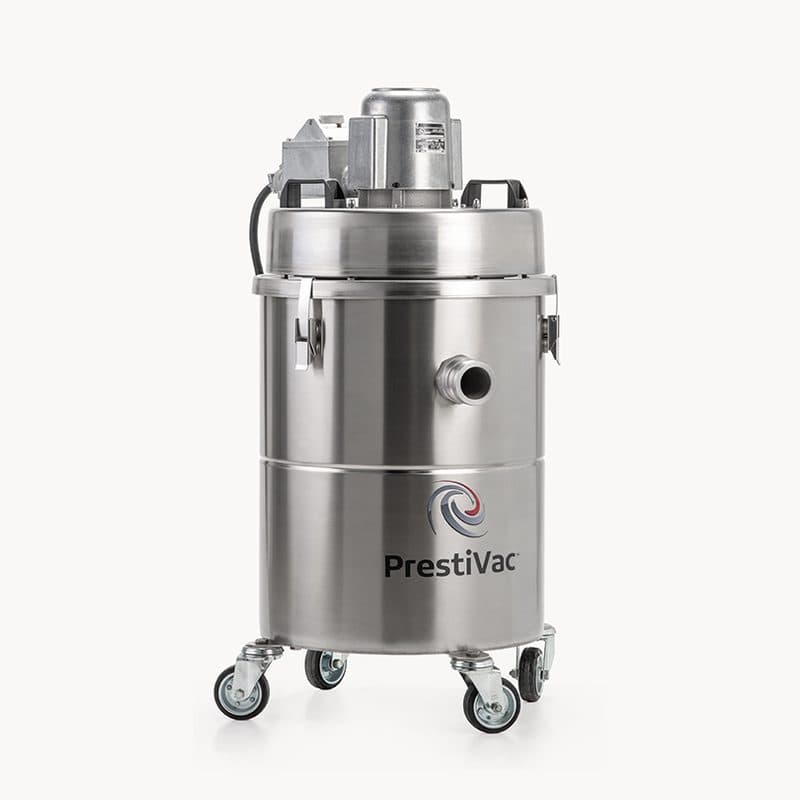
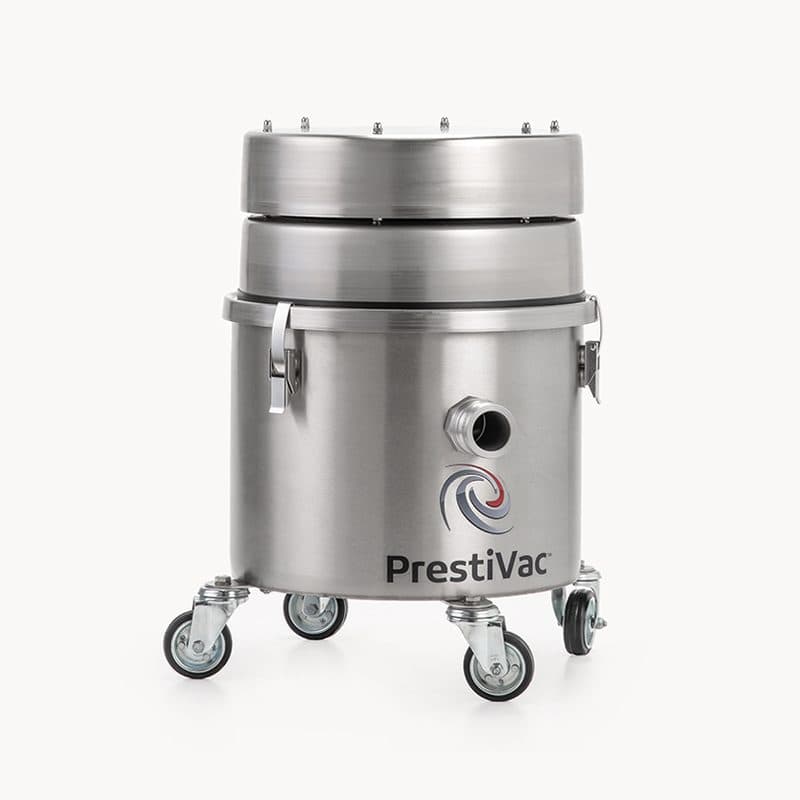
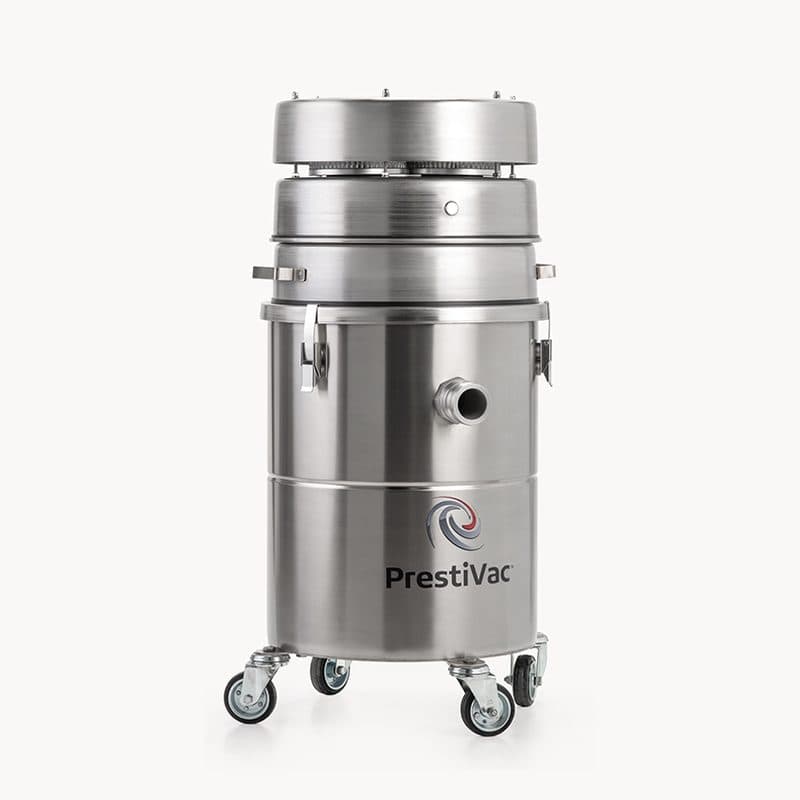
Typical system configuration
- 01
Survey the building, not the department
Low density carries this powder into areas with no obvious process connection — and those are rarely on the schedule.
- 02
Re-check intervals against capacity
A frequency set at commissioning will understate the requirement after an expansion.
- 03
Confirm the classification
Your engineer assigns the classification for classification, drying and blending areas.
- 04
Specify for the finest fraction
Air classification concentrates and handles the finest material as normal operation.
- 05
Fix the release points
Dumping and blending dominate the airborne load; capture there before scheduling cleanup.
Best practices
- Extend the survey to the whole building, including areas that look unrelated.
- Reassess frequencies whenever throughput changes.
- Prioritise the classifier, blender and the overhead above them.
- Never blow down — this fraction travels further than any other in the plant.
- Verify grounding continuity through pneumatic runs.
- Empty into sealed disposal away from the process area.
Pea Protein FAQ
Is pea protein dust combustible?
Yes. Pea protein isolate and concentrate are fine organic dusts and behave as combustible dusts when dispersed, sitting in Class II Group G. Severity depends on grade and particle size and is established by testing your material.
Why does it settle so far from the equipment?
Low bulk density and very fine particle size. The powder stays suspended long enough to travel on general air movement, so deposits appear on overhead surfaces in areas that are not obviously part of the process — and those surfaces are rarely on the cleaning schedule.
Our plant expanded — does the cleaning schedule still fit?
Worth checking explicitly. Accumulation tracks throughput, so a frequency set at commissioning will understate the requirement after a capacity increase. That reassessment belongs in the Dust Hazard Analysis rather than being judged by appearance.
Is pea protein an allergen concern like soy?
It is not among the major allergens in the way soy is, but pea protein allergy is recognised and cross-contact policies vary by market and customer. Follow your own segregation policy; the equipment arrangement should follow from it.
Talk to the manufacturer
Get the right explosion proof vacuum for your application.
Tell us what you need to vacuum and where. Our technical team will recommend the PrestiVac model best suited to your material, your classification and how hard you will work it — and because we build every unit ourselves, we can modify it to fit.
- Legally certified explosion proof
- Solid stainless steel construction
- Industry-best 3-year warranty
- Designed & manufactured in the USA
- 200+ vacuum versions