
Protein Powder Vacuum Solutions
Built for the blending and filling rooms behind the supplement industry, where large volumes of very fine powder move through the building every shift. Protein powders are light, readily suspended and blended in operations that put the finest fraction into the air by design.
Explosion-Safe Design
Grounded, bonded, conductive recovery path
Group G Organic Dust
Non-conductive combustible food powder
HEPA Filtration
Tested 99.99% at 0.3 um
Food-Sector Standards
NFPA 61 legacy carried into NFPA 660
Overview
Protein powder manufacturing is a blending operation more than a chemical one: bulk protein isolates and concentrates arrive as fine powders, are dumped into blenders with flavourings and additives, then sifted, conveyed and filled. Manual tote and sack dumping is where the largest single release usually happens, and it happens repeatedly through every shift.
The fine particle size that gives the product its mouthfeel and dispersibility is the same particle size that suspends readily and travels. Because the operations are high-throughput and largely open at the dump station, the airborne load in these rooms can be substantial without anything having gone wrong. That makes source capture at the dump point and defined-frequency overhead recovery the two interventions that change the accumulation picture most.
Material type
Combustible organic protein dust, Class II Group G (non-conductive)
Where it is generated
Blending, sifting, pneumatic conveying, tote dumping, filling and packing
Distinguishing property
High-throughput blending and manual tote dumping put large volumes of very fine powder into the air
Governing standards
NFPA 660, consolidating the former NFPA 61
Industries & applications
What makes protein powder worth controlling
- Combustible organic dust: fine protein powder that suspends readily and carries deflagration conditions inside blenders and enclosures.
- Manual dumping releases: tote and sack dumping is the largest single release point and repeats through every shift.
- High throughput: large volumes mean accumulation builds quickly, so intervals that suit a low-volume plant are inadequate here.
- Overhead accumulation: light fines reach beams, duct tops and above suspended ceilings across the whole room.
- Static in dry handling: dry powder through chutes and pneumatic lines accumulates charge, so a bonded conductive path matters throughout.
- Allergen cross-contact: dairy, soy and other allergen-bearing proteins share equipment, making redistribution a labelling exposure.
Engineered recovery
- Source capture at the tote and sack dump station, which is the largest repeated release point.
- Explosion-proof recovery sized for high-throughput blending rather than intermittent housekeeping.
- HEPA-filtered collection retaining a very fine fraction across a large open room.
- Frequent overhead recovery, because accumulation tracks volume and these plants run hard.
- Dedicated units or accessory sets where dairy and soy allergen segregation applies.
- Grounded, bonded conductive path through chutes, blenders and pneumatic transfer.
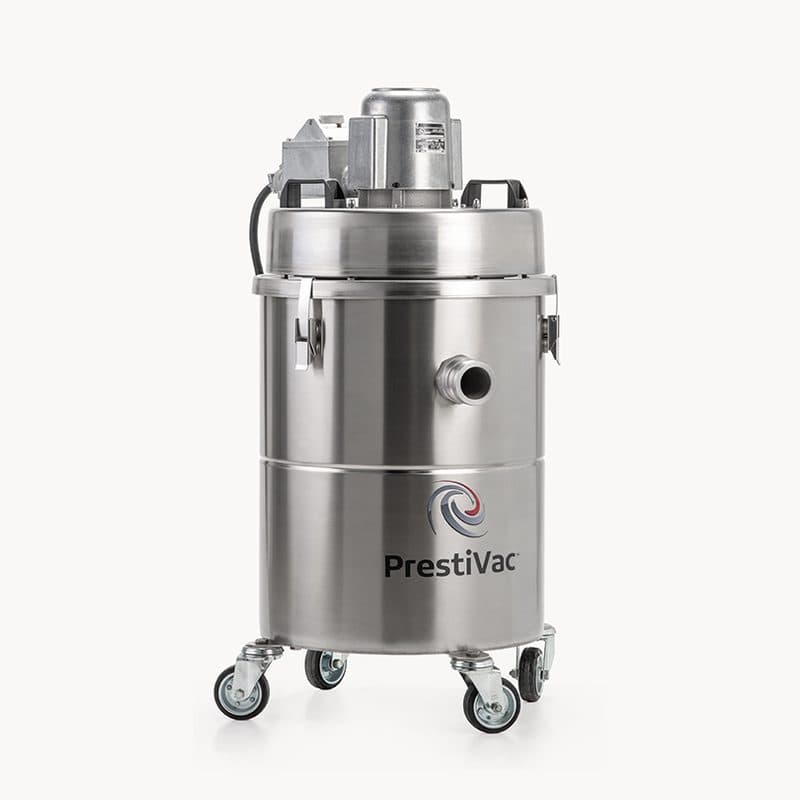
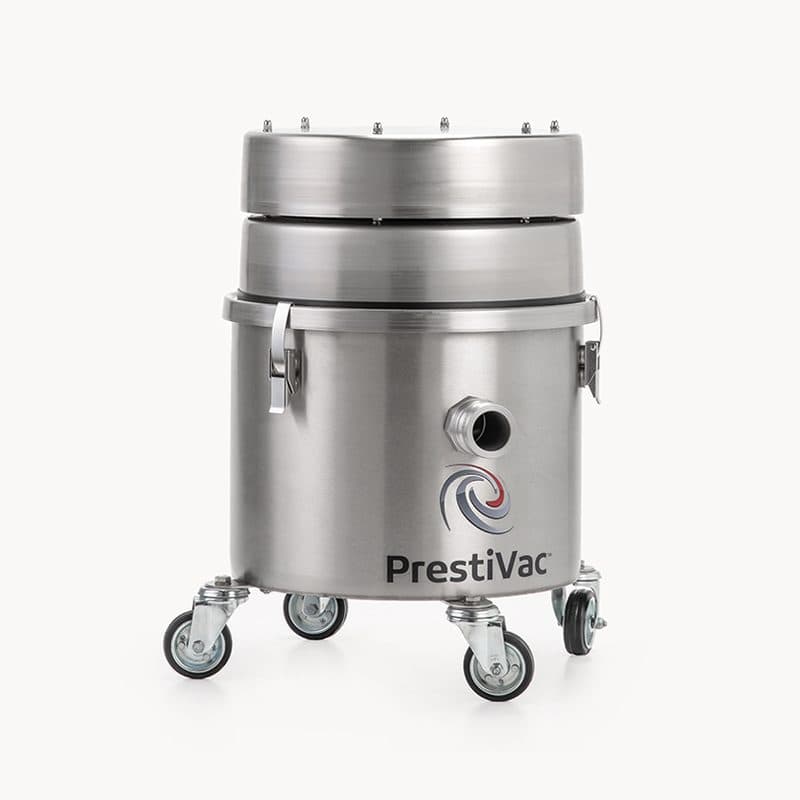
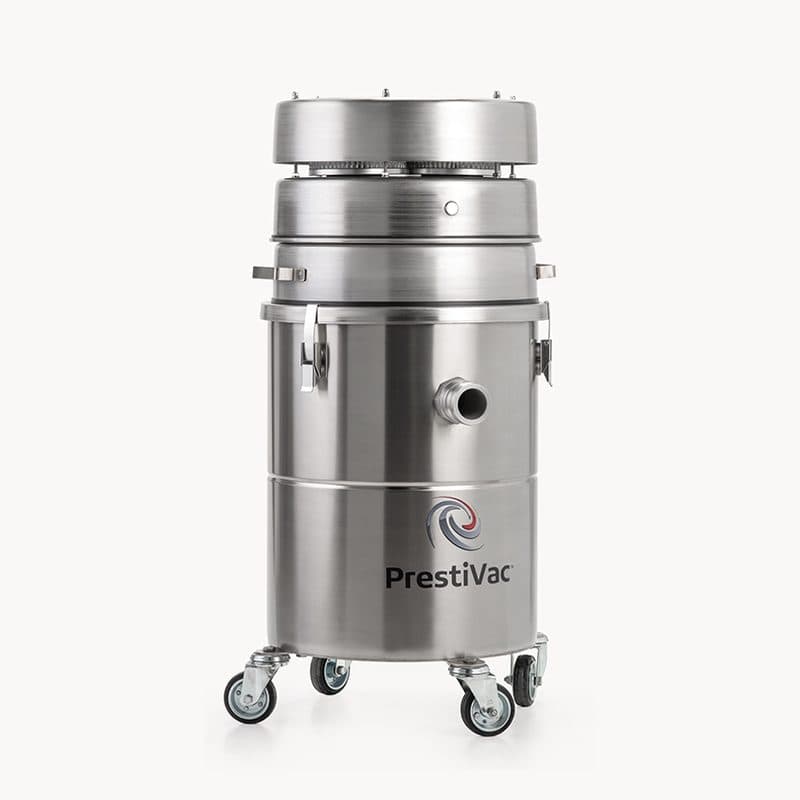
Recommended products
View all products →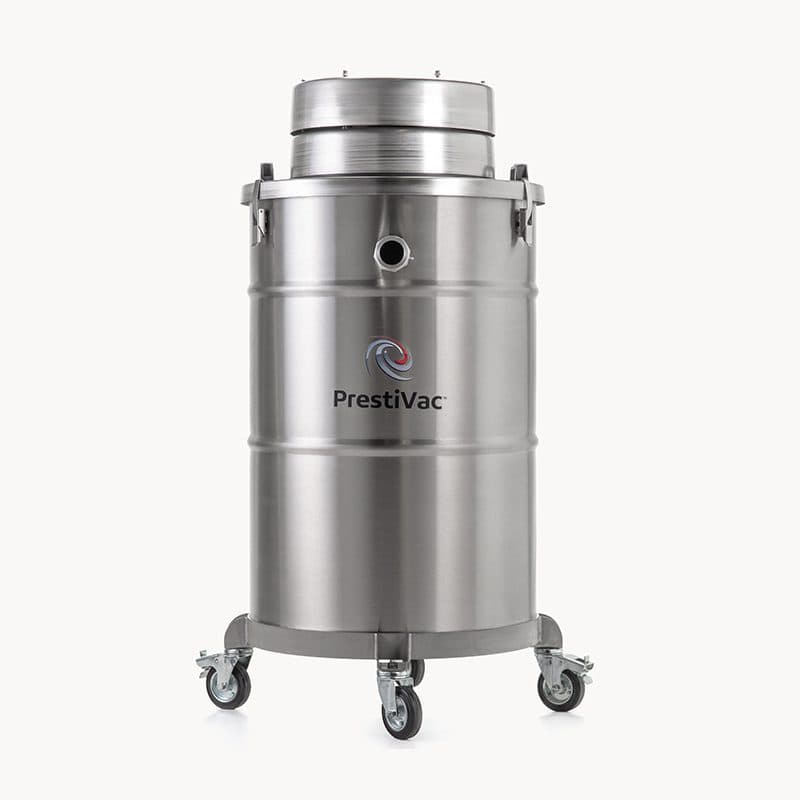
Typical system configuration
- 01
Fix the dump station first
Manual tote and sack dumping is open by design and repeats every shift. Source capture there changes the airborne load more than anything else.
- 02
Size for throughput
Accumulation tracks volume. Intervals set for a low-volume plant will not hold here.
- 03
Confirm the classification
Your engineer assigns the classification for blending and dumping areas.
- 04
Plan for allergen segregation
Dairy and soy proteins share equipment routinely; segregation policy drives the equipment count.
- 05
Schedule overhead against volume
By the time overhead deposits are visible from the floor, the inventory is already substantial.
Best practices
- Capture at the dump point rather than relying on cleaning it up afterwards.
- Set intervals against throughput, not appearance.
- Keep dedicated units or accessories where allergen segregation applies.
- Include the whole room overhead, not just above the blender.
- Verify grounding continuity through chutes and pneumatic runs.
- Empty into sealed disposal away from the blending area.
Protein Powder FAQ
Are protein powders combustible?
Yes. Protein isolates and concentrates are fine organic dusts and behave as combustible dusts when dispersed, sitting in Class II Group G. Severity depends on particle size and composition, established by testing the material as your process handles it.
Where is the biggest release point?
Manual tote and sack dumping into blenders, in most operations. It is open by design, it repeats through every shift, and it releases a large volume of very fine powder in a short time. Source capture there changes the airborne load more than any other single intervention.
How often should overhead cleaning happen?
More often than a low-throughput plant, because accumulation tracks volume. The interval belongs in the Dust Hazard Analysis rather than being set by appearance — by the time overhead deposits are visible from the floor, the inventory is already substantial.
Does shared equipment create an allergen problem?
It can. Dairy and soy proteins are major allergens and blending lines frequently share equipment. Dedicated units or accessory sets, and a documented cleaning pass between products, are the usual controls.
Talk to the manufacturer
Get the right explosion proof vacuum for your application.
Tell us what you need to vacuum and where. Our technical team will recommend the PrestiVac model best suited to your material, your classification and how hard you will work it — and because we build every unit ourselves, we can modify it to fit.
- Legally certified explosion proof
- Solid stainless steel construction
- Industry-best 3-year warranty
- Designed & manufactured in the USA
- 200+ vacuum versions