
Whey Powder Vacuum Solutions
Built for a powder that changes character with the humidity in the room. Whey is fine, light and hygroscopic — it draws moisture, cakes on surfaces, then breaks back into an airborne fraction the moment something disturbs it, which makes accumulation easy to underestimate.
Explosion-Safe Design
Grounded, bonded, conductive recovery path
Group G Organic Dust
Non-conductive combustible food powder
HEPA Filtration
Tested 99.99% at 0.3 um
Food-Sector Standards
NFPA 61 legacy carried into NFPA 660
Overview
Whey is a by-product stream turned into a high-value powder, and the processing that concentrates and dries it also produces a very fine fraction. Drying, milling, sifting, blending and pneumatic transfer all liberate airborne powder, and the bagging line releases it again at every fill.
Its hygroscopic behaviour is what makes housekeeping deceptive. A deposit that has drawn ambient moisture looks caked and stable — visually it reads as something that will stay put. Mechanical disturbance, vibration or airflow breaks it back into fines, so the accumulation is an inventory of suspendable fuel rather than an inert crust. That is why the assessment should be based on where deposits form rather than on how loose they currently appear.
Material type
Combustible organic protein dust, Class II Group G (non-conductive)
Where it is generated
Drying, milling, sifting, blending, pneumatic conveying and bagging
Distinguishing property
Hygroscopic — cakes with ambient moisture, then re-suspends as fines when disturbed
Governing standards
NFPA 660, consolidating the former NFPA 61
Industries & applications
What makes whey powder worth controlling
- Combustible organic dust: a fine protein powder that suspends readily and carries deflagration conditions inside enclosures.
- Deceptive caking: hygroscopic deposits look stable but break back into airborne fines under vibration or disturbance.
- Milling and sifting concentration: the equipment producing the finest fraction sits alongside mechanical ignition sources.
- Overhead accumulation: light fines reach beams, duct tops and above suspended ceilings, which is the secondary-event fuel inventory.
- Static in dry handling: dry powder moving through chutes and pneumatic lines accumulates charge, so a conductive bonded path matters throughout.
- Allergen and sanitation overlap: dairy protein residues are a cross-contact concern, so cleaning has to satisfy both records.
Engineered recovery
- Explosion-proof recovery specified for a powder that cakes between shifts and re-suspends when disturbed.
- Contact tooling for crusted deposits, since caked whey does not respond to suction alone.
- HEPA-filtered collection retaining a very fine protein fraction rather than exhausting it.
- Dedicated units or accessory sets per line where dairy allergen segregation applies.
- Grounded, bonded conductive hose across milling, sifting and pneumatic transfer.
- Scheduled overhead recovery, because light fines settle well above the working area.
Recommended products
View all products →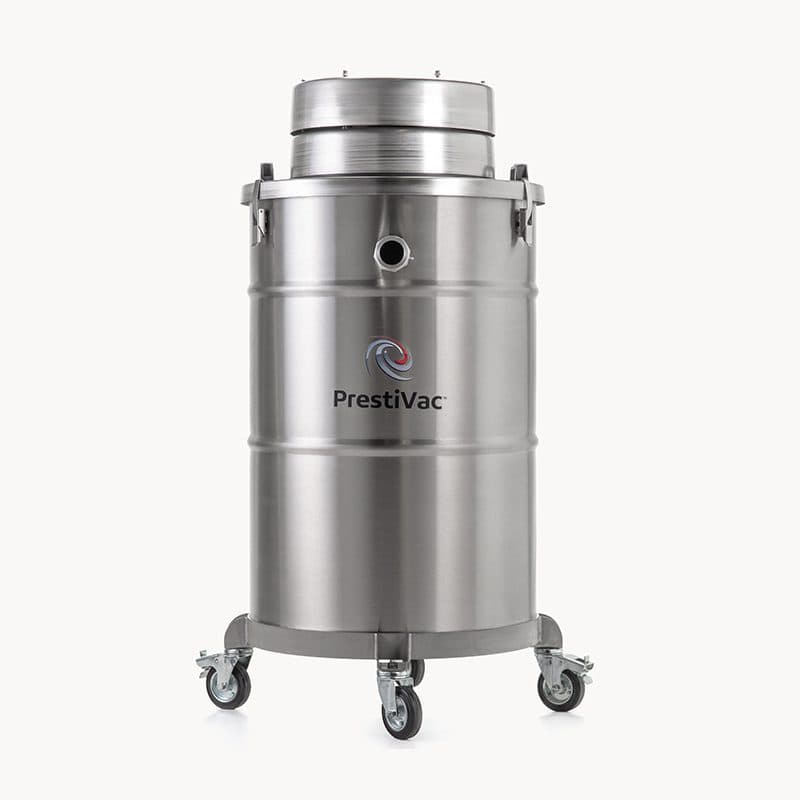
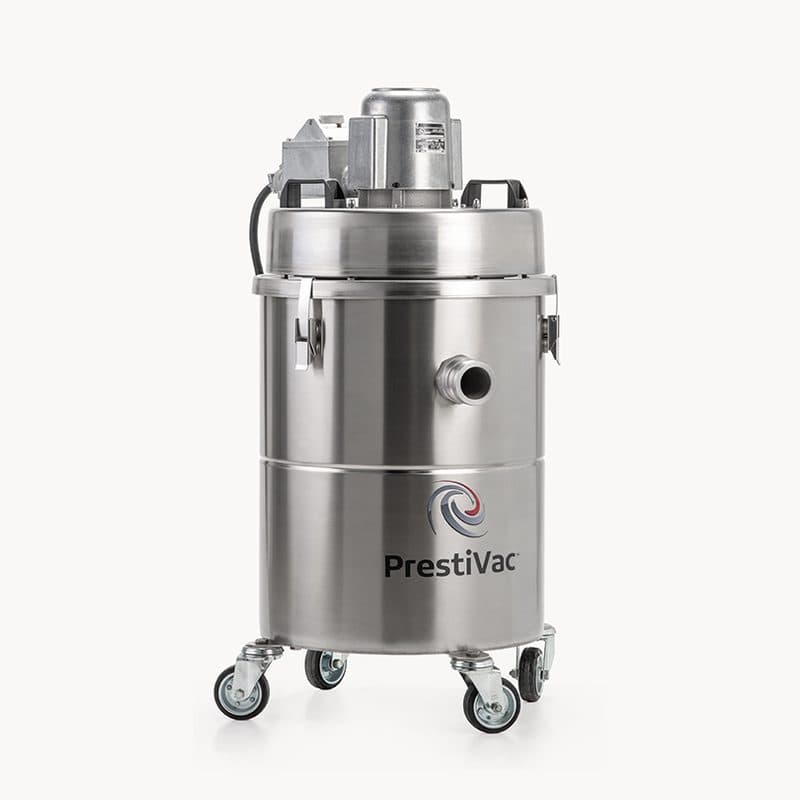
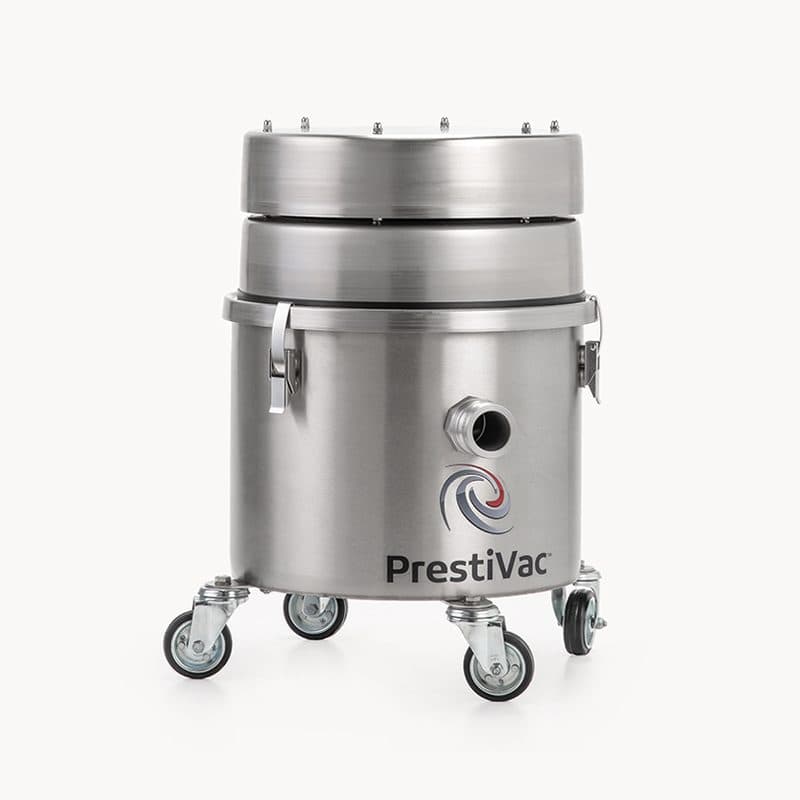
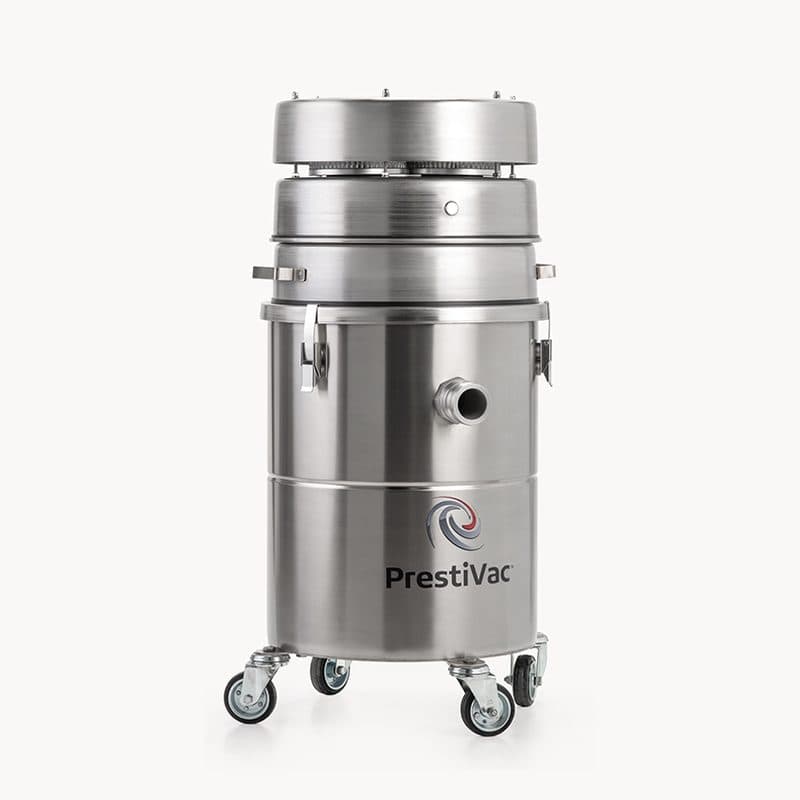
Typical system configuration
- 01
Find the fines, not the spills
Milling and sifting generate the fraction that matters; visible spills at the bagger do not.
- 02
Survey by location, not appearance
Hygroscopic caking makes deposits look stable. Base the survey on where powder reaches, not on what looks loose.
- 03
Confirm the classification
Your engineer assigns the classification for drying, milling and conveying areas.
- 04
Include crust removal in the tooling
Caked deposits need mechanical contact. A suction-only kit will leave the accumulation in place.
- 05
Fix humidity into the plan
Caking rate tracks ambient humidity, so intervals that hold in winter may not hold in summer.
Best practices
- Treat caked deposits as fuel inventory, not as a settled crust.
- Prioritise milling and sifting enclosures over floor area.
- Schedule overhead recovery on structure and duct tops, where the light fraction lands.
- Segregate equipment or accessories where dairy allergen cross-contact matters.
- Check hose and tool continuity rather than assuming the machine ground is enough.
- Revisit intervals seasonally, because humidity changes the caking rate.
Whey Powder FAQ
Is whey powder a combustible dust?
Yes. It is a fine organic protein powder and behaves as a combustible dust when dispersed. It sits in Class II Group G. Severity depends on particle size and moisture content, established by testing the material as your process produces it.
Caked whey looks stable — is it still a hazard?
Yes, and this is the point most often missed. A hygroscopic deposit that has drawn ambient moisture looks like an inert crust, but vibration or airflow breaks it back into suspendable fines. Treat it as an accumulation of fuel rather than as something that has settled permanently.
Where should we start cleaning?
Where the finest fraction is produced — milling, sifting and blending — and overhead, where light fines settle out of sight. The floor usually looks worse and matters less than the beams, duct tops and equipment housings above head height.
Can we use the same vacuum across different product lines?
Only where cross-contact is acceptable. Dairy protein is an allergen concern, so many facilities dedicate units or accessory sets per line. The equipment decision follows the segregation policy rather than the other way round.
Talk to the manufacturer
Get the right explosion proof vacuum for your application.
Tell us what you need to vacuum and where. Our technical team will recommend the PrestiVac model best suited to your material, your classification and how hard you will work it — and because we build every unit ourselves, we can modify it to fit.
- Legally certified explosion proof
- Solid stainless steel construction
- Industry-best 3-year warranty
- Designed & manufactured in the USA
- 200+ vacuum versions