
Potash Dust Vacuum Solutions
Built for potash handling, where the material is genuinely not a combustion hazard and the problems are corrosion, caking and respiratory irritation. Potash draws moisture aggressively, sets hard on equipment and attacks steel while it does it.
Robust Industrial Construction
Built for corrosive, high-volume mineral dust
Non-Combustible Mineral
Hazard is corrosion and irritation, not deflagration
HEPA Filtration
Retains an irritant respirable fraction
Corrosion Resistance
Stainless construction matters for this duty
Overview
Potash is produced and moved in very large tonnages through crushing, screening, drying, compaction and loadout. Dust is generated continuously, and because the operations are large and often partly open, both airborne load and accumulation are constant features of the site rather than exceptional events.
Being clear about the hazard helps: potash is non-combustible, so the dust explosion framework does not apply to it. What does apply is corrosion, caking and irritation. Potash is strongly hygroscopic — deposits pull moisture from the air, set hard, and become tenacious crusts that resist ordinary cleaning. Combined with that moisture, the salt attacks carbon steel, so accumulation on structure and equipment causes progressive corrosion damage rather than a fire risk. Airborne potash is also an irritant to airways, eyes and skin, which is why the airborne load still matters even though the fire question does not.
Material type
Non-combustible mineral dust — potassium salts
Where it is generated
Mining, crushing, screening, drying, compaction, conveying, storage and rail or ship loadout
Distinguishing property
Strongly hygroscopic and corrosive to carbon steel; irritant to airways, eyes and skin
Governing standards
Occupational exposure controls; not an NFPA 660 combustible dust material
Industries & applications
What makes potash dust worth controlling
- Corrosion: potash combined with ambient moisture attacks carbon steel, so accumulation causes progressive structural and equipment damage.
- Hard caking: strong hygroscopicity sets deposits into tenacious crusts that resist brushing and build over time.
- Respiratory and skin irritation: airborne potash irritates airways, eyes and skin, so the airborne load matters regardless of the fire question.
- Very high volumes: continuous generation through crushing, drying, compaction and loadout.
- Not a combustible dust: applying the deflagration framework here misdirects effort from the controls that actually matter.
- Equipment corrosion: recovery equipment used in this duty needs corrosion-resistant construction to survive it.
Engineered recovery
- Explosion-proof vacuum recovery with a conductive, grounded and bonded path from hose tip to container.
- Air-operated units where compressed air is available and the classification favours a drive with no electrical components.
- HEPA filtration tested to 99.99% at 0.3 um so the respirable fraction is retained rather than returned to the room.
- Elimination of compressed-air blowdown, which converts settled material directly into a suspended cloud.
- Defined-frequency recovery on high steel, equipment housings, conveyor runs and transfer points.
- Sealed container removal so collected material leaves the area without a second dispersal event.
Recommended products
View all products →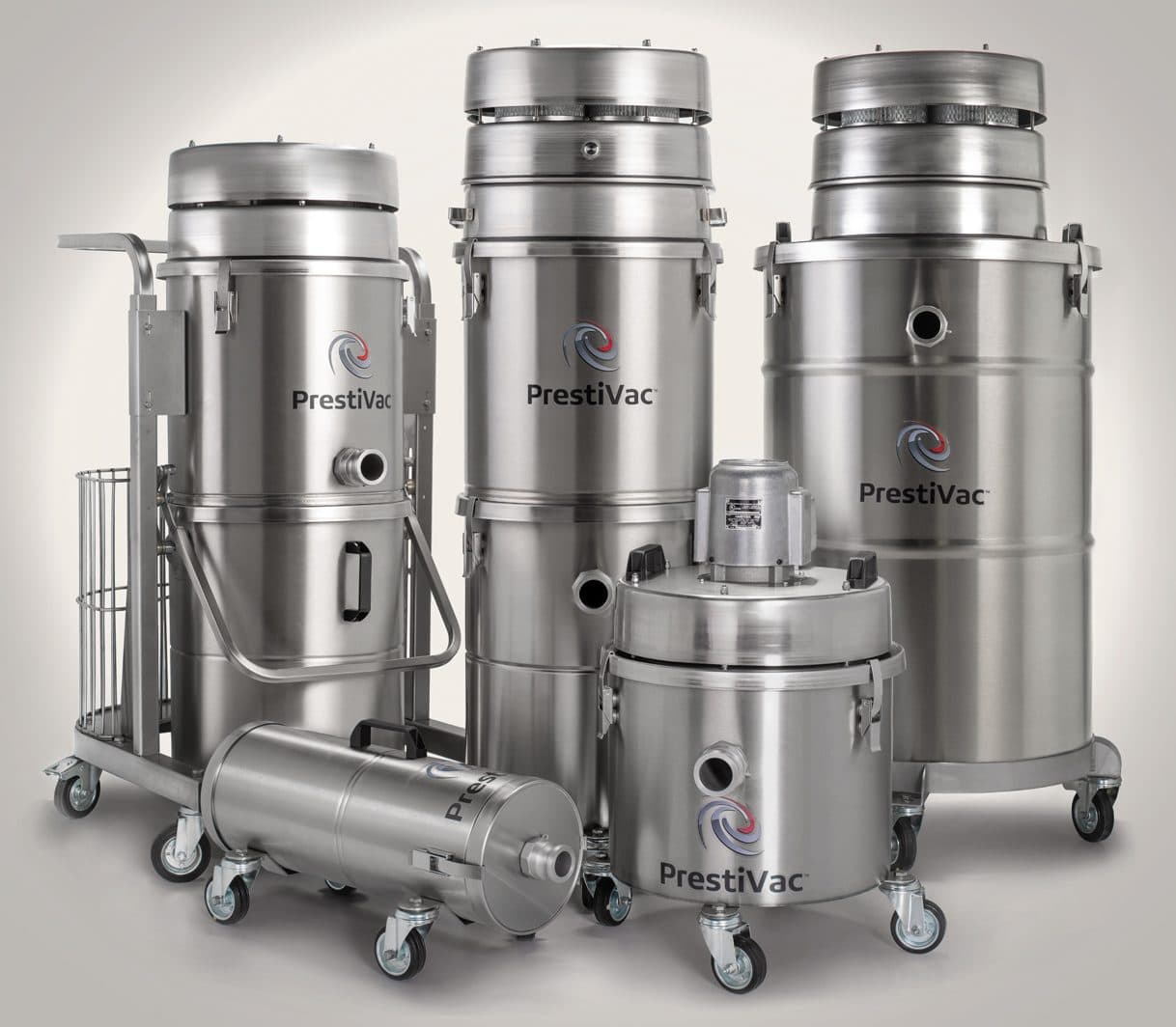
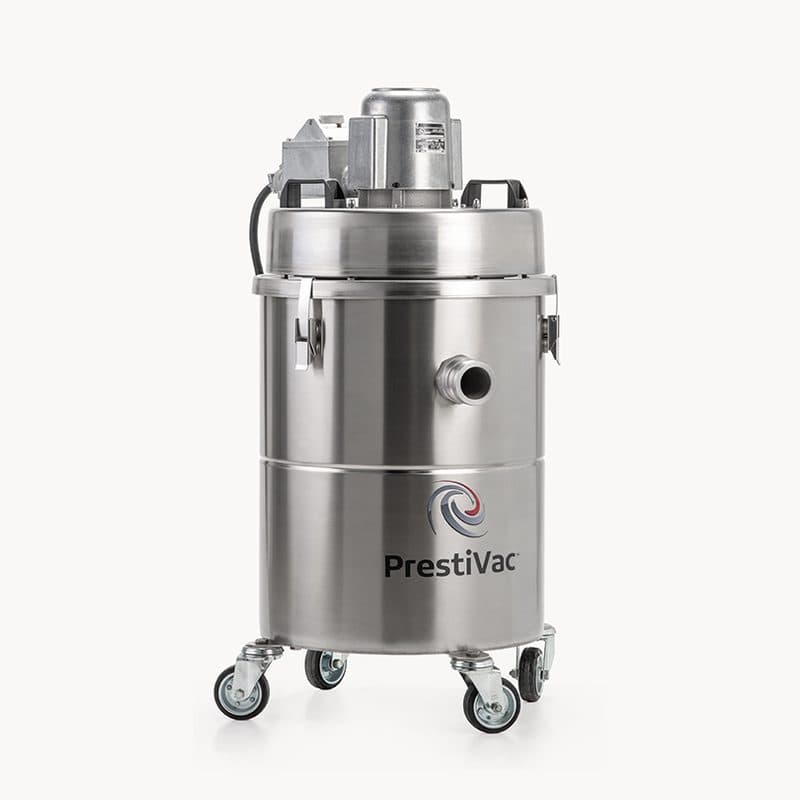
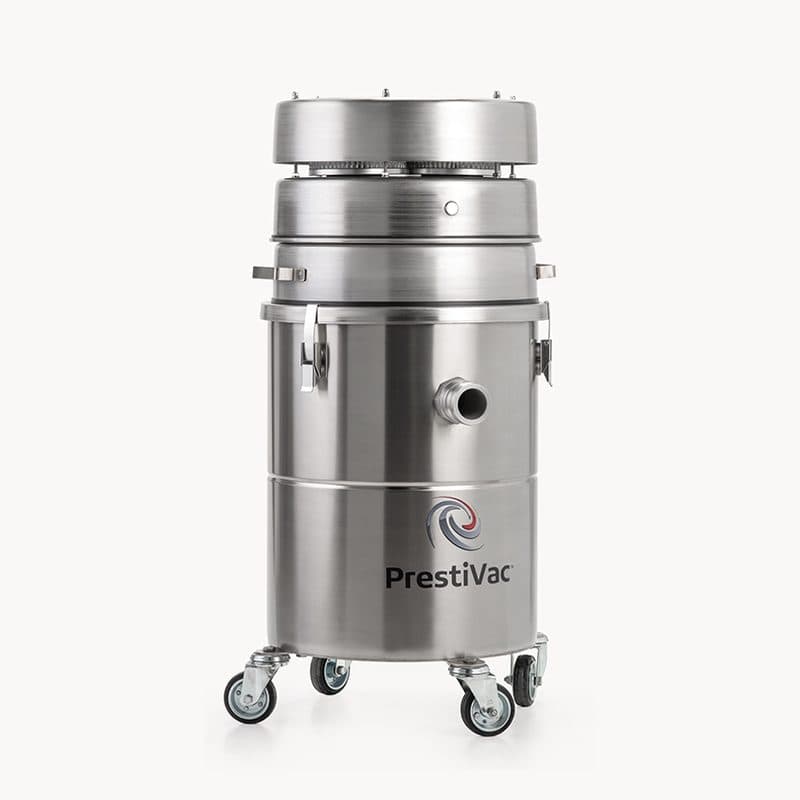
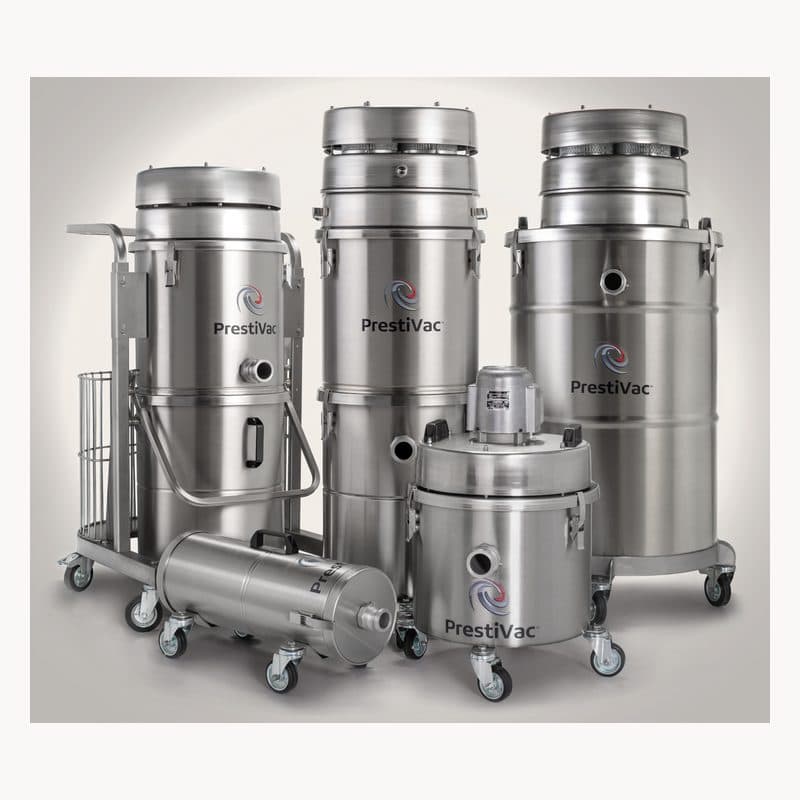
Typical system configuration
- 01
Identify where the fines are made
Size reduction, transfer and separation produce the finest fraction. Start there rather than where the floor looks worst.
- 02
Confirm the classification
Your electrical or process engineer assigns the area classification, which determines which equipment is eligible.
- 03
Specify the conductive chain
Anti-static hose and conductive accessories bonded to the unit — the accessory chain is part of the grounding path.
- 04
Match filtration to the fraction
Fine dusts defeat general-purpose filtration. Retained absolute filtration keeps the respirable fraction out of the room.
- 05
Write frequencies into the DHA
A Dust Hazard Analysis turns the accumulation map into defined intervals and a record that the pass happened.
Best practices
- Treat equipment enclosures and overhead steel as priority accumulation zones rather than occasional deep-clean targets.
- Never blow down with compressed air; it creates precisely the suspended cloud the programme exists to prevent.
- Include duct tops, cable trays and above suspended ceilings in the schedule — that is where secondary-event fuel sits.
- Ground and bond the whole recovery chain and inspect anti-static hoses as routine.
- Empty collection into sealed disposal away from ignition sources rather than tipping containers in place.
- Record each pass so the housekeeping frequency is evidenced rather than asserted.
Potash Dust FAQ
Is potash combustible?
No. Potash is a non-combustible mineral, so the combustible dust framework does not apply to it. Being straightforward about that matters, because effort spent on deflagration controls here is effort not spent on corrosion and exposure, which are the real problems.
What is the main damage mechanism then?
Corrosion. Potash is strongly hygroscopic, and deposits combined with drawn moisture attack carbon steel. Accumulation on structure, equipment and electrical enclosures causes progressive damage that is expensive and slow to reverse.
Why does the dust still need controlling?
Airborne potash irritates airways, eyes and skin, and deposits cake hard on every surface they reach. Removing it protects both the workforce and the plant, even though the fire argument does not apply.
What construction should recovery equipment have?
Corrosion-resistant. A unit used continuously in potash duty is exposed to the same corrosive salt as the rest of the plant, so stainless construction and sealed housings matter more here than explosion protection does.
Talk to the manufacturer
Get the right explosion proof vacuum for your application.
Tell us what you need to vacuum and where. Our technical team will recommend the PrestiVac model best suited to your material, your classification and how hard you will work it — and because we build every unit ourselves, we can modify it to fit.
- Legally certified explosion proof
- Solid stainless steel construction
- Industry-best 3-year warranty
- Designed & manufactured in the USA
- 200+ vacuum versions