VACOMEGAH kit
Accessories & KitsElectric
Hoses, tools and service kits for the PrestiVac lineup.
Certification
Not within the UL 1203 listing. UL 1203 covers electrical equipment; this unit has no electrical components. What that means
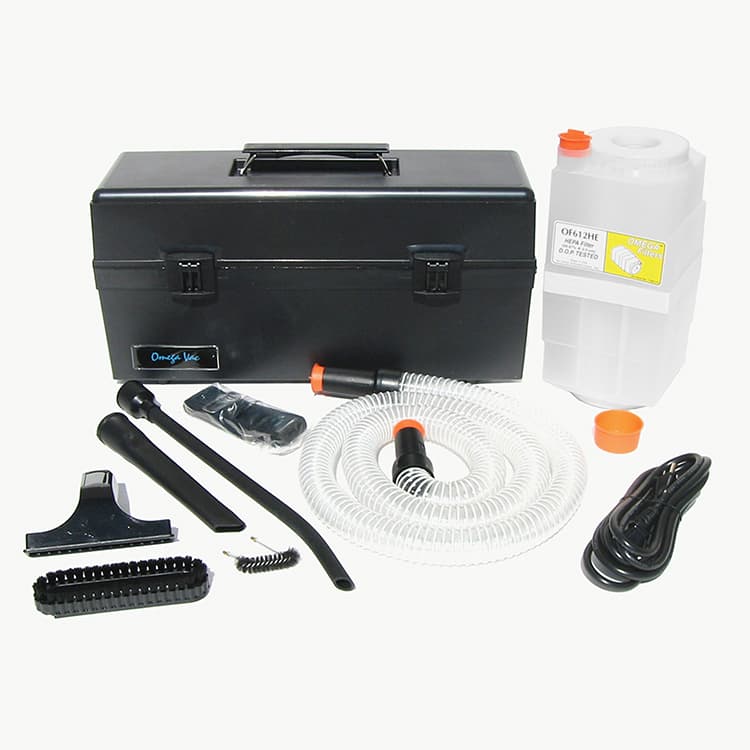
Product photography. Configuration may vary by specification.
- Series
- Accessories & Kits
- Power source
- Electric
- Tank capacity
- See datasheet
- Airflow
- See datasheet
- Filtration
- See datasheet
- Certification
- Not within the UL 1203 listing
- Construction
- Stainless steel
- Hazardous location scope
- See certification section
Technical
Specifications
What is confirmed for this model. Airflow, vacuum, motor and dimensions are model-specific and are supplied on the datasheet — we do not publish estimated figures.
Construction & configuration
- Series
- Accessories & Kits
- Power source
- Electric
- Configuration
- Standard
Filtration
- Filter area
- See datasheet
Performance
- Airflow
- See datasheet
- Vacuum
- See datasheet
- Tank capacity
- See datasheet
- Weight & dimensions
- See datasheet
Full specifications, drawings and certification documents are issued per configuration. Tell us the application and we will send the set that applies to it.
Request documentsCompatibility
Which materials does this model's certified scope cover?
This table reports certification scope, not a safety clearance. Class II groups come from the certificate: Group E is conductive metal dust, F is carbonaceous, G is other non-conductive dust.
| Material | Class II group | Within scope | Note |
|---|---|---|---|
| Mercury | Group G | No listing | This model is not within the UL 1203 listing. Suitability for a classified area must be established against your own area classification. |
| Milk Powder | Group G | No listing | This model is not within the UL 1203 listing. Suitability for a classified area must be established against your own area classification. |
| Whey Powder | Group G | No listing | This model is not within the UL 1203 listing. Suitability for a classified area must be established against your own area classification. |
| Egg Powder | Group G | No listing | This model is not within the UL 1203 listing. Suitability for a classified area must be established against your own area classification. |
| Spice Dust | Group G | No listing | This model is not within the UL 1203 listing. Suitability for a classified area must be established against your own area classification. |
| Garlic Powder | Group G | No listing | This model is not within the UL 1203 listing. Suitability for a classified area must be established against your own area classification. |
| Onion Powder | Group G | No listing | This model is not within the UL 1203 listing. Suitability for a classified area must be established against your own area classification. |
| Cinnamon Dust | Group G | No listing | This model is not within the UL 1203 listing. Suitability for a classified area must be established against your own area classification. |
| Pepper Dust | Group G | No listing | This model is not within the UL 1203 listing. Suitability for a classified area must be established against your own area classification. |
| Paprika Dust | Group G | No listing | This model is not within the UL 1203 listing. Suitability for a classified area must be established against your own area classification. |
| Protein Powder | Group G | No listing | This model is not within the UL 1203 listing. Suitability for a classified area must be established against your own area classification. |
| Soy Protein | Group G | No listing | This model is not within the UL 1203 listing. Suitability for a classified area must be established against your own area classification. |
Scope is not suitability. Whether a specific material can be recovered safely also depends on its behaviour as your process generates it — established by testing — and on the area classification assigned by your own electrical or process engineer. Confirm with a PrestiVac application specialist before ordering for a hazardous application.
Compliance
Certification and what it covers
Read the scope rather than the phrase. A listing names specific classes, groups and a temperature code, and it means nothing outside them.
No NRTL certification — and that is a question of scope
UL 1203 is a standard for explosion-proof and dust-ignition-proof electrical equipment. This unit has no electrical components anywhere on it, so the standard does not apply to it. The ignition-source question is answered by the construction — there is nothing electrical to enclose — rather than by an enclosure listing. PrestiVac does not claim UL, CSA, ATEX or IECEx approval for this line.
Electric or pneumatic — how to chooseOptions
Configuration options on this model
What each designation on the model name means.
Explosion-proof construction
Built for use in hazardous (classified) locations. Whether a specific unit is within the CSA listing is stated per model.
Equipment
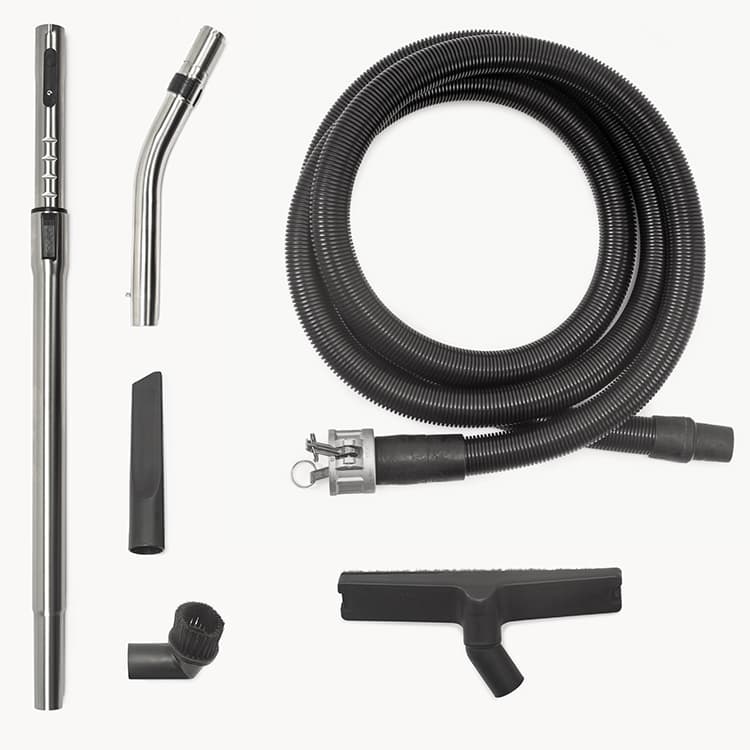
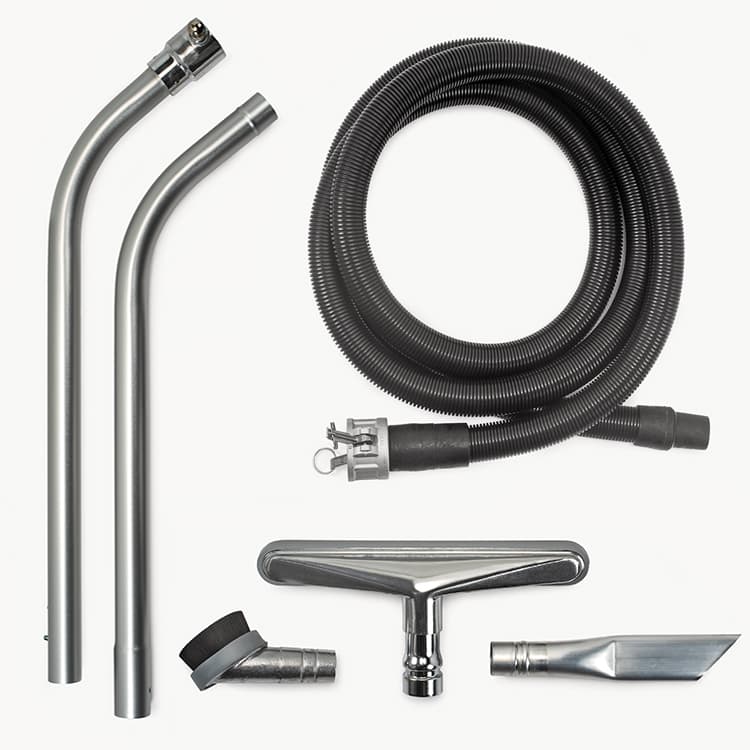
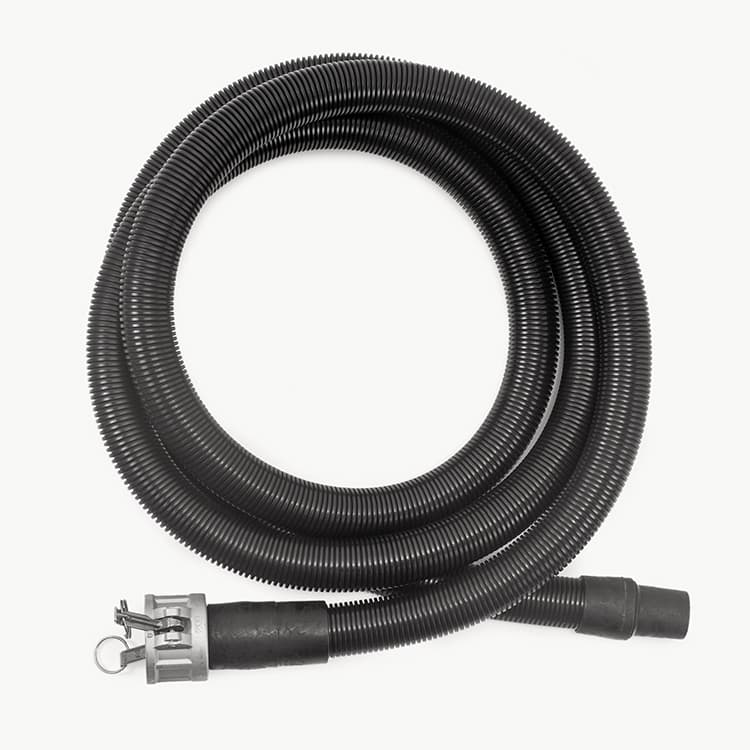
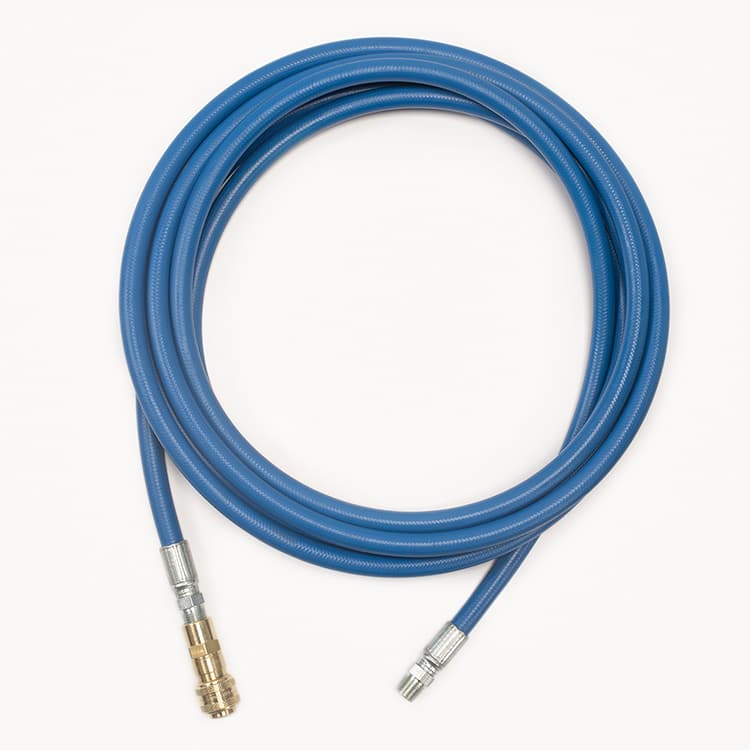
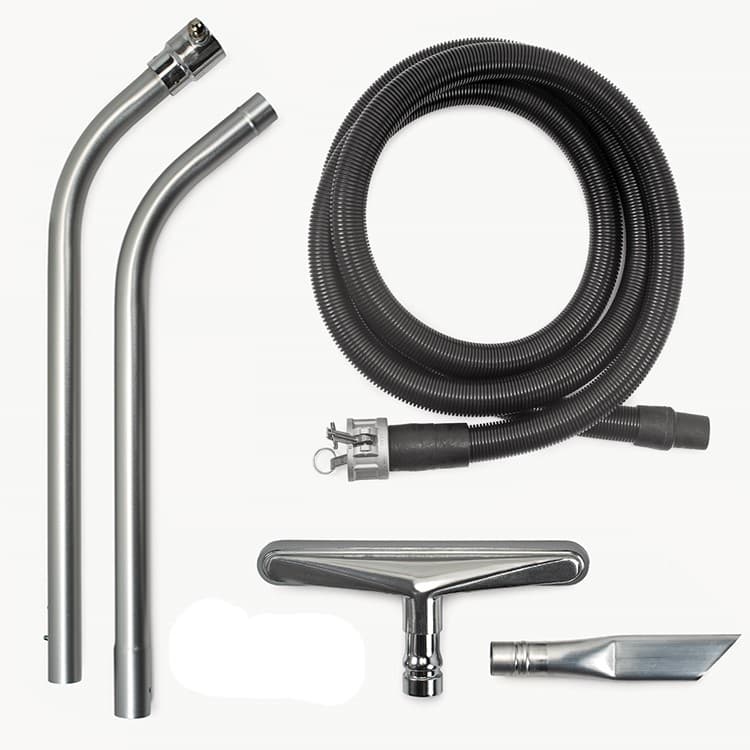
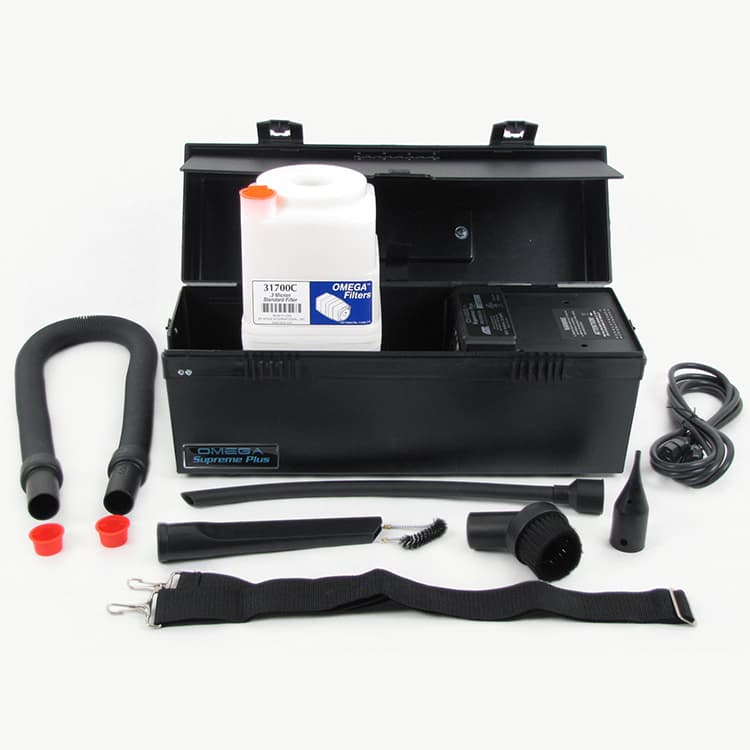
Hoses, tools and accessories
Hoses and tools supplied with the unit.
Range
Other models in the Accessories & Kits
Same series, different configuration. Performance figures come from the datasheet for each model.
| Model | Configuration | Certified scope | |
|---|---|---|---|
| VACOMEGAH kitViewing | Standard | Not within the UL 1203 listing | |
| 1.25 in accessory kit | Standard | Not within the UL 1203 listing | View |
| 1.5 in accessory kit | Standard | Not within the UL 1203 listing | View |
| 1.5 in suction kit | Standard | Not within the UL 1203 listing | View |
| AV air hose | Standard | Not within the UL 1203 listing | View |
In service
Representative industrial applications
Anonymised scenarios describing how the hazard was assessed and controlled. Outcomes are described qualitatively; we do not publish figures that were not measured.
Pharmaceutical
Containing Combustible Excipient Dust in a Tablet Facility
Lactose · Combustible Organic Dust & Potent Compound Exposure
ReadFood Processing
Controlling Flour Dust in a High-Volume
Flour · Combustible Organic Dust
ReadWood Industry
Managing Wood Dust in a Furniture Manufacturing
Wood Dust · Combustible Wood Dust & Carcinogen Exposure
ReadEstimate
What manual housekeeping costs you now
An arithmetic estimate from your own figures. It makes no claim about this model's performance.
Your assumption, not a PrestiVac performance claim.
Estimated annual labour
$11,700
260 hours of 520
An arithmetic estimate from the figures you entered. It is not a quotation, a payback guarantee, or a claim about any PrestiVac model’s performance.
Questions
Frequently asked
Why are the air-operated units not UL 1203 certified?
Because UL 1203 is a standard for explosion-proof and dust-ignition-proof electrical equipment, and the AVX line has no electrical components anywhere on the unit. It is a question of scope rather than a shortfall: enclosing an electrical ignition source and removing it entirely are two routes to the same objective, and a standard written for the first does not apply to the second.
Should I choose an electric or an air-operated vacuum?
It usually comes down to two things: your area classification and whether you have adequate compressed air at the point of use. An air-operated unit is driven by compressed air through a venturi, so there is no electric motor, no switch and no cord in the recovery unit at all — which removes the electrical ignition question from the drive entirely and suits long continuous running. Electric units suit facilities without sufficient plant air. Both are built with the same conductive, grounded and bonded recovery path, because the dust carries static regardless of what drives the machine. Air units are louder, which is worth planning for in occupied areas.
How must a certified vacuum be grounded?
Grounded and bonded in accordance with the National Electrical Code, Article 250. Static-dissipating hose and filters are part of the required configuration. The practical point is that the path has to be continuous from the tool through the hose to the container — a grounded machine with a non-conductive hose attached leaves the charge generated in the hose with nowhere to go, and the machine will keep working normally without anyone noticing.
What is the difference between HEPA and ULPA filtration?
They are tested at different particle sizes and efficiencies. Standard HEPA is tested to a minimum of 99.97% efficiency at 0.3 micrometres; PrestiVac units are rated at 99.99% absolute, and factory H14 grades reach 99.995%. ULPA extends further, to 99.9995% at 0.12 micrometres. Which you need follows the requirement — the room classification, the exposure limit, or the sanitation standard — rather than a preference for the larger number. Ask what a filter is tested to rather than what it is called.
Do you supply dust collectors?
No. We manufacture industrial vacuums — explosion-proof, HEPA, air-operated, wet and dry, central systems and custom-built units. A dust collector is a different machine: high air volume at low suction, capturing dust at the source through fixed ducting. A vacuum is lower volume at high suction, removing what has already settled. Most dust programmes need both, and we would rather point you to a collection-system specialist for that half than sell you the wrong equipment.
Which of your vacuums are certified, and for what?
Our listing is CSA Certificate 70122393, assessed against UL 1203 (5th Edition). It carries two scopes, and they are not interchangeable. The EX1 HEPA drum-type line is covered for Class I, Gp. D; Class II, Gps. E, F and G; Temp. Code T3C. The EV EX HEPA line is covered for Class II, Div. 2, Gps. F and G only — no Class I, Division 2 rather than Division 1, and no Group E, which is the conductive metal-dust group. Commercial indoor use only. Each model page states which scope applies. The air-operated AVX line holds no NRTL certificate at all. We do not claim ATEX or intrinsic-safety approvals.
Does your UL 1203 listing cover Class I Groups A, B and C?
No. Class I is Group D only — propane, methane and most common hydrocarbons and industrial solvents. Groups A, B and C cover acetylene, hydrogen and ethylene and are not within our listing. Note also that Class I coverage applies to the EX1 HEPA line only; the EV EX HEPA line has no Class I coverage at all, and is limited to Class II, Division 2, Groups F and G.
Which line is certified for metal dust?
The EX1 HEPA line. Its scope includes Class II, Groups E, F and G, and Group E is the conductive metal-dust group. The EV EX HEPA line is covered for Groups F and G only, so it does not carry Group E coverage — which matters directly in metalworking, aerospace, foundry and battery applications where the dust is frequently Group E. If you are specifying for aluminium, titanium, magnesium or other metal dust, ask us to confirm the line and scope against your area classification before ordering.
Not sure this is the right model?
Tell us the material, the area classification and how the unit will be used, and our technical team will confirm the model and configuration — or tell you if something else in the range fits better.
Talk to the manufacturer
Get the right explosion proof vacuum for your application.
Tell us what you need to vacuum and where. Our technical team will recommend the PrestiVac model best suited to your material, your classification and how hard you will work it — and because we build every unit ourselves, we can modify it to fit.
- Legally certified explosion proof
- Solid stainless steel construction
- Industry-best 3-year warranty
- Designed & manufactured in the USA
- 200+ vacuum versions